Breaking Down the Broadcast
Eight themes from one full episode — connected to the real world and to your purpose.
A Message from the Founder
Art Fuller
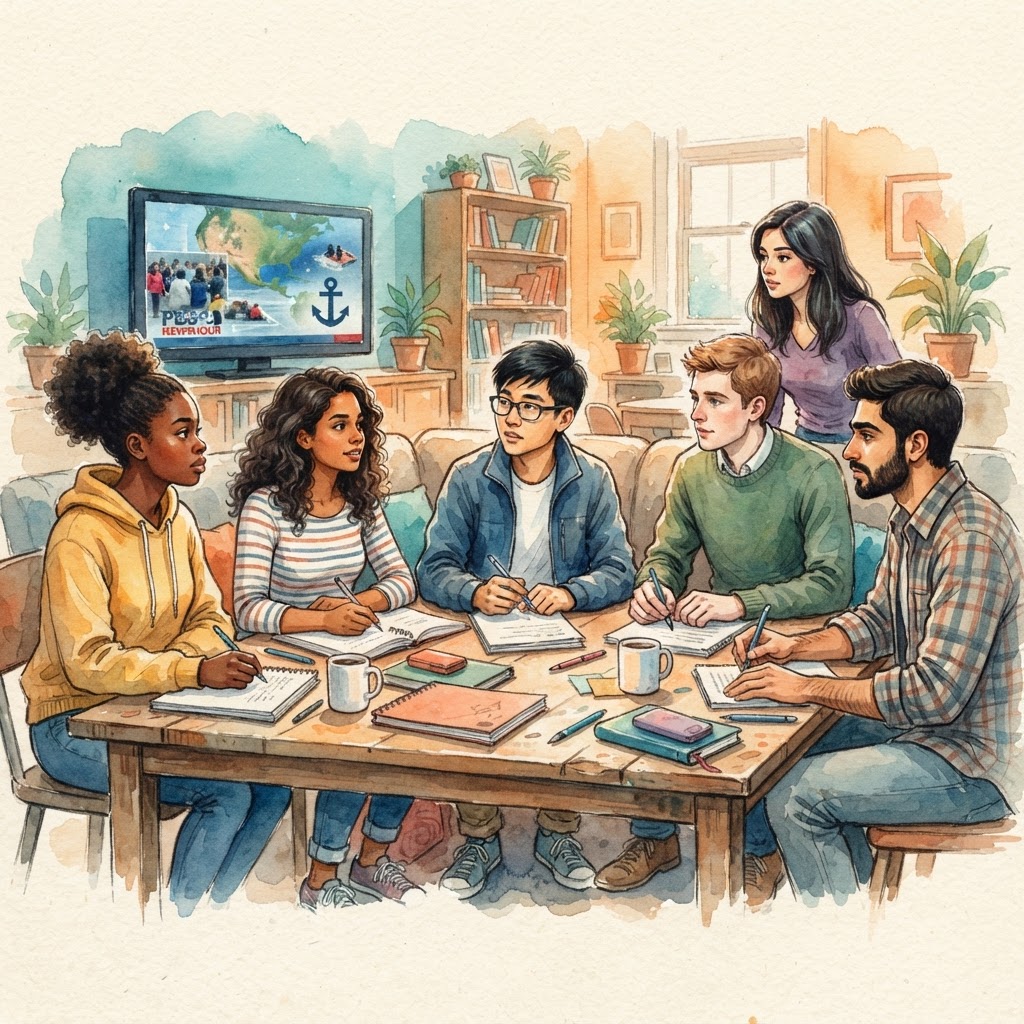
This is the second episode in our Current Events series. We take a full PBS NewsHour broadcast and break it into sections so you can see the themes that connect our world — and connect them to your purpose.
We use writing, rhythm, song, video, dance, and theater to create and share something we believe will stand the test of time by elevating our voice.
The news can feel like a flood of headlines with no clear meaning. But inside every broadcast are themes that connect to our communities, our values, and our purpose.
In this breakdown, we watch the full PBS NewsHour episode from August 27, 2026 and learn to see the through-lines: the power of nature, the practice of democracy, the state of our mental health, the shadow of war, the search for justice, the resilience of children, the healing power of the arts, and the work of preparing for disaster.
Each theme becomes a focused track of study, reflection, and action — grounded in Voice Up's five core principles of Collaboration, Precision, Empathy, Humility, and Patience.
How This Connects to Purpose & Writing
Connecting to Purpose, Writing, and Reflection
Connecting to Purpose
Each episode breakdown is designed to help you find the themes that connect to your purpose. When you study the news through the lens of what matters to you, you build a habit of purposeful engagement with the world.
Writing & Reflecting
Each theme track invites you to write and reflect — turning what you watch into what you think, feel, and believe. Writing about what you learn helps you process complex ideas and find your own voice.
Backed by Research From Multiple Sources
People with a strong sense of purpose show lower stress hormones and reduced inflammation.
Journal of Research in Personality
A clear life purpose is linked to better sleep, fewer chronic conditions, and longer life.
University of Rochester Medical Center
Expressive writing for 15–20 minutes strengthens immune function and improves physical health.
Pennebaker & Beall (1986)
Purpose-driven adults have a 15% lower risk of dying during a given study period.
Harvard T.H. Chan School of Public Health
Research from many different sources shows that living with purpose and writing regularly each have real, measurable health benefits — from lower stress and better sleep to stronger immune function and longer life. Together, purpose and writing are even more powerful.
Source broadcast: PBS NewsHour full episode, August 27, 2026 · 56:46. Each theme below is drawn directly from a segment of this broadcast.
Eight Theme Tracks
Each theme was drawn directly from the segments of this broadcast. Interns choose a primary track and explore how it connects to the others — and to their own purpose.
Climate & Natural Disaster Stewardship
Deadly Floods in Nepal · How Melting Glaciers Contributed to Himalayas Flooding
People in This Segment
- Geoff Bennett — PBS NewsHour Co-Anchor
- Amna Nawaz — PBS NewsHour Co-Anchor
- Dan Shugar — Director, waterSHED Lab, University of Calgary
- Janak Bahadur — Flood Survivor, Nuwakot District, Nepal
- Lin Jian — Chinese Foreign Ministry Spokesperson
Easy Summary
A huge chunk of a glacier high in the Himalayas broke off and caused a wall of water, mud, and rocks to rush through valleys in Nepal and Tibet. At least 390 people died and more than 1,400 are still missing. Whole villages were buried in mud. A scientist explained that as the planet warms, glaciers melt and the mountain walls they once held up become unstable — making disasters like this more likely.
Internship Focus
Interns study how climate change drives natural disasters, how scientists connect extreme weather to warming, and how rescue teams work in the hardest terrain on Earth. They practice explaining environmental science in plain words and exploring purpose-driven ways to help communities prepare and recover.
Civic Engagement & Political Analysis
News Wrap: Trump Signs Order to Rename Lake Ontario
People in This Segment
- Geoff Bennett — PBS NewsHour Co-Anchor
- Amna Nawaz — PBS NewsHour Co-Anchor
- PBS NewsHour News Team — Daily Headlines Roundup
Easy Summary
The news wrap covers the top headlines of the day, including President Trump signing an executive order to rename Lake Ontario. The segment rounds up other major national and international stories in a quick, fact-based format so viewers can stay informed on what happened today.
Internship Focus
Interns practice civic literacy — tracking executive actions, separating fact from spin, and understanding how daily headlines fit into bigger political patterns. They learn to read the news with precision and to ask what each story means for everyday people.
Public Health & Mental Health Policy
Lindsay Clancy Trial Draws Attention to Postpartum Care
People in This Segment
- PBS NewsHour Health Correspondents
- Legal and Medical Analysts — Covering the Trial
- Postpartum Mental Health Advocates — Cited in the Report
Easy Summary
The murder trial of Lindsay Clancy has drawn national attention to postpartum mental health. The case highlights how hard it can be to diagnose and treat severe postpartum conditions. It opens a bigger conversation about whether new mothers get the support and care they need before a crisis.
Internship Focus
Interns examine how one story can shine a light on a hidden public health crisis. They study maternal mental health policy, the gap between diagnosis and treatment, and how purposeful storytelling can push for better care for families.
Peacebuilding & International Security
Latvia's Foreign Minister Warns of Russian Sabotage Acts
People in This Segment
- Latvia's Foreign Minister — Interviewed on the Threat
- PBS NewsHour Foreign Affairs Correspondents
- European Security Analysts — Cited in the Report
Easy Summary
Latvia's foreign minister warned that Russia is carrying out sabotage acts across Europe. The warning matters because Latvia sits right next to Russia and is part of NATO. The segment looks at how countries are trying to protect their power grids, roads, and people from hidden attacks that fall short of open war.
Internship Focus
Interns study modern security threats that do not look like traditional war — sabotage, cyber attacks, and hybrid conflict. They learn how small nations defend themselves, how alliances like NATO respond, and how to explain complex foreign policy in clear, honest language.
Civic Justice & Accountability
Jan. 6 Rioters Pursue New Path for Payments from Trump
People in This Segment
- PBS NewsHour Justice Correspondents
- Legal Analysts — Tracking the Payments Push
- January 6 Defendants and Advocates — Cited in the Report
Easy Summary
Some people convicted for their role in the January 6, 2021 attack on the U.S. Capitol are trying a new way to get payments from the Trump administration. The segment looks at the legal and political fight over whether they should receive money, and what that says about how the country is handling the aftermath of that day.
Internship Focus
Interns track how the story of January 6 keeps evolving — in courts, in Congress, and in public debate. They practice civic accountability: asking who is responsible, who decides, and how a democracy holds itself together after violence.
War & Human Resilience
Gaza's Youth Search for Hope in Devastated Homeland
People in This Segment
- Omar Halawa — Child in Gaza (through translator)
- PBS NewsHour Foreign Correspondents
- Aid Workers and Educators — Cited in the Report
Easy Summary
Children in Gaza are trying to find small moments of hope in the middle of a war that has destroyed their homes and their sense of safety. One boy explained that he and his friends took down their kite because they were afraid a drone might mistake it for something dangerous. The story shows the human cost of war through the eyes of its youngest victims.
Internship Focus
Interns study the human cost of conflict — especially for children. They learn empathetic storytelling, how to center the voices of people living through war, and how to connect faraway crises to the shared value of protecting the most vulnerable.
Arts, Health & Community Healing
Mayo Clinic Using the Arts to Improve Patient Care
People in This Segment
- Mayo Clinic Care Teams — Using Improv with Patients
- PBS NewsHour Health & Arts Correspondents
- Dementia Patients and Families — Featured in the Report
Easy Summary
The Mayo Clinic is using improv theater and the arts to help people living with dementia. The arts help patients express themselves, connect with others, and find moments of joy even as their memory fades. It is a powerful example of how creativity can be part of real medical care.
Internship Focus
Interns explore how the arts improve health and community well-being. They study programs that bring creativity into clinical settings, the economics of arts-in-health, and how purpose-driven institutions can heal both bodies and spirits.
Disaster Preparedness & Community Resilience
Craig Fugate Joins Amna Nawaz on 'Settle In'
People in This Segment
- Craig Fugate — Former FEMA Administrator
- Amna Nawaz — PBS NewsHour Co-Anchor
Easy Summary
Craig Fugate, who used to run FEMA, sat down with Amna Nawaz for a segment called 'Settle In.' He talked about how communities can prepare for disasters before they strike — from floods to storms — and why being ready ahead of time saves lives when the worst happens.
Internship Focus
Interns study disaster preparedness and community resilience. They learn how emergency systems work (and where they fail), how leaders plan for the worst, and how purposeful local action can protect a community before a crisis ever begins.
What Interns Do
- Watching and analyzing this PBS NewsHour episode, identifying the key themes and how they connect to each other.
- Writing reflective summaries that turn complex current events into clear, purpose-driven stories for everyday readers.
- Researching one theme in depth — its history, the people involved, and its real-world impact on communities.
- Connecting each theme to the five core principles of Voice Up: Collaboration, Precision, Empathy, Humility, and Patience.
- Producing a short written, audio, or video piece that helps others understand a current event and find their role in it.
- Joining weekly cohort discussions that examine how the news connects to purpose, action, and community.
- Tracking personal growth in civic literacy, empathetic communication, and purposeful engagement with the world.
Who Should Apply
- Curiosity about the world and a real desire to understand current events beyond the headlines.
- Strong reading, writing, and critical thinking skills.
- Empathy for different perspectives and lived experiences.
- Ability to pull together information from credible journalistic sources.
- Commitment to honest, balanced, and purposeful communication.
- Willingness to engage respectfully with complex and sometimes difficult topics.
What You'll Gain
- Analyze a full news broadcast and identify the themes that connect its segments.
- Turn complex geopolitical, environmental, and civic stories into plain language.
- Connect current events to your own purpose and to community action.
- Apply the five core Voice Up principles to the practice of informed citizenship.
- Produce purposeful media (written, audio, or video) that helps others engage with current events.
- Build a lasting habit of informed, reflective engagement with the world.
Program Details
100% Remote
Format
Flexible (4–8 weeks)
Duration
Academic credit available
Credit
This is the second episode breakdown in our Current Events series. Future episodes will be added over time, building an ongoing library of purposeful engagement with the news.