The Lights Are Back On in Gary, Indiana. The Story Is Not Over.
On August 25, 2026, after fifteen days in the dark, power was finally restored to Gary. The storm hit on August 11. At its peak, more than 375,000 customers across Northern Indiana lost power — including over 33,000 in Gary alone, more than any other community. For most of those fifteen days, almost nobody in the national media was covering it. That silence is the story. Why did it take so long for a city of 67,000 people to be seen — and what does that reveal about the stories we tell about the most vulnerable? Food and donations are at the top of this page, first and foremost. Below them, you will find how the tragedy unfolded, day by day — and why Voice Up is not leaving Gary.
Help Gary, Indiana Families Recover.
99% Restored
NIPSCO · 375,000 customers affected · Power back on Aug 25, 2026
Power has been restored, but families are still recovering from fifteen days in the dark. Food, medication, and basic needs remain at risk. Your support directly helps families in Northwest Indiana.

"Left Behind and Overlooked"
Democracy Now! broadcast a national segment on the Gary, Indiana two-week outage — "Left Behind and Overlooked": Indiana Energy Company Left Majority-Black Gary Powerless for Weeks. Host Amy Goodman interviewed Mayor Eddie Melton, who said Gary was omitted from NIPSCO's initial restoration schedule:
"When we did not see Gary listed in the beginning, it felt as if we were being left behind and overlooked."
Indiana officials estimate up to $5 billion in damage across Gary and other communities. Gary is roughly 80% Black, with about a third of residents below the poverty line. Mayor Melton is demanding NIPSCO "harden the infrastructure" — stronger poles, cement bases, upgraded circuitry and transformers. FEMA arrived on the ground August 31.
Watch the Democracy Now! Segment →How the Tragedy Unfolded
This is the story of fifteen days in the dark — and of a country that took almost two weeks to look. It begins today, and reaches back to the night the storm hit.
Power has been restored to Gary, Indiana.
After fifteen days in the dark, NIPSCO has restored power to the customers affected by the August 11 storms — the worst damage in the company's known history. The lights are back on. The recovery, and the questions, are just beginning. On August 31, Democracy Now! brought the story to a national audience in "Left Behind and Overlooked."
Aug 11 · Day 1
The storm hits.
Severe storms tear across Northwest Indiana. More than 375,000 NIPSCO customers lose power at the peak — the worst damage in the company's known history. Over 33,000 of those outages are in Gary alone, more than any other community.
Aug 12–18 · Days 2–8
A week in the dark — and almost no one is watching.
Food spoils in the fridge. Medicine like insulin can't stay cold. Generators cost too much for many families. Residents go to community centers just to eat and charge their phones. But for most of this week, the story stays local. Almost no national media covers it.
Aug 19 · Day 9
The story finally breaks through — locally.
Voice Up begins supporting Gary on August 19. A local outlet reports from the ground. The Associated Press releases a national story reporting tens of thousands still without power — more than a week after the storm.
Aug 20–24 · Days 10–14
Slow national attention, thousands still in the dark.
NPR carries the story. The New York Times confirms it. Mayor Eddie Melton calls 12 days without power "unacceptable." World Central Kitchen serves thousands of free meals. But thousands of Gary residents are still without power.
Aug 25 · Day 15
Power restored — and the story finally breaks through nationally.
NIPSCO restores power to 99% of customers by 5 p.m. — the worst damage in the company's known history. PBS NewsHour finally brings the two-week outage to a national television audience. Gov. Mike Braun calls for an investigation into NIPSCO. President Trump approves a major disaster declaration, making federal funding available to affected residents. A class-action lawsuit is filed against NIPSCO.
Aug 27 · Day 17
Gary is still "in recovery phase," the mayor says.
Two days after restoration, CBS Chicago reports that cleanup is still underway from 99 mph winds. Mayor Eddie Melton — a former NIPSCO employee of over 15 years — says the city is in "recovery phase" and is reviewing all options as residents form a class-action group. The Chicago Sun-Times also reports on the recovery.
Aug 31 · Day 21
"Left Behind and Overlooked" — Democracy Now! broadcasts nationally.
Democracy Now! airs a national segment interviewing Mayor Eddie Melton, who says Gary was omitted from NIPSCO's initial restoration schedule: "When we did not see Gary listed in the beginning, it felt as if we were being left behind and overlooked." Indiana officials estimate up to $5 billion in damage. FEMA arrives on the ground. The real question is unchanged: why did it take so long for a city of 67,000 people to be seen — and what does that reveal about the stories we tell about the most vulnerable?
The real question: Why did it take so long?
For most of fifteen days, a city of 67,000 people lived without power — and almost nobody in the national media was telling their story. The cameras came late. The country noticed late. The lights are back on now, but that gap — between when a community starts hurting and when the country sees it — is the story Voice Up exists to lift up. Voice Up is not leaving Gary. We will keep telling this story — and stories like it in every town that gets overlooked.
Purpose & Public Health Media Fellowship
If this story moved you to act, the Purpose & Public Health Media Fellowship is the next step — a flexible, remote program that turns stories like Gary, Indiana into media that drives real change, with paid project pathways.
Fifteen Days in the Dark — 7-Day Sprint
Turn this story into practice. A 7-day applied purpose sprint on public health, equity, the media arc, and the patience to stay after the cameras leave — connected to the five Voice Up principles. Complete all 7 days and download the full guide.
Become a Current Events Intern
Stories like Gary, Indiana need people who will pay attention long after the headlines disappear. As a Voice Up Current Events Intern, you will track, analyze, and elevate underreported stories — and connect them to real, lasting purpose-driven action.
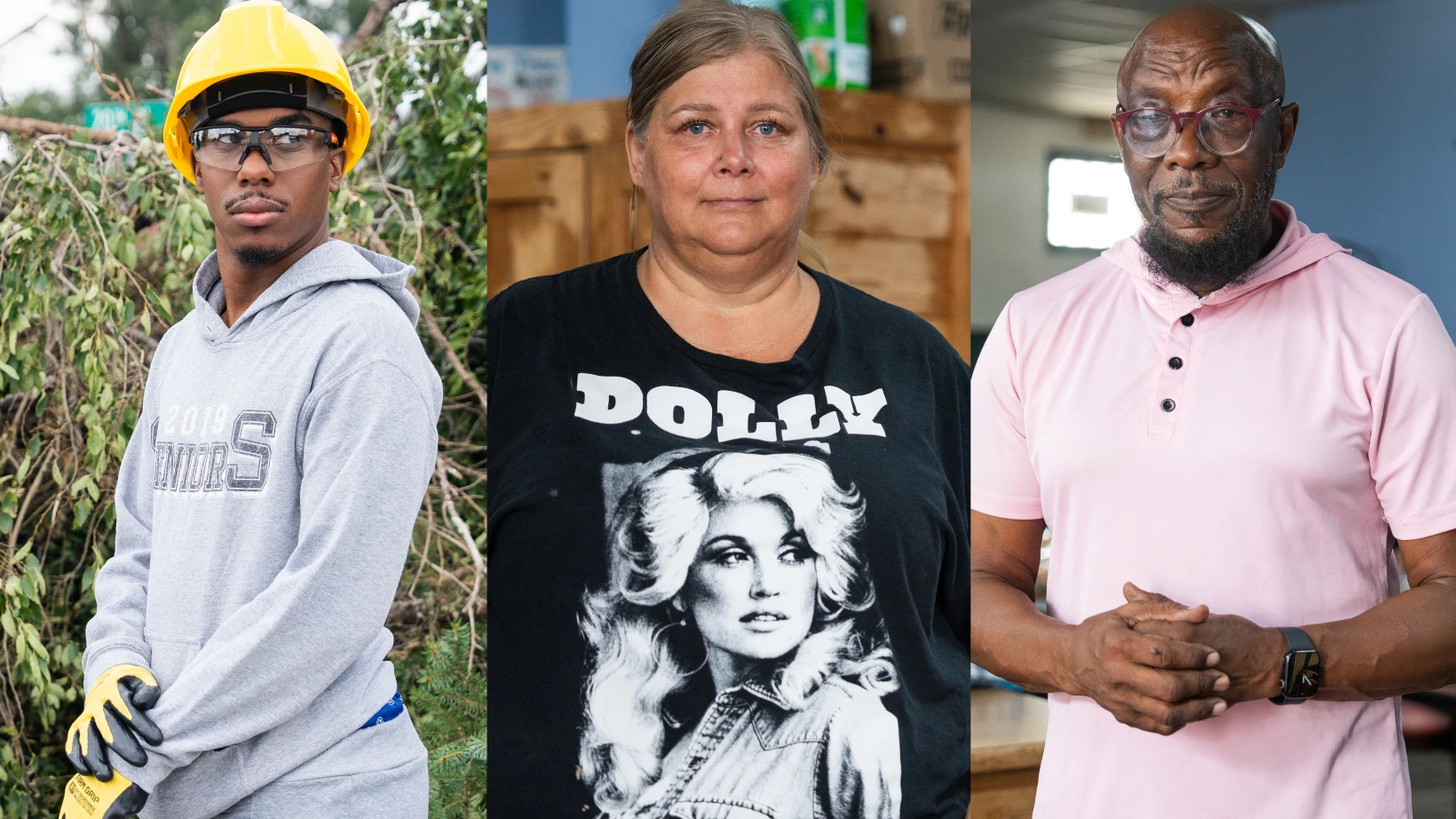
Miles Lewis (from left), Allison Looney and Isaac Mootye deal with the aftermath of the Aug. 11 storms once power is mostly restored in Gary, Indiana. Pat Nabong / Sun-Times
Read the Sun-Times story →Latest Developments — Most Recent Updates
"Left Behind and Overlooked": Indiana Energy Company Left Majority-Black Gary Powerless for Weeks
Democracy Now! broadcast a national segment on the Gary, Indiana two-week outage, interviewing Mayor Eddie Melton. Melton said Gary was omitted from NIPSCO's initial restoration schedule: "When we did not see Gary listed in the beginning, it felt as if we were being left behind and overlooked." Indiana officials estimate up to $5 billion in damage. Gary is roughly 80% Black, with about a third of residents below the poverty line. Melton is demanding NIPSCO "harden the infrastructure" — stronger poles, cement bases, upgraded circuitry and transformers. FEMA arrived on the ground August 31.
Watch the Democracy Now! segment (Aug 31, 2026) →Gary, Indiana still "in recovery phase" following damaging storms, mayor says
CBS Chicago reports that the power is back on, but life is far from normal in Gary. Cleanup is still underway from 99 mph winds on Aug. 11 that left some residents in the dark for nearly two full weeks. Mayor Eddie Melton — a former NIPSCO employee of over 15 years — says the city is in "recovery phase" and is reviewing all options, as residents form a class-action group to sue NIPSCO for omitting Gary from early restoration timelines.
Watch the CBS Chicago report (Aug 27, 2026) →NIPSCO restores power to 99% of customers — Gary's lights back on
On August 25, 2026, ABC7 Chicago reported that NIPSCO restored power to 99% of customers across Northwest Indiana by 5 p.m. — ending fifteen days in the dark for Gary residents. The August 11 storms affected 375,000 customers, the worst damage in NIPSCO's known history. Gov. Mike Braun called for an investigation into NIPSCO, and President Trump approved a major disaster declaration making federal funding available to affected residents. A class-action lawsuit was also filed against the utility.
Read the ABC7 Chicago restoration story (Aug 25, 2026) →NIPSCO: 99% of customers restored by 5 p.m. on August 25
NIPSCO restored power to 99% of the 375,000 customers affected by the August 11 storms by 5 p.m. on Tuesday, August 25, 2026 — the worst damage in the company's known history. Power was restored to nearly all of Gary just hours before NIPSCO's restoration estimate. A class-action lawsuit has been filed against NIPSCO, and Gov. Mike Braun has called for an investigation.
Read the NIPSCO outage page →PBS NewsHour covers Gary, Indiana in national broadcast
PBS NewsHour featured the Gary, Indiana power crisis in its August 25, 2026 full episode — bringing the two-week outage to a national public-television audience the same day NIPSCO announced expected full restoration.
Watch the Gary, Indiana story on PBS NewsHour (Aug 25, 2026) →Mayor Eddie Melton: "12 days without power is unacceptable"
Mayor Melton addressed residents in a public briefing, calling the 12-day outage unacceptable and pledging the city will keep fighting for recovery. "Your city will not stop fighting for you."
Watch the briefing →NIPSCO expected all power restored Tuesday night — and restoration is nearly complete
NIPSCO announced it expected to restore power to all remaining customers by the night of Tuesday, August 25. As of August 26, roughly 1,000 customers in Gary were still without power, with NIPSCO estimating full restoration by end of day — down from more than 33,000 in Gary at the height of the outage.
Read the ABC7 Chicago story →World Central Kitchen serves free meals in Gary
World Central Kitchen, founded by chef José Andrés, distributed about 4,000 free meals on Sunday, August 23, to Northwest Indiana residents still struggling with NIPSCO power outages — a sign the crisis has drawn national relief support.
Read the ABC7 Chicago story →Power restored — but the questions remain.
After fifteen days in the dark, NIPSCO has restored power to the 375,000 customers affected by the August 11 storms — including over 33,000 in Gary alone. PBS NewsHour finally covered the story nationally on August 25. The real story is not the outage alone. It is the question it leaves behind: why did it take so long for a city of 67,000 people to be seen — and what does that reveal about the stories we tell about the most vulnerable? Voice Up is not leaving Gary.
How the Story Broke Through
No coverage → local coverage → national coverage — after an extreme delay
The storm hit on August 11. For more than a week, what Gary residents were going through stayed mostly a local story. A local outlet reported from the ground. Only on day nine did NPR carry it nationally — and day ten before The New York Times confirmed it.
Gary sits inside the Chicago metropolitan area — one of the largest metro regions in the country. For a crisis of this scale to wait more than a week for sustained national attention is striking, especially when similar outages in bigger cities are covered immediately. That gap is the story.
The Delay, In One Line
Aug 11 — storm hits. Aug 21 — NPR goes national. Aug 22 — The New York Times confirms. That is ten days before the newspaper of record tells the country what a major-metro city has been living through.
Stage 1 · Local Coverage · On the ground in Gary
A Storm Knocked Out Gary’s Power. Then One Dark Day Became Eight.
Capital B Gary · August 21, 2026
A local, Gary-based outlet documented the lived experience first. About 20,000 customers in Gary remained without power, and Gary accounted for nearly half of the roughly 43,000 NIPSCO customers still dark across Northwest Indiana.
“It felt like an apocalyptic movie.”
— Javonte Anderson, Capital B Gary
Stage 2 · National Public Radio · National broadcast breaks the silence
‘Survival mode’: Indiana residents endure a ninth day without power
NPR · Associated Press · August 21, 2026
NPR carried the story nationally on day nine — 68,000 NIPSCO customers still without power, the majority in Lake County, with health risks rising from generators, spoiled food, and medical devices losing charge.
“Nine days is a long time for a community to be without power.”
— Courtney Page-Tan, Indiana University Indianapolis
Stage 3 · The New York Times · National newspaper of record
Desperation Mounts as Thousands in Indiana Endure 10 Days Without Power
The New York Times · August 21, 2026
The Times confirmed the crisis on day ten — electricity out for ten days across much of Gary, Indiana, after deadly storms knocked down trees and power lines across the region.
Read the full reportWhy This Arc Matters — and Why It Is Research
Who covers a story, when, and why it breaks through (or doesn’t) is exactly what the Purpose & Public Health Media Fellowship studies. This arc — silence, then local truth-telling, then delayed national attention — is not just news. It is a case study in media visibility, health equity, and which American disasters get seen.
Fellows track, analyze, and document arcs like this one, turning lived experience into evidence. That is how a story like Gary, Indiana becomes the basis for real research.
Who Lives in Gary, Indiana — and Why the Reporting Delay Matters
The latest census numbers help explain why a two-week outage in an American city took so long to reach the national conversation. When a community has fewer resources, older and sicker residents, and less money to amplify its own story, the gap between when a crisis starts and when the country notices grows wider.
Latest Gary, Indiana Demographics
67,289
Population (2025 est.)
down 2.6% since 2020
76.2%
Black residents
of total population
10.4%
Hispanic / Latino
of total population
33.1%
Residents in poverty
about 1 in 3 people
$23,453
Per capita income
2024 dollars, 2020-2024
18.9%
Adults 65 and older
nearly 1 in 5
15.3%
Adults with a disability (under 65)
2020-2024
10.0%
Uninsured (under 65)
no health insurance
49.1%
Owner-occupied homes
just under half
82.2%
Broadband internet at home
2020-2024
14.8%
Bachelor’s degree or higher
age 25+
50.2%
In the labor force
age 16+
Source: U.S. Census Bureau QuickFacts, Gary city, Indiana (Population estimates July 1, 2025; ACS 2020-2024).
The Exceptional Delay in Reporting
The storm hit on August 11. For more than a week, what Gary residents were going through stayed mostly a local story. Only on day nine did NPR carry it nationally. Day eleven before The New York Times confirmed it. That gap is the story \u2014 and the demographics above help explain it.
How Demographics Connect to the Delay
- →A smaller, poorer city has less amplification power. With a per capita income of $23,453 and a labor force participation of 50.2%, fewer residents have the time, money, and platforms to push a story onto national radar.
- →Older and sicker residents are hit hardest but heard least. 18.9% are 65+, 15.3% live with a disability, and 10% lack health insurance — the people most endangered by a long outage are often the least able to advocate publicly.
- →A majority-Black city (76.2%) raises a fairness question. These facts do not prove the delay was caused by race or poverty. But they make a fair question easy to ask: when a town has less money to handle a long outage, do our systems notice how bad it really is?
- →Local reporters saw it first — national newsrooms took days. The work of local journalism should warn bigger newsrooms early. In Gary, it took more than a week.
The crisis in Gary, Indiana is not over. National and regional coverage continues — this feed tracks the most recent stories as residents work through recovery. The most recent reports appear first.
Update on Federal Disaster Response in Northwest Indiana
Congressman Frank J. Mrvan provided an update on the ongoing federal disaster response, noting that President Donald Trump has approved a Major Disaster Declaration for Indiana. The update emphasizes that Lake County is now approved for both Individual and Public Assistance, and encourages residents to visit the "one-stop shop" at the United Steelworkers Local 1014 hall for aid.
Key figures from the report:
- •President Trump approved a Major Disaster Declaration for the state.
- •Lake County is eligible for Individual Assistance (for residents) and Public Assistance (for infrastructure/emergency work).
- •The "one-stop shop" at United Steelworkers Local 1014 (1301 Texas St., Gary) serves as a centralized hub for FEMA and state aid.
This is encouraging news for Gary and Lake County after everything our community has endured.
FEMA Recovery Center in Gary Offering One-Stop Shop for Storm Victims
This report details the establishment of a FEMA recovery center at McBride Hall in Gary, providing a "one-stop shop" for survivors of the August 11 storm. The center connects residents with housing support, insurance guidance, public health resources, and crisis counseling.
Key figures from the report:
- •The center is located at 1301 Texas St., Gary.
- •State and federal officials have been on-site through October 2, 2026.
- •The deadline to apply for FEMA assistance is October 25, 2026.
The recovery center is at McBride Hall... State and federal officials will be available from 9 a.m. to 6 p.m. through Friday, Oct. 2.
Indiana is investigating why NIPSCO customers went weeks without power
Indiana utility regulators have launched an investigation into NIPSCO's preparedness and response to the severe August storms that left many residents without power for over two weeks.
Key figures from the report:
- •The storms knocked out power to 387,010 NIPSCO customers.
- •More than 1,230 distribution poles were broken during the weather event.
- •NIPSCO described the event as the most widespread outage in its history.
This was an unprecedented storm that caused extraordinary damage across northern Indiana.
If the investigation finds that NIPSCO is not adequately prepared for future emergencies, well, what is the plan afterwards to remedy that situation?
Featured Current Events Report
Eight Days in the Dark: What Gary, Indiana Reveals About Which American Disasters Get Seen
August 19, 2026 · Voice Up Media and Publications
GARY, Indiana — After fifteen days in the dark, power has finally been restored to Gary. NIPSCO has now restored power to the 375,000 customers affected by the August 11 storms — including over 33,000 in Gary alone. The real story is not the outage alone.
It is the question it leaves behind: why did it take so long for a city of 67,000 people to be seen — and what does that reveal about the stories we tell about the most vulnerable?
The Associated Press says about 75,000 people in Northwest Indiana still have no power in an official report released August 19, 2026. Many of them live in Gary, Indiana. People told reporters their food went bad. They could not keep medicine like insulin cold. Generators cost too much. Many had to go to community centers just to eat and charge their phones.
Gary is not a huge city. The Census says about 67,289 people live there, in about 27,227 homes. Nearly 19% of the people are 65 or older. About one-third live in poverty.
A huge share of this small city is still in the dark.
When No Power Becomes a Health Problem
Electricity helps keep people healthy. A few hours without power is annoying. A few days without power can be dangerous.
The news cameras may have left. The problem has not.
Compare This to Other Disasters
When Hurricane Beryl hit Houston in July 2024, about 2.7 million homes and businesses lost power. National news covered it right away. They kept covering the heat, the health risks, and the repairs the whole time.
Gary got a different kind of coverage. The big storm on August 11 got national attention at first. But for most of the next week, what Gary residents were going through stayed mostly a local story.
Only on August 19, 2026 — more than a week after the storm — did the Associated Press release an official national story reporting that 75,000 people were still without power. Thousands in Gary stayed in the dark for fifteen full days before power was finally restored on August 25. That gap — between when a community starts hurting and when the country notices — is worth thinking about.
Gary Also Raises a Fairness Question
The Census says about 76% of Gary residents are Black. The middle income for a household is about $38,731. About 33% of residents live in poverty.
These facts do not prove that Gary got less attention because of race or money. But they make a fair question easy to ask:
When a town has less money to handle a long outage, do our systems notice how bad it really is?
A Big Number Is Not the Only Way to Measure a Disaster
National news pays attention to big numbers. But the biggest number is not the only way to tell how bad a disaster is.
The share of people hit matters.
How long it lasts matters.
How vulnerable the town is matters.
The health effects matter.
Ask not just, "How many people are affected?" but also, "How hard is this hitting them?"
What Needs to Get Better
- 1Look at how much of a town is hit. A smaller outage that hits one whole city can still be a disaster for that city.
- 2Report on health sooner. Food, medicine, heat, medical machines, and mental health should matter before people go days without power.
- 3Connect local news to national news. Local reporters often see problems first. Their work should warn bigger newsrooms early.
- 4Keep covering the story after the storm. Getting power back is part of the disaster, not just the end of it.
- 5Listen to residents, not just the power company. A repair percentage tells us how the wires are doing. It does not tell us how people are doing.
Gary Is the Story — and a Warning Too
Somewhere else in America, another town will face a long outage, a flood, a hospital closing, or a water problem. The numbers might not look big enough for national TV at first. The story might not reach the biggest newsrooms right away. But for the people living there, it can still be huge.
A story should not become important only once the whole country can see it.
The real question is whether we can build better ways to make sure the next town does not have to wait eight days to be heard.
A Voice Up Featured Current Events Story
Gary, Indiana Needs Our Attention
August 19, 2026 · Voice Up Media and Publications
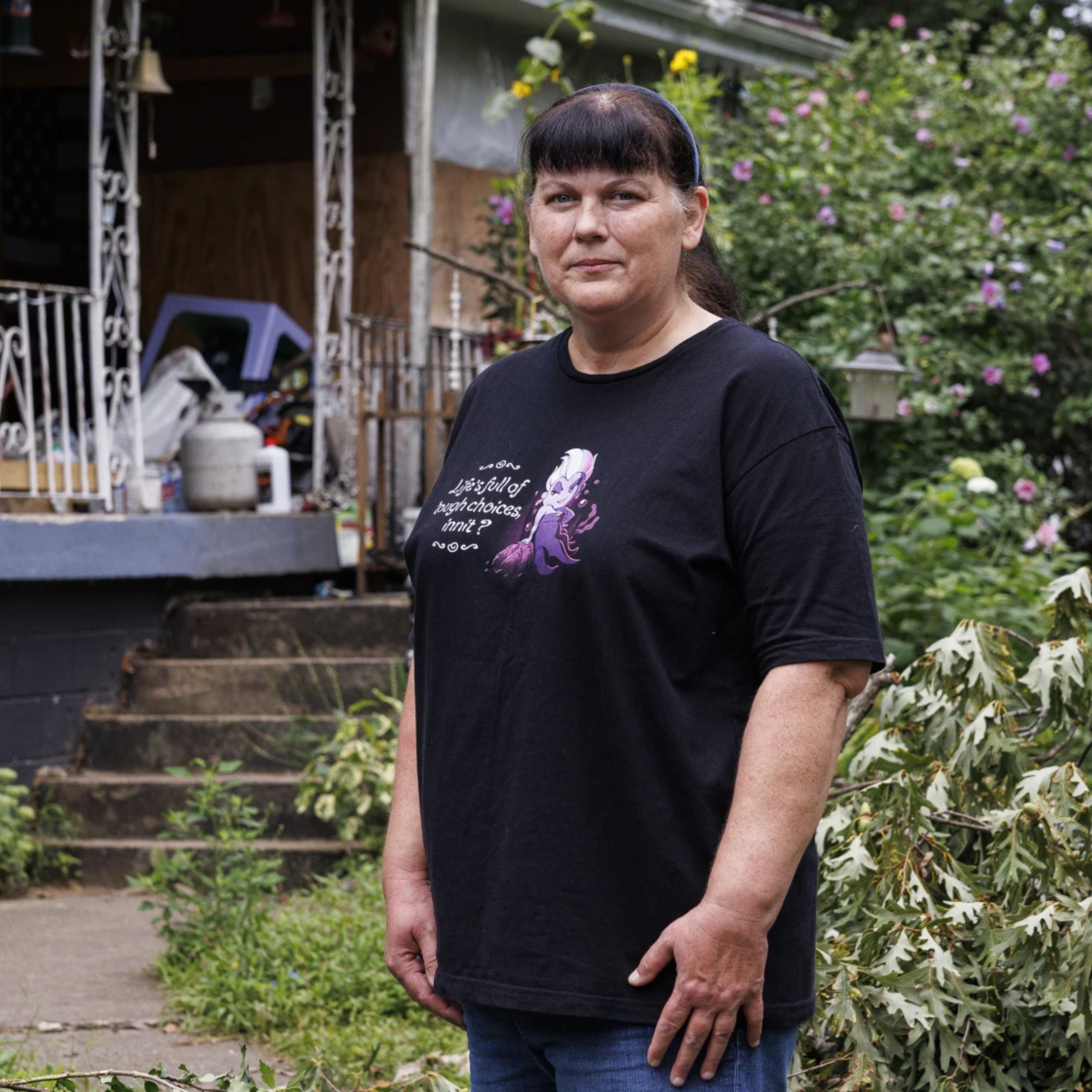
Today, Voice Up Media and Publications is launching one of our first big calls to action. We are asking students, community leaders, teachers, researchers, and caring people to speak up together about an important American story.
It is a story about health. About power lines. About being ready for emergencies. About food. About schools. About strong communities. About fairness. And about whether local stories get the attention they deserve.
National news has started to report on what is happening — food going bad, medicine like insulin that needs to stay cold, no electricity, and trouble meeting basic needs. But our job does not end when a headline shows up.
This Is Our Call to Action
College students. Graduate students. Community leaders. Health workers. Journalists. Researchers. Teachers. Doctors and nurses.
Pay attention to Gary.
- →What happens to people's health when the power is out for days, not hours?
- →What happens to families who can't afford a generator or a hotel?
- →What happens to cold food and medicine that needs a fridge?
- →What happens to older adults, kids, people with disabilities, and people who are already sick?
- →And what happens when a serious local problem does not become part of the national conversation right away?
Students: Your Voice Matters
If you study public health, journalism, social work, medicine, nursing, communications, emergency management, public policy, environmental health, engineering, sociology, political science, or education — this story is worth your time.
Look into it.
Write it down.
Talk about it.
Think about the health effects.
Watch how the news covers it.
Listen to residents.
Community Leaders: Help Keep the Story Visible
- ✓Share true, helpful information.
- ✓Lift up the voices of residents.
- ✓Connect people with the help they need.
- ✓Ask hard but fair questions about power, readiness, recovery, and health.
- ✓Keep paying attention after the first headlines fade.
You do not have to make a tragedy sound scary to get people to care.
It takes Collaboration. Precision. Empathy. Humility. Patience.
Those are the five principles that guide Voice Up.
Lift Our Voice Up
Gary, Indiana is not just a story about electricity. It is a chance for America to look at what happens when power, health, strong communities, money struggles, and news coverage all meet.
- Learn what is happening.
- Share true information.
- Listen to Gary residents.
- Ask better questions.
- Bring the health side into the talk.
- And help lift this story up across the country.
Sometimes changing a national conversation starts by refusing to ignore what is happening in one town.
Share These Stories
Copy and paste these ready-to-post messages to amplify the Gary, Indiana story and recruit the next generation of current events interns.
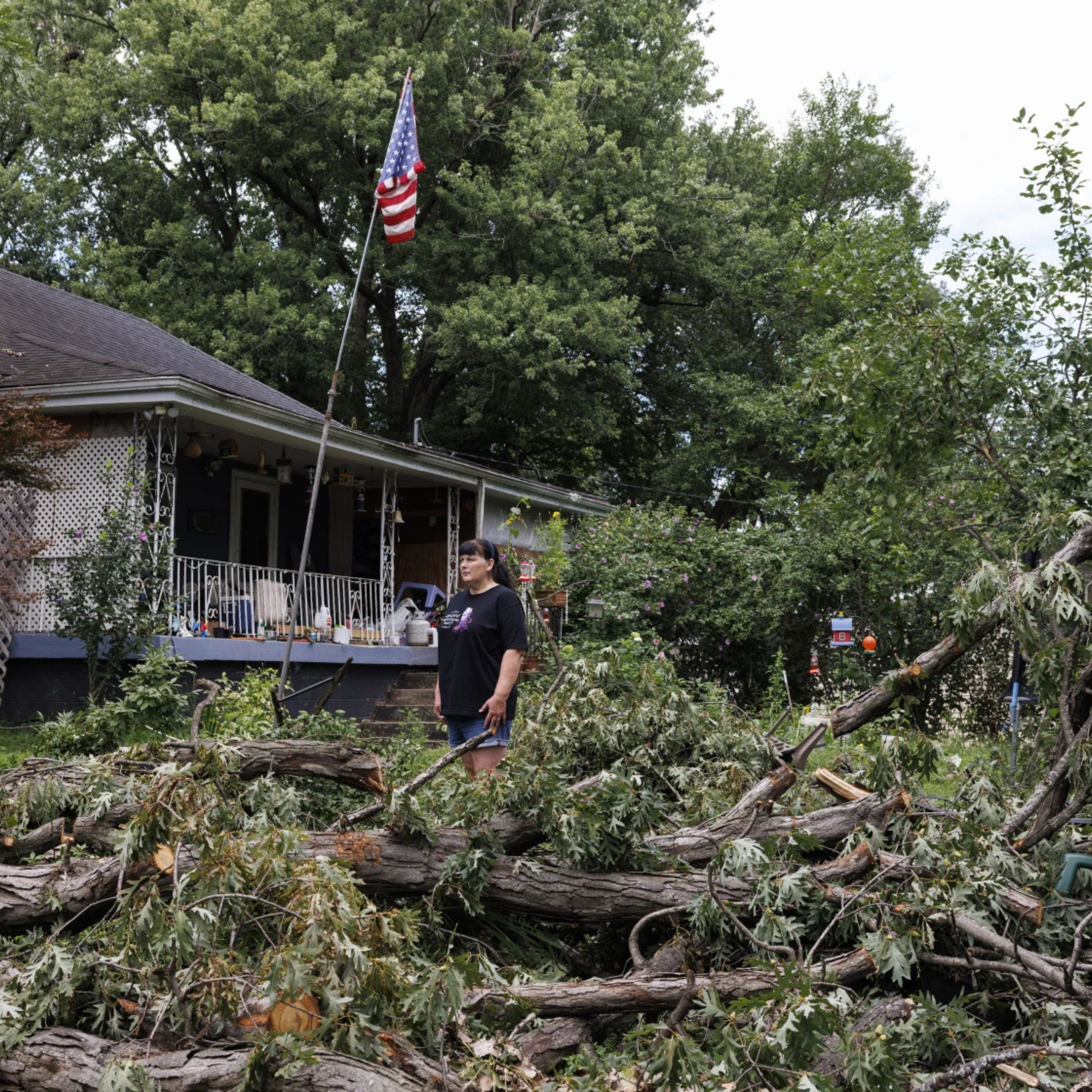
Gary, Indiana Needs Our Attention.

More than a week after devastating storms struck Northwest Indiana, tens of thousands of residents have experienced prolonged power outages. What began as a severe-weather story has become something much larger.

It is a story about public health. Infrastructure. Emergency preparedness. Food security. Education. Community resilience. Health equity. And whether significant local stories receive the attention they deserve.

Raising awareness does not require sensationalizing tragedy. It requires Collaboration. Precision. Empathy. Humility. Patience.

Those are the five principles that guide Voice Up.

🎓 If you are a student, researcher, educator, journalist, or community leader — there is something here worthy of your sustained attention. Not just today. Long term.

Voice Up is actively recruiting Current Events Interns to do exactly this kind of work: track, analyze, document, and elevate underreported stories like Gary, Indiana — and connect them to purpose-driven action.

👉 Become a Voice Up Current Events Intern: voiceuplab.org/CurrentEventsInternship

Learn what is happening.
Share credible information.
Listen to Gary residents.
Ask better questions.
Bring the public-health implications into the conversation.
And help elevate this story nationally.

This is what it means to lift our voice up.

#VoiceUp #VoiceUpMedia #GaryIndiana #PublicHealth #CommunityHealth #CurrentEvents #StudentLeadership #GraduateStudents #CollegeStudents #CommunityLeadership #EmergencyPreparedness #HealthEquity #Infrastructure #Journalism #CivicEngagement
Gary, Indiana needs our attention — and it needs it long term. 🌊

More than a week after devastating storms, tens of thousands of residents still face prolonged power outages. This is a story about public health, food security, infrastructure, and health equity.

Raising awareness doesn't require sensationalizing tragedy. It requires:
✅ Collaboration
✅ Precision
✅ Empathy
✅ Humility
✅ Patience

These are the five principles guiding Voice Up.

🎓 We are recruiting Current Events Interns to track stories like this one — not just for a news cycle, but for the long term. Research it. Document it. Elevate it.

Apply to become a Voice Up Current Events Intern — link in bio.

#VoiceUp #GaryIndiana #PublicHealth #HealthEquity #Infrastructure #CurrentEvents #CivicEngagement #StudentLeadership #CommunityHealth #EmergencyPreparedness #CollegeStudents #GraduateStudents #VoiceUpMedia #LiftOurVoiceUp
Gary, Indiana Needs Our Attention — August 19, 2026

Today, Voice Up Media and Publications is launching one of our first featured current-events calls to action: mobilizing students, community leaders, educators, researchers, and concerned citizens to lift our voices together around an important American story.

That story is unfolding right now in Gary, Indiana.

More than a week after devastating storms struck Northwest Indiana, tens of thousands of residents have experienced prolonged power outages. What began as a severe-weather story has become something much larger — public health, infrastructure, emergency preparedness, food security, and whether significant local stories receive the attention they deserve.

Our responsibility does not end when a national headline appears.

📣 WE ARE RECRUITING CURRENT EVENTS INTERNS

If you're a student in public health, journalism, social work, medicine, nursing, communications, emergency management, public policy, or virtually any discipline concerned with people and communities — this is your opportunity to make a long-term difference.

As a Voice Up Current Events Intern, you will:
• Track and document underreported local stories like Gary, Indiana
• Analyze public-health and policy implications
• Connect current events to your academic purpose
• Help elevate important stories to national awareness

Apply today: voiceuplab.org/CurrentEventsInternship

Gary, Indiana is not simply a story about electricity. It is an opportunity for America to examine what happens when infrastructure, public health, community resilience, economic vulnerability, and media visibility intersect.

#VoiceUp #VoiceUpMedia #GaryIndiana #PublicHealth #CommunityHealth #CurrentEvents #StudentLeadership #HealthEquity #Infrastructure #CivicEngagement

Sign Up for Our Newsletter
Get purpose-driven updates, new opportunities, and community stories delivered straight to your inbox. It's free, and it's one more way to stay connected to the movement.