Anthropic's Jack Clark Studied Literature, Not Code — and Says Liberal Arts Degrees Will Win in the AI Age
Jack Clark, billionaire cofounder of Anthropic and a former journalist who majored in English literature and creative writing, says his literary education is exactly what helped him become an influential figure in the world of AI — and that synthesis, not rote programming, is the skill the future rewards.
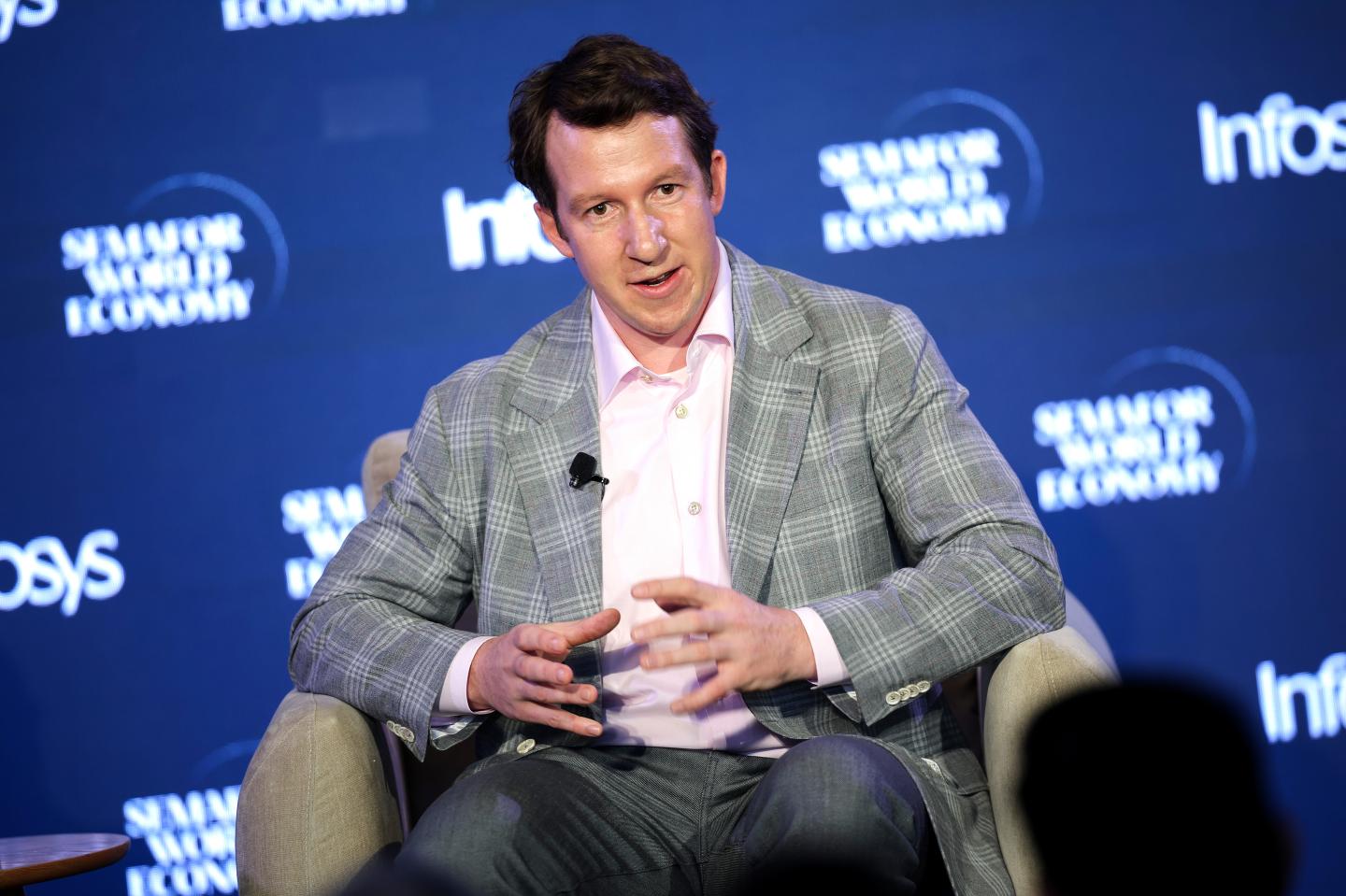
Jack Clark discussing his liberal arts background and AI at a conference:
The Five Principles in the Age of AI
Turn this article into a learning module. Connect Jack Clark's message to the five Voice Up principles — Collaboration, Humility, Precision, Patience, and Empathy — with discussion questions and a personal reflection on your purpose in the AI economy.
Why This Article Matters at Voice Up
This is not just a tech story. It is a story about what the AI age actually rewards. The people building the technology are telling us: rote programming is no longer the safe path.
Anthropic's own research finds AI can theoretically take over 94% of computer and math tasks. The creator of Claude Code says "coding is practically solved." And a literature graduate cofounded the company saying it.
The skill that matters most is synthesis — the ability to ask the right questions and collide insights across many different disciplines. That is the liberal arts. And that is purpose.
The Numbers Behind the Story
94%
of computer & math tasks AI can theoretically take over (Anthropic study)
5.7%
unemployment rate for recent college graduates as of June 2026
16%
increase in vocation-focused community college enrollment last year
50%
of entry-level white-collar jobs AI could eliminate (Amodei warning)
Key Quotes from the Article
A Literature Graduate Cofounded a Frontier AI Company
"I'm a literature graduate, and I don't think you'd put that as a cofounder of a frontier AI company, but what turned out to be useful is that I got to learn a lot about history and a lot about the kind of stories that we tell ourselves about the future."
Ask the Right Questions
"The really important thing is knowing the right questions to ask and having intuitions about what would be interesting if you collided different insights from many different disciplines."
Avoid Rote Programming — Pursue Synthesis
Clark says young people should avoid pursuing basic or "rote programming" and added the degrees that are going to become even more relevant in the future are the ones that involve "synthesis across a whole variety of subjects and analytical thinking about that."
The Stories We Tell About the Future
Clark says his literary education taught him "the kind of stories that we tell ourselves about the future. That's turned out to be, like, extremely relevant for AI in a way that I think people wouldn't have predicted."
The Liberal Arts & AI — A Parallel Timeline
Jack Clark's path from literature graduate to AI billionaire cofounder is not an accident — it is part of a larger story about what the AI age actually rewards. This timeline places his journey beside the events reshaping work, education, and what it means to be prepared.
Jack Clark
The liberal arts tradition is in decline in American higher education as the Cold War drives a national push toward science, engineering, and applied math.
The World
Dartmouth Conference (1956) coins the term "Artificial Intelligence." The field is founded by people who see computation as a humanistic discipline, not only a technical one.
Jack Clark
Jack Clark begins a career in journalism — a liberal arts path built on reading, writing, and asking questions. He does not study computer science.
The World
STEM enrollment has exploded. Between 2000 and 2015, science and engineering graduate enrollment grows by more than a third, driven partly by a spike in computer science interest.
Jack Clark
Clark transitions from journalism into AI policy and research communication, bringing his literature training with him. He learns to "collide insights from many different disciplines."
The World
Deep learning revolutionizes AI. Companies begin hiring philosophers, linguists, and ethicists alongside engineers to grapple with what the technology means.
Jack Clark
Jack Clark cofounds Anthropic — a frontier AI safety company — with Dario and Daniela Amodei. A literature graduate is now a cofounder of one of the world's most important AI labs.
The World
The liberal arts comeback quietly begins inside tech. Companies realize that building safe AI requires history, ethics, and the ability to think about the stories we tell ourselves about the future.
Jack Clark
Anthropic CEO Dario Amodei warns AI could eliminate half of all entry-level white-collar jobs. The company building the technology is also sounding the alarm about displacement.
The World
The unemployment rate for recent college graduates hits 5.7% — up from 3.6% before the pandemic. Young people feel the shift first.
Jack Clark
Boris Cherny, creator of Anthropic's Claude Code, says "coding is practically solved" and "we're going to start to see the title 'software engineer' go away." Rote programming is no longer the safe path.
The World
An Anthropic study finds AI can theoretically take over 94% of computer and math tasks. Microsoft's chief scientist Jaime Teevan says a liberal arts education will be essential for the metacognitive skills AI cannot replace.
Jack Clark
Clark tells young people: "The really important thing is knowing the right questions to ask and having intuitions about what would be interesting if you collided different insights from many different disciplines." He says to avoid rote programming and pursue synthesis.
The World
Vocation-focused community college enrollment increases 16% as some young people pivot to the trades. Others embrace the liberal arts as the skill set that AI cannot automate — flexibility, adaptability, critical thinking, and the ability to connect ideas across fields.
The skill the AI age rewards is not rote programming — it is synthesis. The ability to ask the right questions, to collide insights across disciplines, and to think critically about the stories we tell ourselves about the future. That is the liberal arts, and that is purpose.
Purpose, Career & Learning Connections
Jack Clark's message is not just about degrees — it is about what the AI age asks of us. Here is how his interview connects to the science of purpose, the future of work, and the skills that actually protect you when the ground shifts.
Synthesis Is the Skill AI Cannot Replace
Jack Clark says the degrees that will matter most involve "synthesis across a whole variety of subjects and analytical thinking about that." AI can write code and crunch data, but it cannot connect a poem to a policy or a history to a product the way a trained mind can.
Asking the Right Questions
"The really important thing is knowing the right questions to ask," Clark says. This is the heart of the liberal arts — learning to frame a problem, to see it from many angles, and to intuit what would be interesting if you collided different fields together.
Purpose in the AI Economy
Voice Up teaches that purpose is uncovered, not created. Clark's journey from literature graduate to AI cofounder is proof: your purpose is not your major. It is the thing you keep returning to — the questions you cannot stop asking — no matter what field you enter.
Metacognitive Skills Win
Microsoft's chief scientist Jaime Teevan says "metacognitive skills will be very important — flexibility, adaptability, experimentation." These are the skills a liberal arts education builds: thinking about how you think, and adjusting when the world shifts under you.
The Stories We Tell About the Future
Clark says his literature training taught him "the kind of stories that we tell ourselves about the future." AI is not just technology — it is a story about what humans are for. The people who can read, critique, and reshape that story are the ones who will shape it.
Who Gets to Belong?
When "coding is practically solved," the question is no longer who can code — it is who can think. A liberal arts path opens the AI economy to people who were told they were not technical enough. That is a question of access, equity, and purpose.
The AI age does not punish the liberal arts — it rewards them. The skill that cannot be automated is the one Voice Up has always taught: the ability to connect your lived experience to purpose, and your purpose to the world.
Liberal Arts & AI Future of Work Internship
Voice Up built a featured internship around this article. Study Jack Clark's message, connect it to the science of purpose and the future of work, and produce original content that helps young people find their place in the AI economy — fully remote, flexible hours, open to all students.