📥 Download the Full Case Study
Complete evidence base, learning framework, and the full Heritage → Purpose → Creation → Legacy arc — printable HTML.
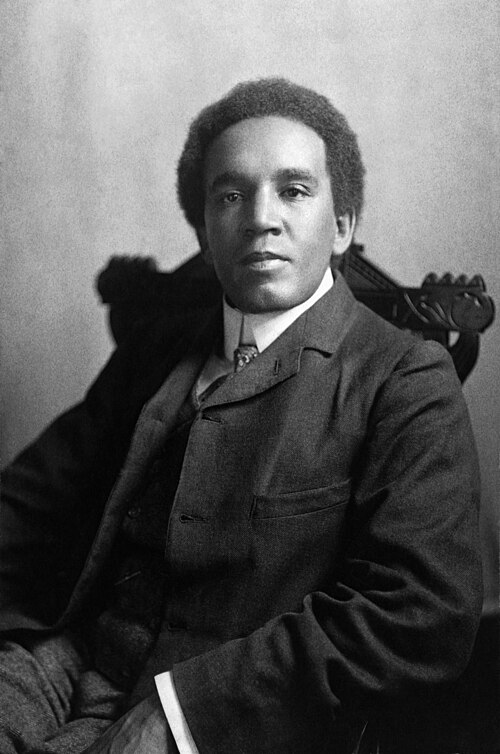
Samuel Coleridge-Taylor
A Case Study Addition to the Learning That Sticks Trilogy
What happens when purpose, heritage, and human excellence collide in a single life — between two continents, between two worlds.
The Complete Arc
Interactive Video Study
Watch the video, then explore each segment. Each portion connects to one of Voice Up's five core principles — Collaboration, Humility, Precision, Patience, and Empathy. Reflect on the question, and receive AI-guided feedback connecting your response to the Learning That Sticks framework.
Heritage & Roots
Coleridge-Taylor drew from both his English and African heritage. How did his ability to collaborate across two cultural worlds shape his artistic identity? Where in your own life do you bridge different worlds?
Please sign in to receive AI-guided feedback.
Training & Breakthrough
By age 20, Coleridge-Taylor had composed approximately 30 works. His precision in craft allowed his voice to be heard. What is one skill you are refining with precision right now, and how does mastery of detail serve your larger purpose?
Please sign in to receive AI-guided feedback.
Transatlantic Impact
African Americans adopted Coleridge-Taylor as a symbol of Black excellence. His music created empathy across an ocean. When have you felt truly seen by someone from a different background? What did that moment teach you about the power of empathy?
Please sign in to receive AI-guided feedback.
Civil Rights & Barriers
Coleridge-Taylor met President Roosevelt at the White House during the Jim Crow era — yet remained grounded in his mission. How does humility allow a person to carry great recognition without losing connection to their purpose?
Please sign in to receive AI-guided feedback.
Legacy & Recovery
Coleridge-Taylor died at 37, yet his story is still being recovered in 2026 — over a century later. What does his legacy teach us about patience? What in your life requires patience across a longer arc than you initially imagined?
Please sign in to receive AI-guided feedback.
Why This Case Study Belongs in the Trilogy
The trilogy establishes the theory. This case study shows all three principles operating in a single human life.
Heritage — Where does purpose come from?
Coleridge-Taylor's purpose was rooted in his mixed African and English heritage. He did not create his purpose — he uncovered it in the tension between two worlds, exactly as Book 1 (Fuller Road: The Science of Purpose) describes.
Purpose — How does real transformation happen?
His growth as a composer followed the model from Book 2 (Learning That Sticks): Conversation → Reflection → Action → Evaluation. Each composition was a cycle of connection, reflection, creation, and refinement.
Legacy — How do we apply this to real lives?
His story is the application stage from Book 3 (Fuller Road: Connecting to Purpose). One life changed music on two continents. A system of conversations — the Coleridge-Taylor Society, his American tours — changed a nation's understanding of Black excellence.
Together, the trilogy and this case study form a complete picture: the theory of human development, validated by a real human life.
Samuel Coleridge-Taylor (1875–1912)
A Case Study Addition to the Learning That Sticks Trilogy
"What happens when purpose, heritage, and human excellence collide in a single life — between two continents, between two worlds?"
Samuel Coleridge-Taylor was a British composer, conductor, violinist, and educator of mixed African and English heritage. Born in Croydon, England, in 1875, he entered the Royal College of Music at age 15 and by 20 had produced approximately 30 compositions. His breakthrough, Hiawatha's Wedding Feast (1898), became one of Britain's most popular choral works — compared to Handel's Messiah. He died of pneumonia in 1912 at only 37 years old — yet his story is still being recovered and celebrated today.
Heritage → Purpose → Creation → Legacy
Inside, you'll discover:
- How mixed heritage became the root of his artistic purpose — not a barrier, but a foundation
- How his growth followed the Conversation → Reflection → Action → Evaluation model from Learning That Sticks
- How one life created a system of conversations that changed transatlantic understanding of Black excellence
- Why his story is still being recovered in 2026 — and what that tells us about the Naming Gap
- Evidence-based connections to funds of knowledge, narrative identity, self-determination, and cultural capital theory
Coleridge-Taylor did not start from zero. He already had the foundation — his heritage, his lived experience, his connection to two worlds. What he did was connect that foundation to purpose, and purpose to creation, and creation to legacy. That is the heart of the Learning That Sticks trilogy, lived out in a single human life.
What does purpose, connection, and application look like in a single human life?
Evidence-Based Connections
This case study grounds the Learning That Sticks trilogy in a real human life — showing how purpose, connection, and application operate when the principles of the trilogy are lived out across racial, cultural, and national boundaries.
Funds of Knowledge Framework
Luis Moll
Funds of Knowledge for Teaching (1992)
Individuals possess valuable knowledge that institutions fail to recognize. Coleridge-Taylor's African diasporic heritage was a fund of knowledge that European institutions initially failed to recognize but that became the source of his greatest artistic power. His story is the Naming Gap in reverse.
Narrative Identity Theory
Dan McAdams
The Stories We Live By (1993)
People develop identity through meaning-making and personal narrative. Coleridge-Taylor's life is a narrative identity constructed between two worlds — English and African, classical and diasporic. His compositions were acts of narrative meaning-making, precisely what Book 1 describes.
Self-Determination Theory
Edward Deci & Richard Ryan
Self-Determination and Intrinsic Motivation in Human Behavior (1985)
Engagement drives retention. Coleridge-Taylor's drive was intrinsic motivation rooted in autonomy, competence, and relatedness. His story demonstrates that the conditions for durable growth described in Book 2 can operate even under systemic racial constraint.
Cultural Capital Theory
Pierre Bourdieu
The Forms of Capital (1986)
Coleridge-Taylor possessed classical cultural capital and diasporic cultural capital. His genius was in converting the latter into the former — making African diasporic music legible within European classical institutions. This is the transfer of learning described in Book 3.
Transfer of Learning
John Dewey
Experience and Education (1938)
Learning matters when it transfers to real contexts. Coleridge-Taylor's music transferred across continents. The Coleridge-Taylor Society and his American tours are the application stage: one composition changed a life; a system of conversations changed a nation's understanding of Black excellence.
Experiential Learning Theory
David Kolb
Experiential Learning: Experience as the Source of Learning and Development (1984)
Experience → Reflection → Application. Coleridge-Taylor's compositional process embodied this cycle. His 24 Negro Melodies (1905) are a direct artifact — lived experience transformed into enduring artistic contribution. This is the mechanism Book 2 describes, made visible in a single creative life.
Life Timeline
Born in Croydon, England — mixed African and English heritage
Entered the Royal College of Music at age 15 on a violin scholarship
Composed 5 Fantasiestücke, Op. 5 — praised in The Times for originality
Hiawatha's Wedding Feast — became one of Britain's most popular choral works
Coleridge-Taylor Society established in Washington, D.C.
First American tour — met President Theodore Roosevelt at the White House
First Black man to conduct a white orchestra in the United States
Composed 24 Negro Melodies — African diasporic music in classical form
Died of pneumonia at only 37 years old
Previously unknown composition discovered at the Royal College of Music
151 years after his birth — his story is still being recovered and celebrated
🔗 How This Case Study Connects to the Trilogy
The trilogy provides the theory. This case study provides the lived example. Together, they form a complete picture of human development.
Book 1
Fuller Road: The Science of Purpose
Book 2
Learning That Sticks
Book 3
Fuller Road: Connecting to Purpose
The Big Picture
Coleridge-Taylor's life is the trilogy in a single human being: purpose uncovered in heritage, learning that stuck through connection, and purpose applied at scale to change transatlantic understanding of Black excellence.