Breaking Down the Broadcast
Seven themes from one full episode — connected to the real world and to your purpose.
A Message from the Founder
Art Fuller
This is the fourth episode in our Current Events series. We take a full PBS NewsHour broadcast and break it into sections so you can see the themes that connect our world — and connect them to your purpose.
We use writing, rhythm, song, video, dance, and theater to create and share something we believe will stand the test of time by elevating our voice.
The news can feel like a flood of headlines with no clear meaning. But inside every broadcast are themes that connect to our communities, our values, and our purpose.
In this breakdown, we watch the full PBS NewsHour episode from September 11, 2026, the twenty-fifth anniversary of the 9/11 attacks, and learn to see the through-lines: the memory of a nation, the threat to global trade, the rhythm of the economy, the practice of democracy, the reflection of a leader, the long shadow of war, and the art of civil disagreement.
Each theme becomes a focused track of study, reflection, and action — grounded in Voice Up's five core principles of Collaboration, Precision, Empathy, Humility, and Patience.
How This Connects to Purpose & Writing
Connecting to Purpose, Writing, and Reflection
Connecting to Purpose
Each episode breakdown is designed to help you find the themes that connect to your purpose. When you study the news through the lens of what matters to you, you build a habit of purposeful engagement with the world.
Writing & Reflecting
Each theme track invites you to write and reflect — turning what you watch into what you think, feel, and believe. Writing about what you learn helps you process complex ideas and find your own voice.
Backed by Research From Multiple Sources
People with a strong sense of purpose show lower stress hormones and reduced inflammation.
Journal of Research in Personality
A clear life purpose is linked to better sleep, fewer chronic conditions, and longer life.
University of Rochester Medical Center
Expressive writing for 15–20 minutes strengthens immune function and improves physical health.
Pennebaker & Beall (1986)
Purpose-driven adults have a 15% lower risk of dying during a given study period.
Harvard T.H. Chan School of Public Health
Research from many different sources shows that living with purpose and writing regularly each have real, measurable health benefits — from lower stress and better sleep to stronger immune function and longer life. Together, purpose and writing are even more powerful.
Source broadcast: PBS NewsHour full episode, September 11, 2026 · 56:46. Each theme below is drawn directly from a segment of this broadcast.
Seven Theme Tracks
Each theme was drawn directly from the segments of this broadcast. Interns choose a primary track and explore how it connects to the others — and to their own purpose.
Memory, Loss & National Unity
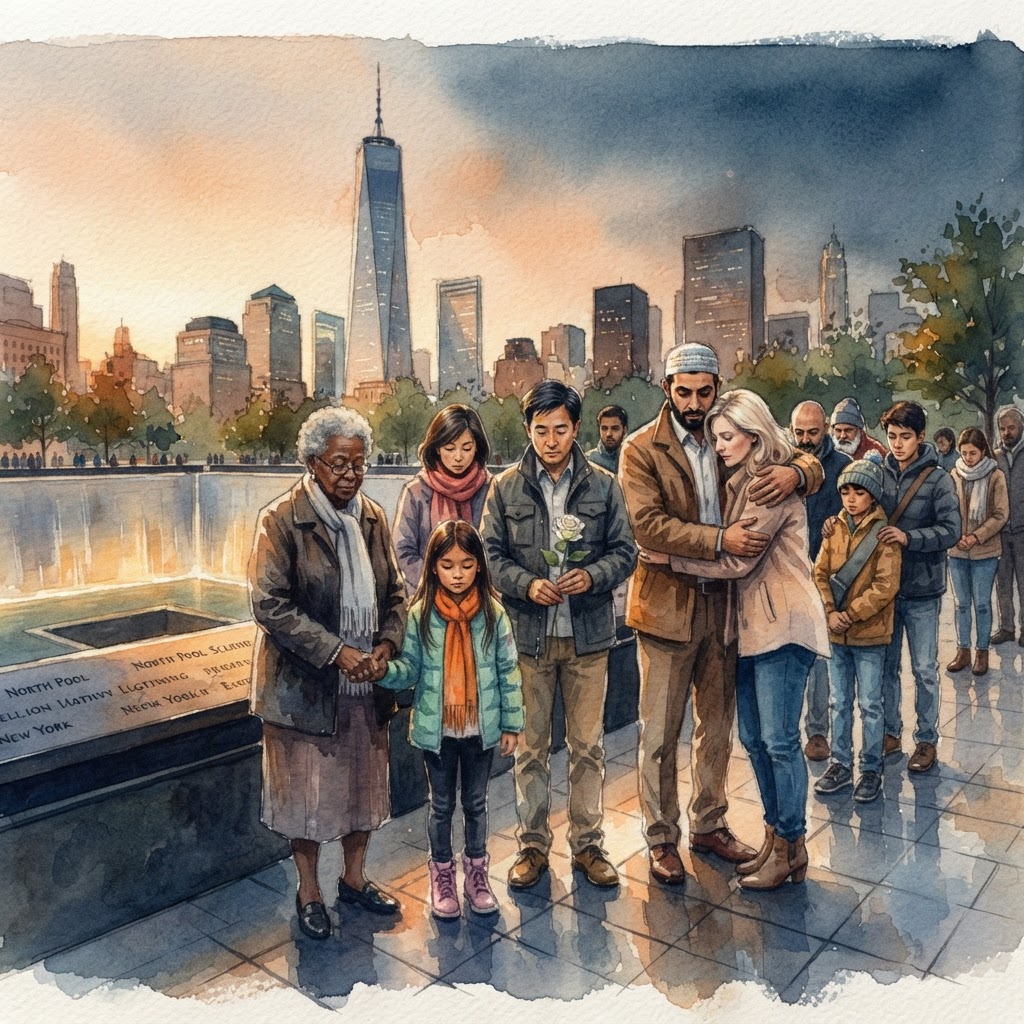
Americans Remember Lives Lost in 9/11 Attacks 25 Years Ago
People in This Segment
- Geoff Bennett — PBS NewsHour Co-Anchor
- Amna Nawaz — PBS NewsHour Co-Anchor
- Family Members of Victims — Reading Names at Ground Zero
- President Donald Trump — Speaking at the Pentagon Memorial
- Condoleezza Rice — Former U.S. Secretary of State
- Greg Carafello — 9/11 Survivor
- Sonia Argon — Ground Zero Recovery Worker
Easy Summary
Americans marked the 25th anniversary of the September 11 attacks with ceremonies in New York, at the Pentagon, and in Shanksville, Pennsylvania. Family members read the names of the 2,977 people who died. The segment looks at how the country came together after the attacks, how that unity has faded, and how a new generation, more than 100 million Americans not yet born that day, is learning to remember.
Internship Focus
Interns study how a nation remembers tragedy, how memory shapes identity, and how the stories we tell about the past connect to the values we carry forward. They practice writing about loss and remembrance with empathy and precision, and explore how purposeful storytelling can help a divided country find common ground.
Global Trade & Geopolitical Conflict
Iran-Backed Houthis Seize Island at Entrance to Red Sea
People in This Segment
- Ali Rogin — PBS NewsHour Correspondent
- Houthi Fighters — Featured in the Report
- Saudi-Backed Yemeni Government Forces — Cited in the Segment
- Shipping and Trade Analysts — Quoted on Global Impact
Easy Summary
Iran-backed Houthi rebels captured the strategic island of Mayun at the entrance to the Red Sea, threatening one of the world's key shipping lanes for oil exports. Saudi-backed forces withdrew without a fight. The segment looks at how this could disrupt global trade and how the conflict connects to the wider war in the region.
Internship Focus
Interns study how local conflicts connect to global trade, how shipping choke points affect everyday prices, and how geopolitical power struggles shape the lives of ordinary people. They learn to explain complex international stories in plain words and to ask who is most affected when the world's supply lines are threatened.
Economic Literacy & Daily Life
News Wrap: August Inflation Report Shows Prices Up 3.4%
People in This Segment
- Geoff Bennett — PBS NewsHour Co-Anchor
- Amna Nawaz — PBS NewsHour Co-Anchor
- PBS NewsHour News Team — Daily Headlines Roundup
Easy Summary
The news wrap covers the day's top headlines, led by the August inflation report showing prices up 3.4 percent. The segment rounds up major national and international stories, giving viewers a snapshot of the day's most important developments in a quick, fact-based format.
Internship Focus
Interns practice economic literacy, learning to read inflation reports and connect numbers to real household budgets. They learn to separate fact from spin, track daily headlines with precision, and ask what each economic story means for everyday people.
Civic Engagement & Political Analysis
Unconventional Convention — Trump Remains Focus of GOP's Midterm Campaign
People in This Segment
- PBS NewsHour Correspondents — Reporting from the Convention
- Republican Party Officials — Featured in the Segment
- Voters and Community Members — Cited in the Report
Easy Summary
Republicans wrapped up their first-ever midterm convention, with Donald Trump remaining the focus of the party's campaign heading into the elections. The segment looks at whether the convention gave the party the boost it needs and how the party is defining its identity for voters.
Internship Focus
Interns study how political conventions shape public opinion, how parties define their message, and how voters make decisions. They learn to read political coverage with precision, ask what each campaign promise means for real communities, and practice balanced, purposeful civic analysis.
Leadership, Reflection & Lessons Learned
Hillary Clinton Reflects on the Losses and Lessons of 9/11
People in This Segment
- Hillary Clinton — Former U.S. Secretary of State
- PBS NewsHour Interviewer — Conducting the Conversation
Easy Summary
Former Secretary of State Hillary Clinton sat down to reflect on the losses and lessons of 9/11, 25 years later. She spoke about the attack on the nation, how the country came together, and what was gained and lost in the years that followed. The segment is a personal, reflective conversation about a defining moment in American history.
Internship Focus
Interns study how leaders reflect on difficult decisions, how personal experience shapes public service, and how lessons from the past can guide the future. They learn to conduct and write reflective interviews with empathy and precision, and to explore how a leader's lived experience connects to their purpose.
War, Nation-Building & Long-Term Consequences
9/11 Changed Afghanistan, but Now It's Back Where It Started
People in This Segment
- PBS NewsHour Correspondents — Reporting on Afghanistan
- Afghan Citizens — Featured in the Segment
- Foreign Policy Analysts — Cited in the Report
- Veterans and Military Families — Referenced in the Story
Easy Summary
After 9/11, the U.S. went to war in Afghanistan, the longest war in American history. Now, the segment shows, Afghanistan is back where it started, with the Taliban back in power. The report looks at what the war cost in lives and years, what was accomplished, and what was lost, and asks what it means for the future.
Internship Focus
Interns study the long-term consequences of war, how nation-building efforts succeed and fail, and how the stories we tell about war shape future decisions. They learn to write about complex, painful history with humility and precision, and to ask who bears the cost when a country goes to war.
Media Literacy & Civil Discourse
Brooks & Capehart on the GOP's Midterm Identity
People in This Segment
- David Brooks — New York Times Columnist
- Jonathan Capehart — Washington Post Columnist
- Geoff Bennett — PBS NewsHour Co-Anchor (Moderator)
Easy Summary
Columnists David Brooks and Jonathan Capehart discuss the GOP's midterm identity and the week's political news. Their conversation models civil disagreement, showing how two people with different views can talk honestly about the same events and help viewers think more clearly about what they believe.
Internship Focus
Interns study how civil discourse works, how commentators with different views can model respectful disagreement, and how media literacy helps people form their own opinions. They learn to listen across difference, to write balanced analysis, and to practice the Voice Up principle of understanding more than one perspective.
What Interns Do
- Watching and analyzing this PBS NewsHour episode, identifying the key themes and how they connect to each other.
- Writing reflective summaries that turn complex current events into clear, purpose-driven stories for everyday readers.
- Researching one theme in depth — its history, the people involved, and its real-world impact on communities.
- Connecting each theme to the five core principles of Voice Up: Collaboration, Precision, Empathy, Humility, and Patience.
- Producing a short written, audio, or video piece that helps others understand a current event and find their role in it.
- Joining weekly cohort discussions that examine how the news connects to purpose, action, and community.
- Tracking personal growth in civic literacy, empathetic communication, and purposeful engagement with the world.
Who Should Apply
- Curiosity about the world and a real desire to understand current events beyond the headlines.
- Strong reading, writing, and critical thinking skills.
- Empathy for different perspectives and lived experiences.
- Ability to pull together information from credible journalistic sources.
- Commitment to honest, balanced, and purposeful communication.
- Willingness to engage respectfully with complex and sometimes difficult topics.
What You'll Gain
- Analyze a full news broadcast and identify the themes that connect its segments.
- Turn complex geopolitical, civic, and historical stories into plain language.
- Connect current events to your own purpose and to community action.
- Apply the five core Voice Up principles to the practice of informed citizenship.
- Produce purposeful media (written, audio, or video) that helps others engage with current events.
- Build a lasting habit of informed, reflective engagement with the world.
Program Details
100% Remote
Format
Flexible (4–8 weeks)
Duration
Academic credit available
Credit
This is the fourth episode breakdown in our Current Events series. Future episodes will be added over time, building an ongoing library of purposeful engagement with the news.