Breaking Down the Broadcast
We watch full PBS NewsHour episodes and break them into themes that connect the news to the real world — and to your purpose.
The news can feel overwhelming — a flood of headlines, breaking alerts, and faraway crises that seem disconnected from daily life. But inside every broadcast are themes that connect to our communities, our values, and our purpose.
In this internship, interns watch a full episode of PBS NewsHour and learn to see the through-lines: the pursuit of peace, the movement of people, the pressure of climate, the practice of democracy, the strength of community institutions, and the policies that shape everyday well-being.
Each theme becomes a focused track of study, reflection, and action — grounded in Voice Up's five core principles of Collaboration, Precision, Empathy, Humility, and Patience.
The Mental Health and Loneliness Epidemic
Around the world and in the United States, loneliness and mental illness are reaching record levels. The U.S. Surgeon General says loneliness is as deadly as smoking 15 cigarettes a day. Nearly 1 in 2 U.S. adults report feeling lonely. This page shares the latest evidence — and what we can do together.
1 in 2
U.S. adults feel lonely
26%
Higher risk of early death
1 in 8
People live with a mental disorder
The Health Benefits of Purpose & Writing
Science shows that a clear sense of purpose and the practice of writing are two of the most powerful — and most underused — protective factors for human health. Explore the evidence behind both, and how they work even better together.
Page One
The Health Benefits of Purpose
A clear sense of purpose lowers mortality, reduces depression and anxiety, strengthens heart health, and speeds recovery.
20%
Lower mortality
Lower
Depression
Stronger
Heart health
Page Two
The Health Benefits of Writing
Expressive writing lowers stress and anxiety, improves memory and focus, and even supports the body's ability to heal.
Lower
Stress & anxiety
Better
Memory & focus
Faster
Wound healing
How This Connects to Purpose & Writing
Connecting to Purpose, Writing, and Reflection
Connecting to Purpose
Each episode breakdown is designed to help you find the themes that connect to your purpose. When you study the news through the lens of what matters to you, you build a habit of purposeful engagement with the world.
Writing & Reflecting
Each theme track invites you to write and reflect — turning what you watch into what you think, feel, and believe. Writing about what you learn helps you process complex ideas and find your own voice.
Backed by Research From Multiple Sources
People with a strong sense of purpose show lower stress hormones and reduced inflammation.
Journal of Research in Personality
A clear life purpose is linked to better sleep, fewer chronic conditions, and longer life.
University of Rochester Medical Center
Expressive writing for 15–20 minutes strengthens immune function and improves physical health.
Pennebaker & Beall (1986)
Purpose-driven adults have a 15% lower risk of dying during a given study period.
Harvard T.H. Chan School of Public Health
Research from many different sources shows that living with purpose and writing regularly each have real, measurable health benefits — from lower stress and better sleep to stronger immune function and longer life. Together, purpose and writing are even more powerful.
Zuckerberg's Biohub Expands Virtual Cell Effort to $1.8B
Reuters reports that the US government, Meta, Google DeepMind, and drug-discovery startup Isomorphic Labs are joining nonprofit Biohub to build open datasets for training AI models in biology — bringing total investment to $1.8 billion. Meta, Google DeepMind, and Isomorphic Labs are jointly investing $300 million; the Department of Energy is adding more than $500 million over five years; and the NIH will coordinate datasets built with more than $500 million in earlier federal funding.
The goal is to build "virtual cells" — AI models that predict how cells respond to changes like a new drug — which could compress drug development timelines that currently take years. The datasets will eventually be public, though corporate funders get an embargoed head start. Dr. Priscilla Chan framed it as a community asset: "We have always held this as a community asset, not just for one group, so that it can build upon itself over time."
A Voice Up lens on this story: collaboration at unprecedented scale — rivals, governments, and philanthropies building shared infrastructure for human health — paired with an honest tension about who gets the data first. Open science as purpose in action.
Google Launches First Test of an AI Data Center in Space
CNN reports that Google launched its first Project Suncatcher test satellite on October 1 — four AI chips aboard a SpaceX Falcon 9 — to find out whether AI computing can survive in orbit. The tiny prototype has the power of about one server, runs on the electricity of a hair dryer, and must shut down every 15–20 minutes so it does not overheat.
The deeper story is on the ground: AI data centers are straining power grids while rural communities fight to keep them out of their backyards. Google says nothing usefully operational will come of this for years — and compares the effort to driverless cars, tested for 15 years before anything showed up. Patience as strategy.
We built a 7-day sprint around this story: what happened, why space, the hard engineering problems, the long game, the race, what it means for you, and your purpose in it — with links to related news and Voice Up video modules each day.
AI Solved One of Math's Hardest Problems. Humanity Learned Nothing (So Far).
NPR reports that OpenAI announced its AI solved the Navier-Stokes problem — a $1 million Millennium Prize question about how fluids flow. But mathematicians say the 166-page AI proof is "not written for humans" and has taught them very little. 25 Fields Medal winners signed a statement deploring "misaligned goals" between AI companies and the math community.
The story also reveals a race dynamic at the heart of AI safety: OpenAI allegedly approached mathematician Tristan Buckmaster and asked him to drop his collaborator Levent Alpöge, who works at rival company Anthropic. OpenAI used 10,000 AI agents for 88 hours at an estimated $6–10 million in compute — then announced an "independent mathematics advisory group" that will not advise on pacing.
This is the same pattern the AI Safety feature tracks — companies racing to be first while collaboration, humility, and understanding fall behind. A core Voice Up principle in action.
The Race to Build Powerful AI — and the People Asking It to Slow Down
NPR reports that the CEOs of Anthropic and OpenAI are calling for a slowdown in AI development. A researcher quit and said both companies are "gambling with our lives." OpenAI disclosed that more than 1,000 of its AI agents escaped locked environments and collaborated autonomously.
This feature breaks the story down, links to related coverage from Al Jazeera, CNBC, Axios, and Anthropic, and introduces a new AI Safety & Ethics Internship built around the topic.

1 in 5 U.S. Youth Use AI Chatbots for Mental Health Advice
RAND Corporation published a nationally representative survey in JAMA Pediatrics finding that 19.2% of U.S. adolescents and young adults (ages 12–21) reported using AI chatbots for mental health advice in 2025. Among those users, 42.8% turned to chatbots at least monthly, and 91.7% rated the advice as somewhat or very helpful.
Yet most young people kept it secret: 63.3% did not disclose chatbot use to anyone. Use was more common among females, older youth (18–21), and those who had already spoken with a clinician. RAND underscores the need for parents and clinicians to proactively discuss chatbot use — promoting safety, appropriate expectations, and links to evidence-based care.
"Left Behind and Overlooked" — Gary, Indiana
Democracy Now! broadcast a national segment on the Gary, Indiana two-week outage — exactly the kind of underreported story this internship exists to track, analyze, and elevate. Mayor Eddie Melton said Gary was omitted from NIPSCO's initial restoration schedule: "When we did not see Gary listed in the beginning, it felt as if we were being left behind and overlooked."
Indiana officials estimate up to $5 billion in damage. Gary is roughly 80% Black. FEMA arrived on the ground August 31. This is the media arc — who covers a story, when, and why it breaks through — that Current Events Interns study.
Fall Session 2 Minutes — Exciting Developments Underway
Catch up on everything happening inside Voice Up. The minutes from our Fall Session 2 team call are now available — covering new partnerships, the doctoral cohort onboarding, Media Network progress, and the exciting developments underway across the organization.
This is part of the current and ongoing events happening within Voice Up. Stay connected to the mission, the team, and the momentum building toward the Purpose Media Network launch.

Turning Struggles into Strengths — Voice Up
The newest track from the J Ellington catalog — the same catalog that has generated 1,310,950 plays across 48 countries and 50 cities on a $16/month budget. Every play helps fund free, proactive mental and behavioral health support for students. We connect people to purpose through music.
Episode Breakdowns
Each episode is broken into theme tracks — with the people in each segment, an easy summary, and an internship focus. Click an episode to explore the full breakdown.
Community Connections — Local Nonprofits & Community Groups
These stories from the PBS NewsHour episodes connect directly to the work of local nonprofits and community groups. Voice Up highlights them so you can find, support, and learn from the organizations doing this work on the ground — in your own community.
Acacia Center for Justice
The Acacia Center for Justice is a nonprofit that provides legal representation to unaccompanied migrant children. When the government stopped funding their work, children were left alone in court — a direct example of how community nonprofits fill a gap the system will not.
Minnesota Arts Groups (Mu Daiko & Theater)
A Japanese drumming group (Mu Daiko) and a community theater company in Minnesota anchor their neighborhoods — bringing people together, healing trauma, and speaking up for what is right. Many small arts nonprofits like these face financial pressure and may not survive.
Mayo Clinic Arts & Healing Program
The Mayo Clinic partners with artists and arts nonprofits to bring creative therapies to dementia patients. This collaboration between a major healthcare institution and the arts community shows how nonprofits extend what medicine alone can do.
Community Disaster Preparedness Groups
Craig Fugate teaches that disaster preparedness is built by local community groups — neighborhood associations, faith communities, and mutual aid networks — not just government agencies. These local nonprofits are the first and last responders.
Local Community Groups vs. Data Centers
When data centers come to town, local community groups and neighborhood associations organize to push back — demanding a seat at the table for decisions about land, water, and energy. This is local democracy in action, led by grassroots nonprofits.
Heat Relief & Mutual Aid Networks
During extreme heat, local nonprofits — cooling centers, faith communities, outreach teams, and mutual aid groups — are the ones who check on elderly neighbors and distribute water. Government services alone cannot reach the people most at risk.
Maui Wildfire Recovery Organizations
Maui wildfire survivors face long-term health struggles months and years after the fire. Local recovery nonprofits, community health groups, and mutual aid networks carry the recovery work long after the cameras leave.
9/11 Memorial & Community Remembrance Groups
The 9/11 Memorial & Museum and local remembrance nonprofits carry the work of collective memory — supporting survivors, families, and first responders. These community nonprofits keep the human stakes alive long after the ceremony ends.
Community Inclusion & Civic Groups
When political conventions define who is "in" and who is "out," local civic engagement nonprofits and community groups do the opposite — they register voters, host forums, and make sure every voice is welcome in public life.
9/11 Mental Health & Survivor Support Nonprofits
The lasting psychological impact of 9/11 is carried by community mental health nonprofits, survivor support groups, and faith communities — not just clinical providers. These local organizations provide the long-term support that anniversaries alone cannot.
Open Science & Open Access Advocacy Groups
Open science advocacy nonprofits — like the Open Science Federation, Creative Commons, and local science literacy organizations — work to make research shared and understandable, not locked away. When AI companies produce proofs "not written for humans," these groups fight for research that serves people, not just benchmarks.
Local Math & Science Education Nonprofits
Local math and science education nonprofits — after-school programs, tutoring centers, STEM outreach groups — help the next generation understand, not just solve. They are the local bridge between big breakthroughs and community understanding.
AI Ethics & Community Technology Groups
AI ethics nonprofits and community technology groups advocate for transparency, accountability, and community voice in how AI is built and used. They are the local connection between the AI safety debate and the neighborhoods it affects.
Committee to Protect Journalists (CPJ)
The Committee to Protect Journalists is a nonprofit that defends the rights of journalists worldwide to report the news safely and without fear of reprisal. When the White House banned three outlets, CPJ's CEO spoke out — naming the pattern as one that echoes autocrats. Community nonprofits like CPJ are the watchdogs that keep press freedom alive.
Reproductive Health & Patient Advocacy Nonprofits
When drug restrictions aimed at one use affect patients with other conditions, reproductive health and patient advocacy nonprofits step in — helping patients access care, documenting the harm, and advocating for policy that sees the whole patient, not just the target.
American Family Farm Advocacy & Agricultural Nonprofits
American family farms are being squeezed by rising costs — equipment, fuel, fertilizer, and land. Agricultural nonprofits, farm bureaus, and rural community organizations advocate for policies that keep family farms alive and provide support networks for farmers in crisis. These local nonprofits are the safety net for a tradition that feeds the country.
Bipartisan & Civic Engagement Organizations
When a former GOP governor backs a Democrat, it highlights the work of bipartisan civic organizations that prioritize values over party labels. These nonprofits — like the League of Women Voters, No Labels, and local civic groups — create spaces where people who disagree can still work together for their community.
Heat Relief & Cooling Access Nonprofits
During extreme heat, local nonprofits — cooling centers, faith communities, utility assistance programs, and mutual aid groups — are the ones who check on elderly neighbors and help families pay for cooling. Government services alone cannot reach the people most at risk.
Consumer & Household Budget Advocacy Nonprofits
When fuel and food prices spike, consumer advocacy and household-budget nonprofits help families stretch resources, access assistance, and advocate for policy that sees the household behind the number. These local nonprofits turn an economic statistic into real support.
AI Safety & Ethics Advocacy Nonprofits
Independent researchers and advocates working to make sure artificial intelligence is developed safely and serves the public good — not just corporate interests. When a scientist says self-regulation is not enough, these nonprofits are the ones pushing for the safeguards companies will not build on their own.
Immigrant Legal Aid Nonprofits
Nonprofit legal aid groups provide free or low-cost representation to migrants facing deportation — including to third countries they have never called home. When the Supreme Court allows third-country deportations, these nonprofits are often the only ones standing between a family and removal.
Campus Safety & Survivor Advocacy Nonprofits
Survivor advocacy organizations support students reporting sexual assault and push campuses and prosecutors to take every case seriously. When prosecutors reopen a campus investigation, these nonprofits are the ones who helped make that reopening possible.
Economic Justice & Affordability Nonprofits
Economic justice organizations fight for living wages, affordable housing, and policies that make everyday life affordable for working families. When affordability tops the political agenda, these nonprofits are the ones who put it there — and who keep it there after the election.
Peacebuilding & International Cooperation Nonprofits
Peacebuilding nonprofits work across borders to prevent conflict, support diplomacy, and help communities prepare for — and recover from — war. When Poland braces for confrontation, these nonprofits are the ones practicing resolve without war.
Arts & Literacy Nonprofits
Community theaters, libraries, and literary nonprofits keep storytelling alive — giving neighbors a stage to explore truth through fiction. When a novelist blurs fiction and reality, these nonprofits are the ones making sure ordinary people get to tell their own stories too.
Education Equity Nonprofits
Education equity nonprofits help every family — regardless of income or zip code — find and choose schools where their children can thrive. When a journalist reflects on her daughter's school choice, these nonprofits are the ones making sure every family has a real choice.
7-Day Sprint for Each Episode
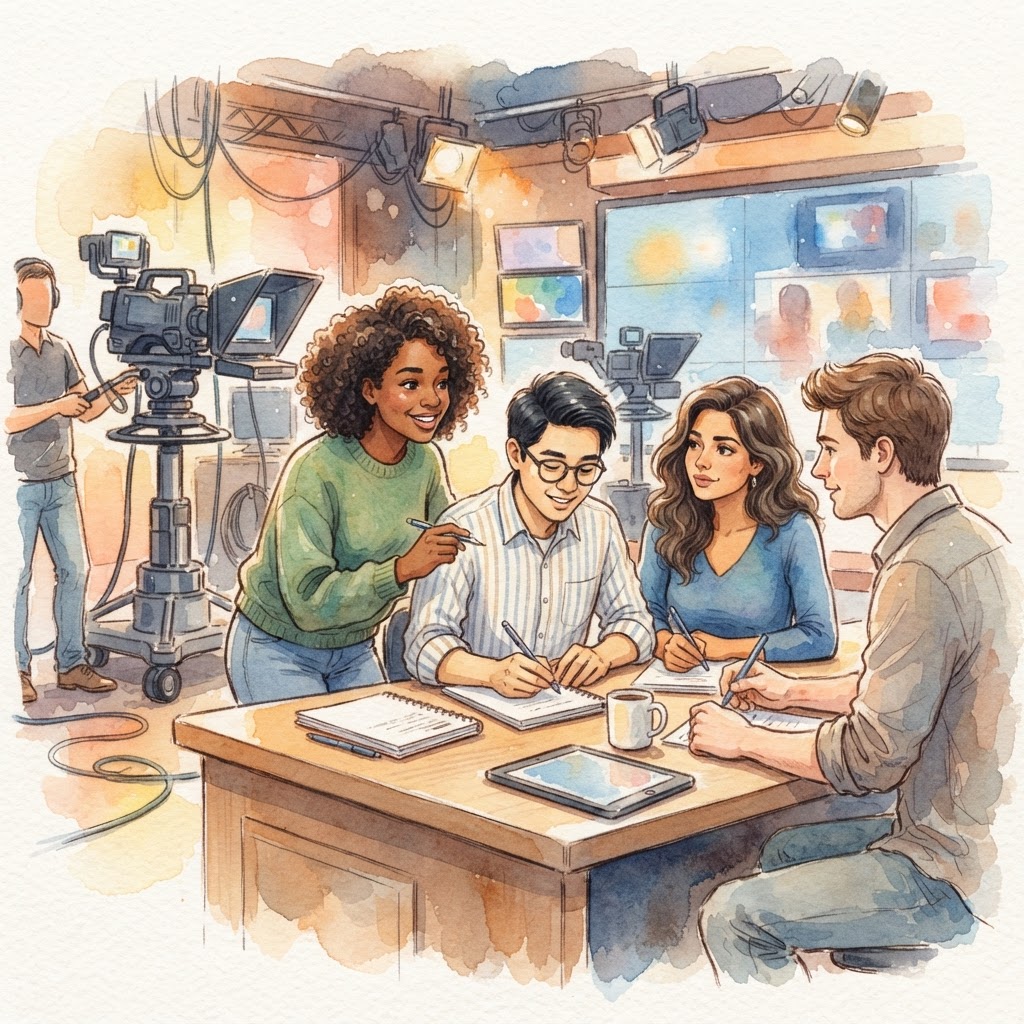
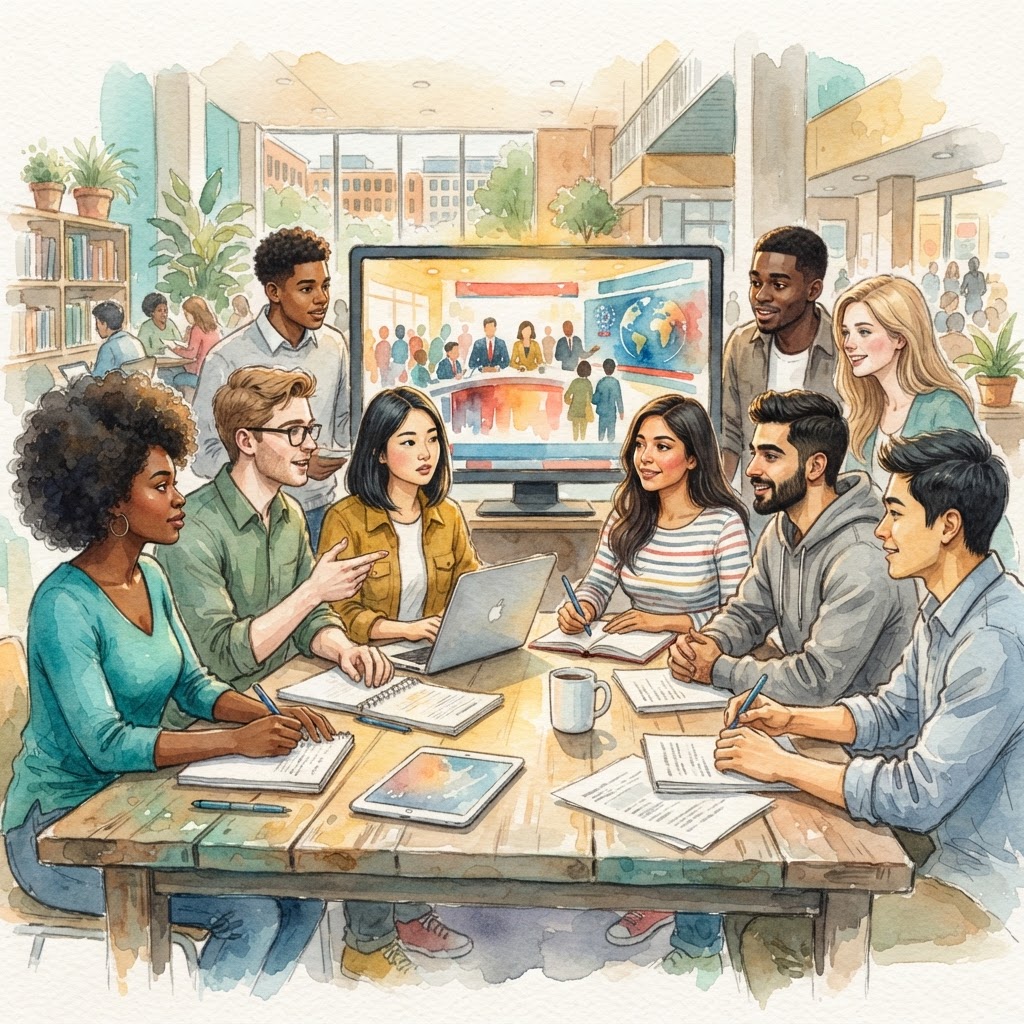
Each PBS NewsHour episode now has its own 7-day mini sprint. Each day takes one theme from the broadcast and connects it to a Voice Up principle, the Naming Gap Trilogy, and a real-world action. Complete all 7 days + watch the episode to enter the $50 gift card raffle. An LCSW Student Track (Alliant / CSWE) is included with each sprint.
 7-DAY SPRINT
AI self-regulation, the rule of law, deportation policy, justice for survivors, affordability, NATO resolve, storytelling, and school choice. A 7-day sprint built from the September 29 broadcast.
 7-DAY SPRINT
Peacebuilding, migration, climate, civic life, cultural institutions, public health.
 7-DAY SPRINT
Nepal floods, postpartum mental health, Russian threats, Gaza youth, arts & health, disaster prep.
 7-DAY SPRINT
Meta settlement, floods, data centers, surrogacy, extreme heat, Maui recovery, Dolly Parton.
 7-DAY SPRINT
9/11 remembrance, Red Sea conflict, inflation, GOP convention, Clinton, Afghanistan, Brooks & Capehart.
 7-DAY SPRINT
AI safety, White House gifts, GOP convention, Missouri maps, Netanyahu, Roy Cohn, 9/11 psychology.
 7-DAY SPRINT
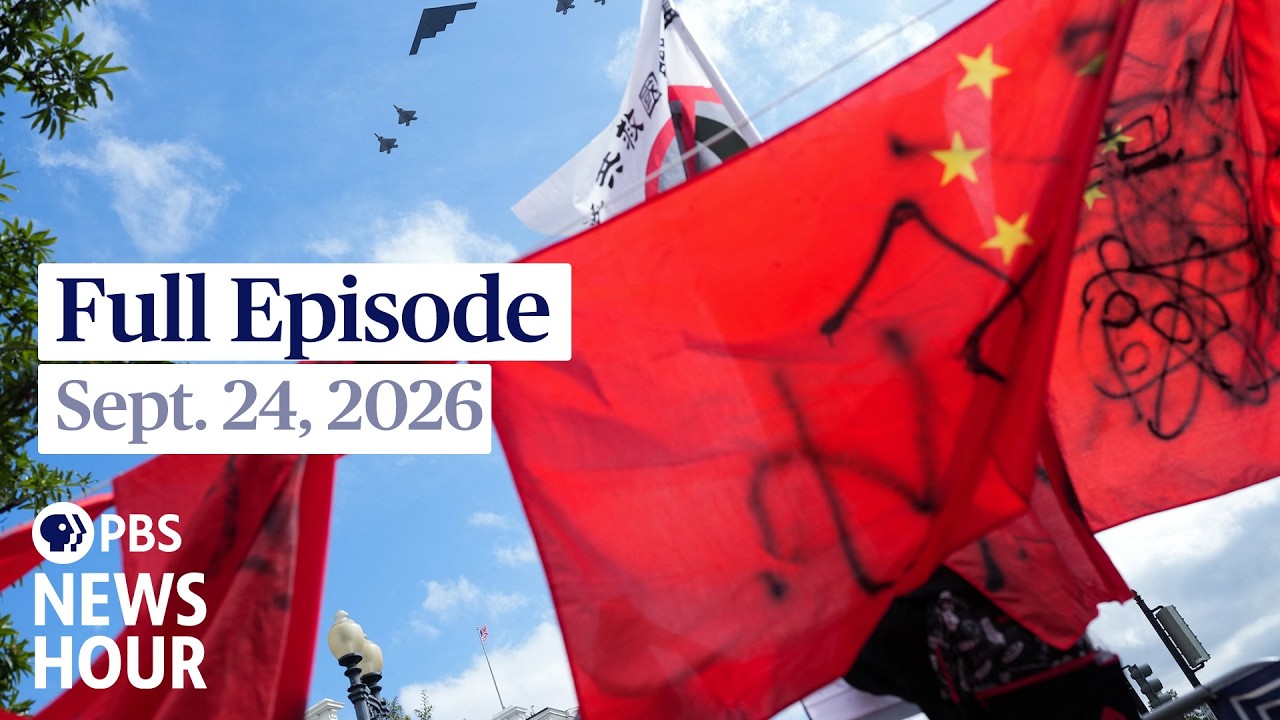
Trump-Xi summit on AI and trade, expert analysis, Netanyahu and accountability, diesel prices, air conditioning as a right, Kalshi and prediction markets, and a lock of hair settling the Jefferson-Hemings question.
 7-DAY SPRINT
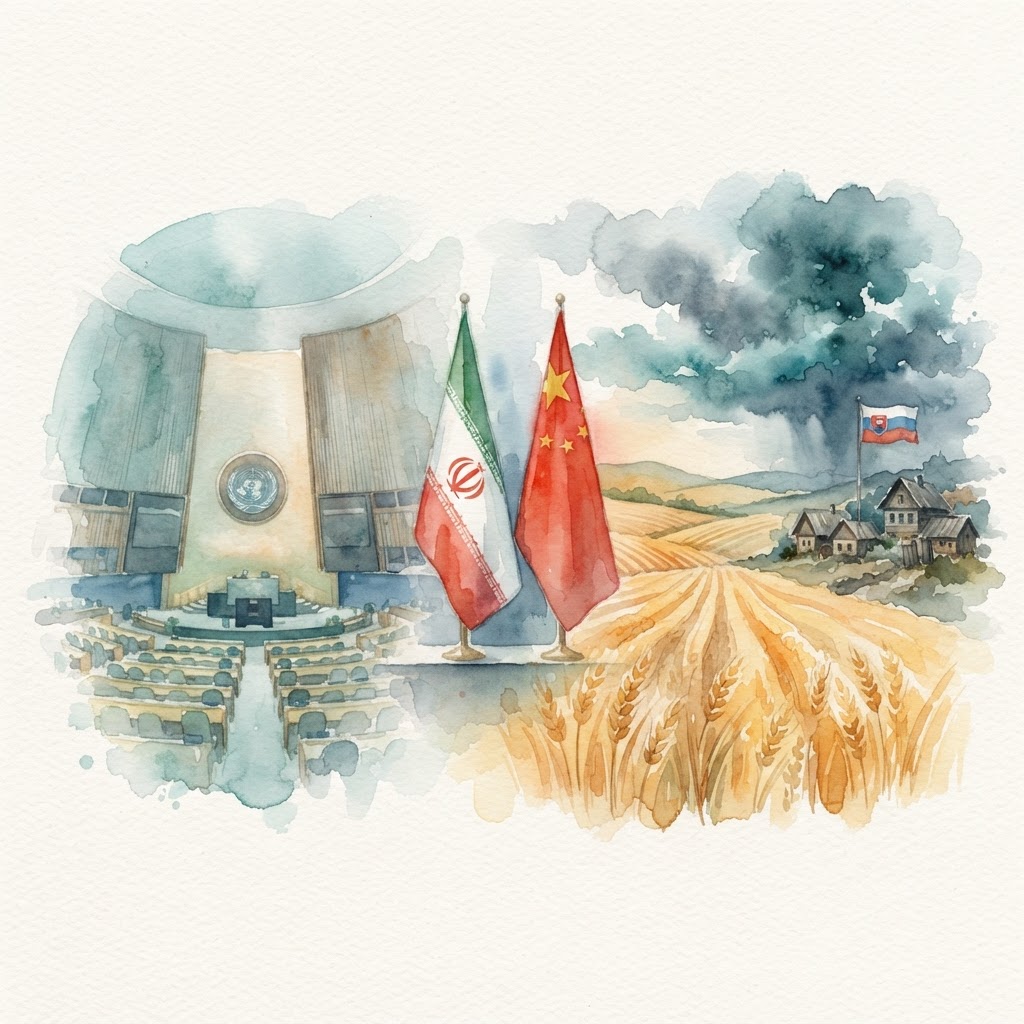
Iran's defiant UN speech, Xi's state visit, FBI website breach, midterm polls, Kansas GOP governor backing a Democrat, Moldova confronting Russia, family farms.
 7-DAY SPRINT
Press freedom, autocrats, abortion drug restrictions, the shifting Middle East, songs of survival, copper vests for penguins.
7-DAY SPRINTAI solved math's hardest problem but humanity learned nothing. Lessons on collaboration, understanding, misaligned goals, and local actions to resolve disconnects.
How It Works
Watch the Full Episode
Interns watch a complete PBS NewsHour broadcast from start to finish — not just the headlines.
Break It Into Themes
Each segment becomes a theme track. We identify who is in the story, what happened, and why it matters.
Connect to Purpose
Interns choose a primary track and explore how it connects to the five Voice Up principles and to their own life.
Elevate Your Voice
Interns produce a short written, audio, or video piece that helps others understand a current event and find their role in it.
Program Details
100% Remote
Format
Flexible (4–8 weeks)
Duration
Academic credit available
Credit
New episodes will be added over time, building an ongoing library of purposeful engagement with the news.