Local Issues, Public Health &
Underreported Communities
Understand the themes shaping our world — including the important stories happening in our own communities that may never become national headlines.
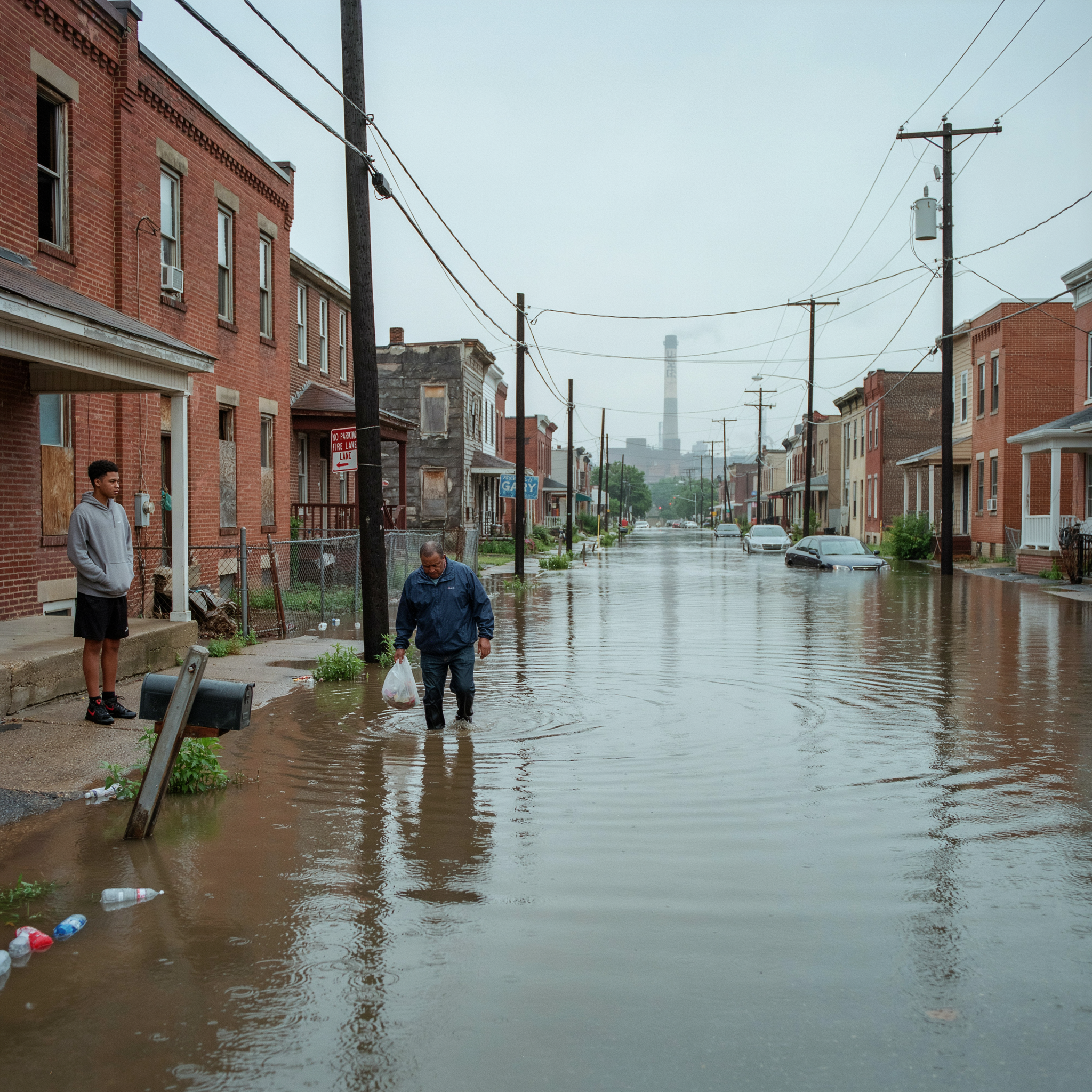
The Current Events Internship prepares undergraduate and graduate students to examine current events with greater depth, context, empathy, and purpose. The existing internship teaches students to move beyond individual headlines, identify connecting themes, translate complicated issues for general audiences, and connect current events to Voice Up's five principles of Collaboration, Precision, Empathy, Humility, and Patience.
This specialization asks students to look beyond the question:
"Is this receiving significant news coverage?"
and ask:
"Is this significantly affecting people's lives?"
Those are not always the same thing.
Specialization Focus
Identifying consequential local issues that may receive limited regional, statewide, or national attention and investigating their implications for health, well-being, public policy, and community resilience.
Why This Matters
A prolonged power outage provides an excellent example. At first glance, the loss of electricity may appear primarily to be an infrastructure or utility story. A deeper investigation reveals numerous potential public-health consequences.
Extended outages can affect households' ability to refrigerate food, maintain safe indoor temperatures, charge phones, access information, operate certain medical equipment, preserve medications requiring refrigeration, travel safely when traffic signals are unavailable, and maintain communication with healthcare providers, family members, and emergency services.
The consequences can be particularly important for older adults, children, people with disabilities, medically vulnerable individuals, people with limited transportation, and households without the financial resources to temporarily relocate or repeatedly replace spoiled food.
Students will therefore learn to investigate the secondary and tertiary consequences behind an event rather than simply reporting the event itself.
The Gary, Indiana Case Study
The August 2026 power outage affecting Gary and Northwest Indiana provides a timely model for this specialization.
Students could begin with the basic news question:
What happened?
They would then move considerably deeper:
- How many people were affected?
- How long were residents without essential services?
- What health consequences can emerge as an outage continues?
- Which populations face the greatest risks?
- What assistance became available?
- How did local government, healthcare organizations, utilities, nonprofits, emergency-management agencies, and residents respond?
- How extensively did local media cover the event?
- How extensively did major statewide Indiana media cover it?
- Were the experiences of residents themselves visible in the reporting?
- What important dimensions of the story remained underreported?
- What happens to a community when the immediate weather event receives attention but its prolonged consequences receive less attention?
Most importantly: What can students do to elevate accurate information without sensationalizing the experiences of the people affected?
Gary becomes a case study in something much larger than one Indiana power outage. It demonstrates how students can identify significant community issues occurring anywhere in the world and investigate connections among journalism, public health, infrastructure, policy, and human experience.
A New Form of Current-Events Analysis
Students choosing this specialization will follow a structured six-step process.
Identify
Find a consequential local issue receiving limited attention outside the affected community.
Issues might involve public health, mental and behavioral health, electricity and utilities, water and sanitation, food access, housing, transportation, environmental hazards, healthcare access, education, natural disasters, emergency preparedness, rural communities, neighborhood safety, aging populations, disability access, or economic disruption.
Verify
Students establish what is actually known.
They distinguish confirmed facts from assumptions, identify primary and credible secondary sources, examine available data, and document what remains unknown. Precision matters — an underreported story should never become an excuse for overstating evidence.
Investigate the Human Impact
Students move beyond statistics.
Who is experiencing the issue? How does it affect everyday life? Are some populations disproportionately vulnerable? What are residents saying? What health and social consequences might not appear in the original news story? Students learn to combine credible quantitative information with lived experience while avoiding exploitation or sensationalism.
Examine the Public-Health Connection
Students investigate how an event connects with established public-health concepts.
This could include environmental health, social determinants of health, emergency preparedness, health equity, chronic disease management, behavioral health, food security, healthcare access, injury prevention, community resilience, or other relevant disciplines. Importantly, students learn to distinguish among documented health effects, established health risks, potential implications, and questions requiring further investigation.
Analyze the Coverage
Students conduct a media-visibility analysis: Local → Regional → Statewide → National.
They identify which organizations covered the issue, when coverage began, how headlines characterized it, whose voices were included, which dimensions received attention, and which were largely absent. The purpose is not to automatically accuse journalists or media organizations of wrongdoing. The purpose is to understand how information travels — and sometimes does not travel — across communities.
Elevate the Community Voice
Students then create something useful.
That might be a written story, public-health brief, podcast, video, data visualization, interview series, community resource guide, policy analysis, research question, artistic interpretation, or multimedia presentation. The goal is not simply to say "This story was overlooked." Instead: "Here is what is happening. Here is the evidence. Here are the people affected. Here is why it matters. Here is what we still need to understand."
Applying the Five Voice Up Principles
Work with residents, students, journalists, researchers, nonprofits, healthcare professionals, public agencies, and community organizations rather than speaking for communities from a distance.
Verify claims, examine data carefully, distinguish evidence from inference, and correct misinformation.
Understand the human consequences behind statistics while protecting people's dignity.
Enter communities prepared to listen. Students recognize that lived experience can provide important knowledge that institutional statistics alone cannot capture.
Follow stories after the initial headlines disappear. Some of the most important consequences of a crisis become visible days, weeks, or months later.
What Interns Produce
Each student completing the specialization develops an Underreported Local Issue Portfolio containing:
- 1A clearly defined local issue.
- 2A timeline of events.
- 3An evidence and source review.
- 4A public-health implications assessment.
- 5Identification of populations potentially most affected.
- 6A media-coverage analysis.
- 7Community or stakeholder perspectives when appropriate.
- 8Identification of unanswered questions.
- 9A purposeful communication product.
- 10Recommendations for additional reporting, research, community action, or policy consideration.
The final product should be understandable to someone who knew nothing about the issue before encountering the student's work.
From Gary to Communities Around the World
Importance should not be determined solely by the size of the media audience covering a story.
A prolonged utility outage in one Indiana city can raise questions about public health, emergency preparedness, aging infrastructure, healthcare access, food security, community resilience, economic vulnerability, and the visibility of communities within statewide media. Similar stories exist everywhere.
A rural hospital facing closure.
A neighborhood repeatedly flooding.
A community losing access to its only grocery store.
A local behavioral-health program disappearing.
A school struggling with unsafe temperatures.
A small town experiencing contaminated drinking water.
A community rebuilding after a natural disaster long after national reporters have left.
These are current events too.
The Current Events Internship will prepare students to find them, understand them, document them accurately, connect them to larger systems, and elevate the voices of the people living through them.
Read beyond the headline.
Look beyond the national story.
Listen to the community.
Follow the evidence.
Find what matters — and elevate it with purpose.