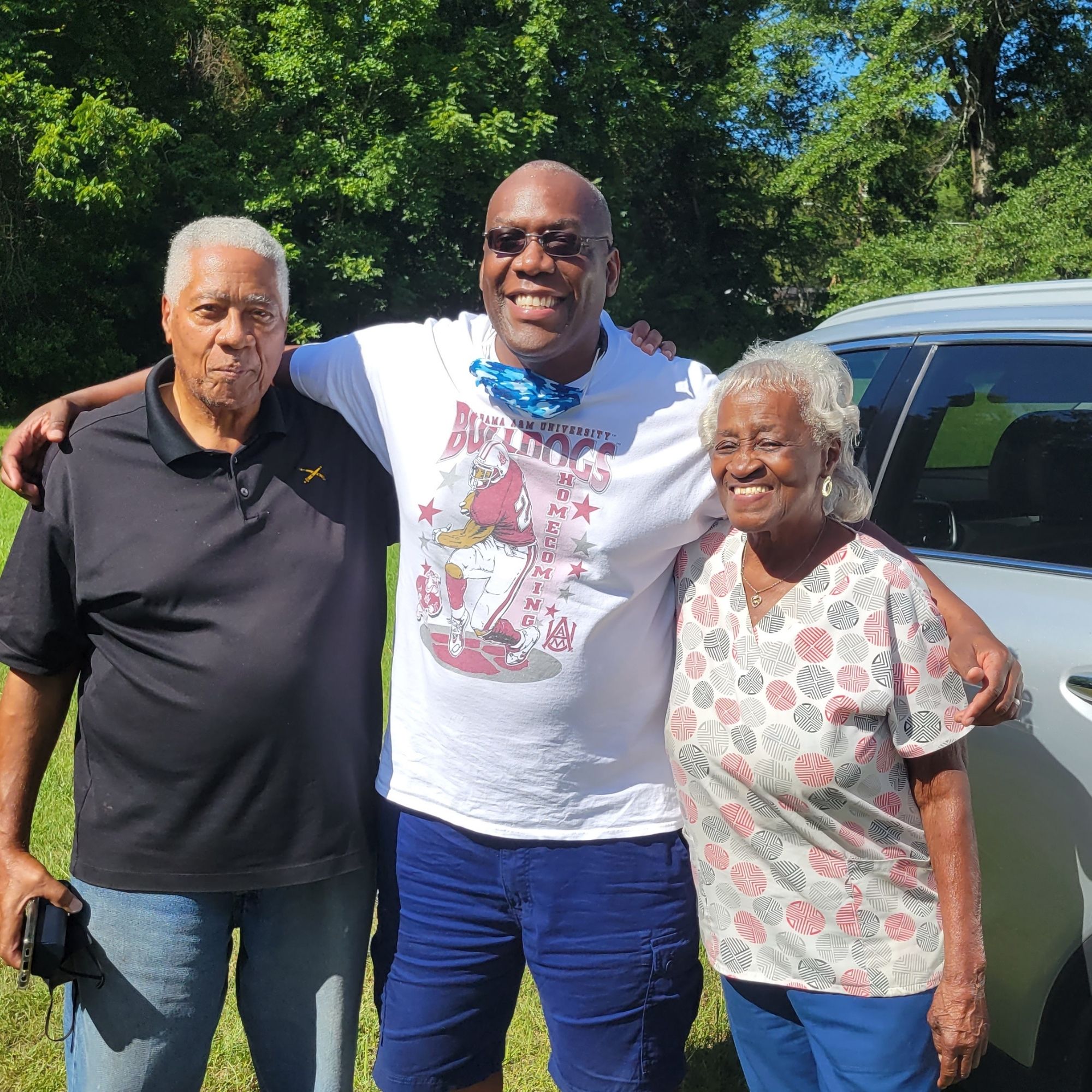
Art Fuller with family — Fuller Road, Montgomery, Alabama.
Art Fuller's Analogies — Three Anchors for a Purpose-Driven Life
During his guest lecture at Georgia State University, Art Fuller used three living analogies to teach public health students how to build, lead, and endure. This page turns each analogy into its own learning anchor — grounded in Voice Up's five core principles.
The Five Core Principles — The Lens
Every analogy on this page is grounded in Voice Up's five core principles. Art used them as diagnostic tools to examine a bad decision. Here, they are the lens for understanding how a founder, a CEO, and a person facing setbacks all stay anchored to purpose.
The Three Analogy Anchors
Analogy 1
Entrepreneurship
Turn what you have lived into something that serves others.
"Voice Up focuses on a very powerful thing that we all have, which is our own lived experience."
— Art Fuller, Georgia State University guest lecture
What It Means
Art built Voice Up directly from his doctoral dissertation on African American students' perspectives on entering mental and behavioral health. He interviewed students across ten states and found they had lived experiences directly related to the field but had not connected that experience to a career. Entrepreneurship, in his teaching, is the act of closing that gap — taking lived experience and building a pathway out of it for the next person.
Principles It Anchors To
Reflection Prompt
What is one piece of your lived experience that could become a pathway for someone else? What would it take to build it — a board, a plan, and how many years of patience?
Analogy 2
Being a CEO
Servant leadership under accountability.
"CEOs answer to a board of directors who are smarter than you in areas that you are not good at."
— Art Fuller, Georgia State University guest lecture
What It Means
Art separated three roles: founders need humility, boards, and IP protection; directors focus on execution; CEOs answer to a board. He shared that he talks with five to seven new people about Voice Up every single day, and used the bike-riding metaphor for mentorship — somebody else taught you. Being a CEO, in his analogy, is not about being the smartest person in the room; it is about servant leadership practiced under daily accountability.
Principles It Anchors To
Reflection Prompt
Who are the people on your "board" — the ones smarter than you in the areas you are not good at? How many new conversations about your purpose are you having each day?
Analogy 3
Working Through Challenges
Return to your lived experience and your principles instead of panic.
"Lived experience is what gets you through setbacks."
— Art Fuller, Georgia State University guest lecture
What It Means
Art told the Uncle Charlie story a second time — not as proof, but as the source of his resilience. He said he knows his family's history going back over two hundred years through firsthand accounts from people like his uncle Charlie. He then stated Voice Up's five core principles and used them as diagnostic tools to examine a bad decision, mapping it specifically to precision and empathy. Working through challenges, in his analogy, is not pushing harder — it is returning to what you already know and who you already come from.
Principles It Anchors To
Reflection Prompt
Think of a recent setback. Which of the five principles would help you diagnose what went wrong — precision to name it, empathy to see the other side, or patience to forgive the mistake?
The Three Anchors Together
The three analogies are not separate lessons — they are one journey. You build from your lived experience (entrepreneurship), you lead it under accountability (being a CEO), and you endure the setbacks by returning to where you came from (working through challenges). At every stage, the five core principles keep you anchored to purpose instead of ego.
That is the whole lecture in one sentence: purpose is not a feeling — it is a practice, and the practice has principles.