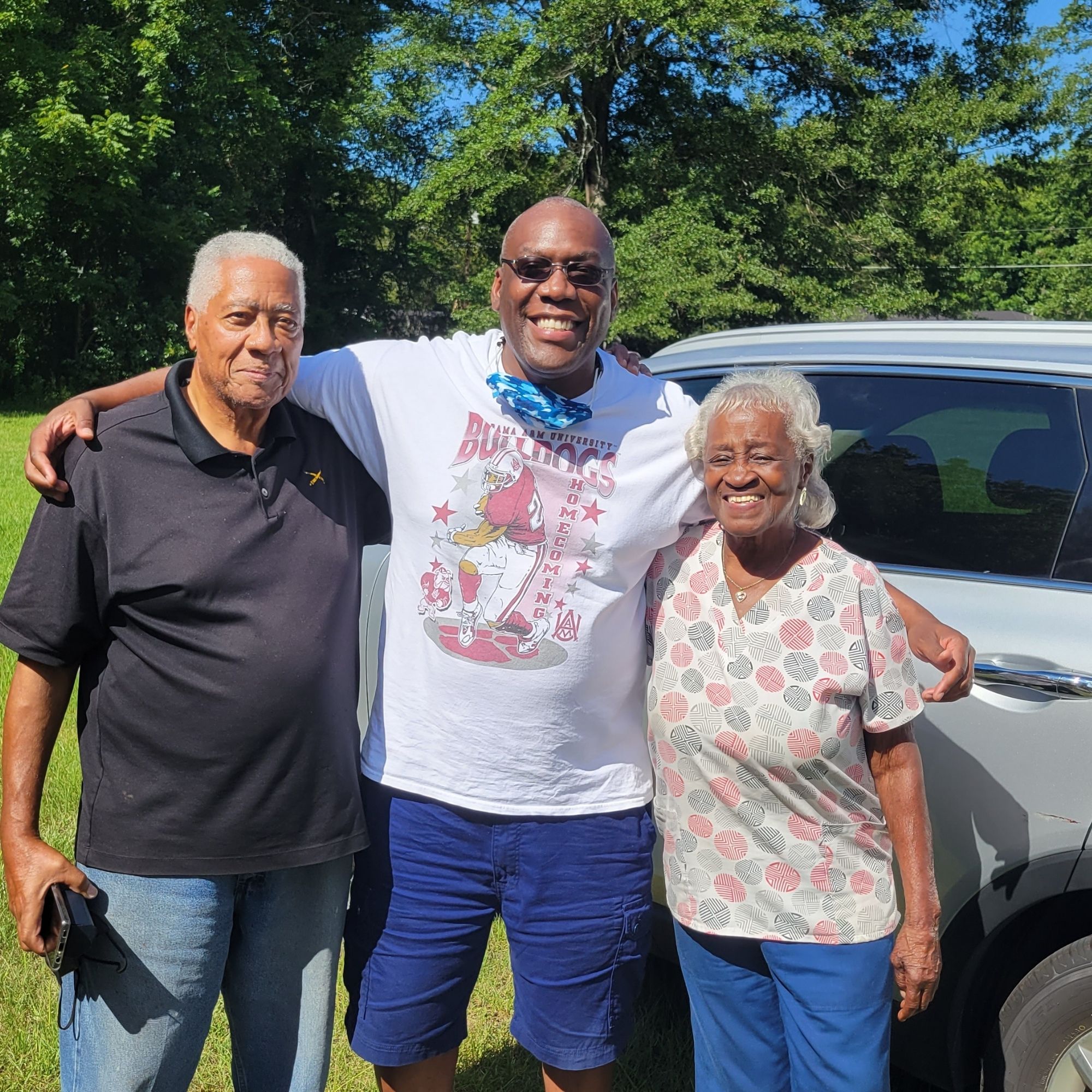
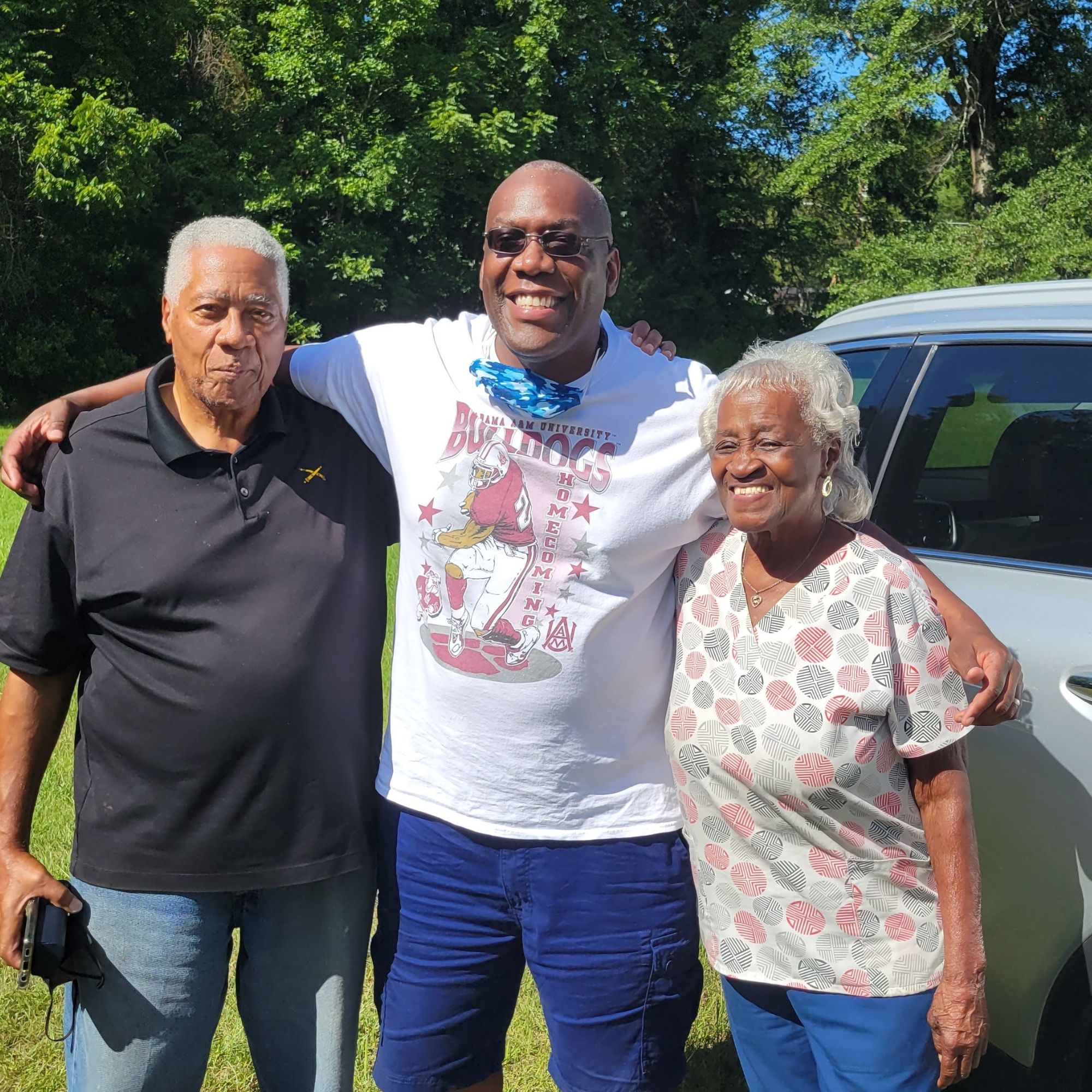
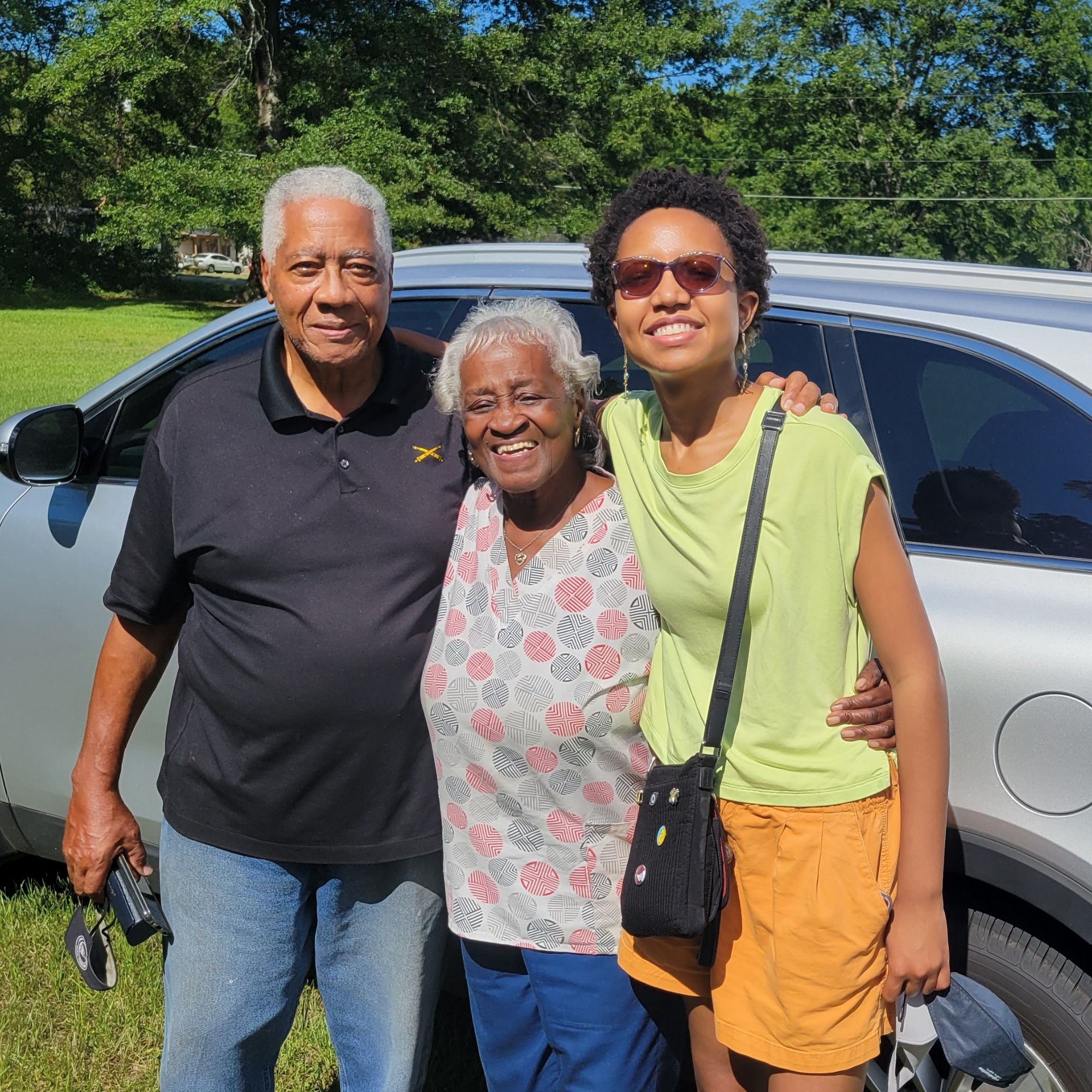
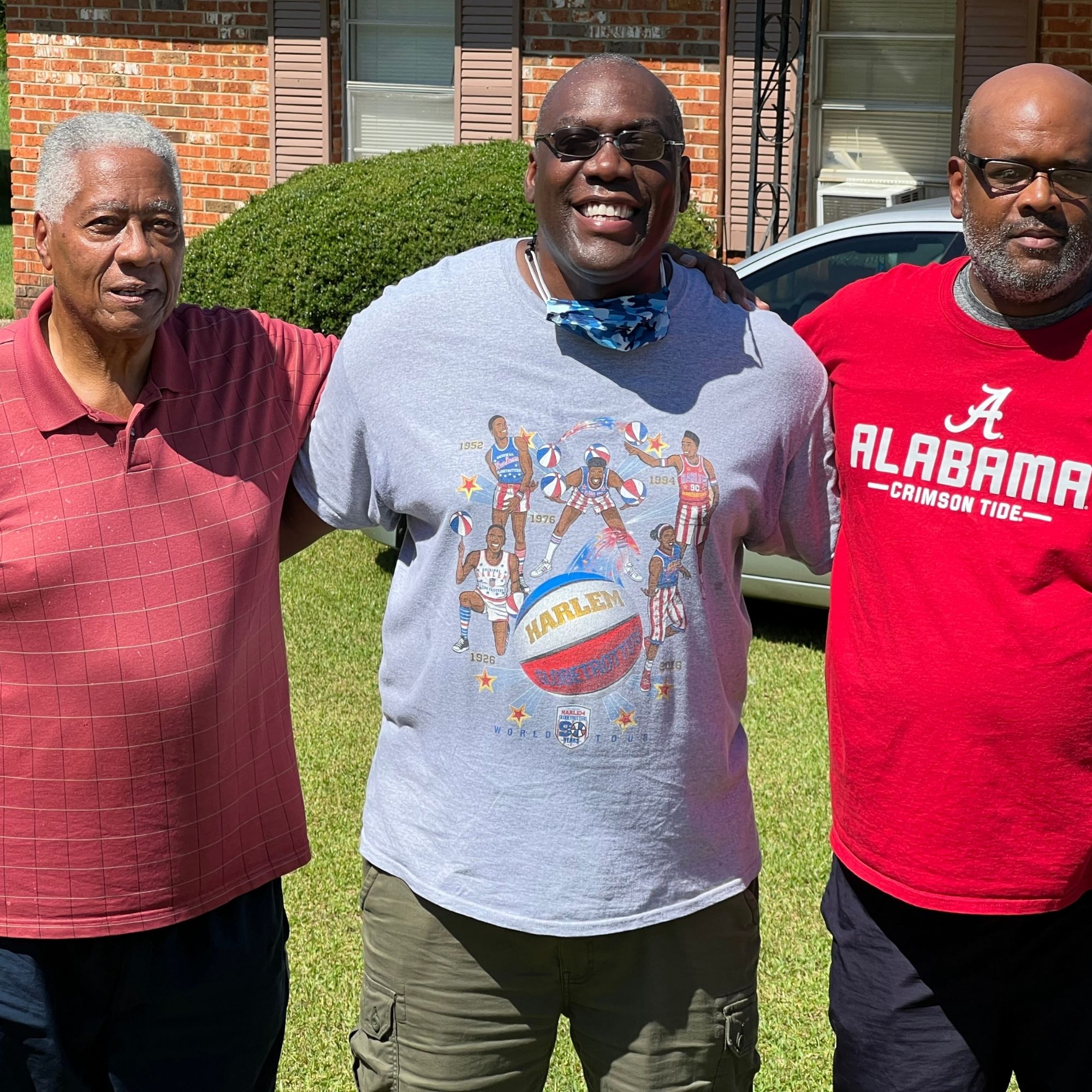
Left to right: Uncle Charlie Douglass, Art Fuller, and Aunt Liz — Fuller Road, Montgomery, Alabama, July 2022.
Georgia State University — Public Health Careers Session
On August 31, 2026 — the same day as his uncle Charlie Douglass's 86th birthday, a great day of celebration — Art Fuller gave Voice Up's guest lecture at Georgia State University. That lecture launched the Voice Up Media Network. This page opens on that day of celebration, and preserves the minutes of what was covered, the implications, and the significance of the session.
Date & Time
Monday, August 31, 2026 · 9:30 AM
Duration & Format
1 hour 13 minutes · Recorded Zoom guest lecture with Q&A
Host
Dr. Jacque-Corey Cormier — Public Health Careers course
Attendees
~39–40 public health students at Georgia State University
Guest
Art Fuller — Founder, President & CEO, Voice Up Publishing; Chief of CCBHC Operations, Hamilton Center, Inc.; DHSc/MPH Doctoral Candidate, University of Indianapolis
Overview
These minutes are organized by theme rather than strict chronology, so each section can stand alone. For every theme, this page records what was covered, the significance of the exchange, and the key quotes. The full learning module — with reflection questions and the complete review tying the session to Charlie Douglass — is available as a separate module.
The Minutes — What Was Covered
Session Framing & Professionalism Norms
What Was Covered
Before Art joined, Dr. Cormier set expectations around Zoom presence, professional self-presentation, and the course's dual purpose — career knowledge and self-knowledge. He framed small behaviors (a real display name, a visible face, a non-default background) as high-signal indicators of seriousness.
Significance
The class explicitly treats guest sessions as professionalization exercises, not passive content delivery. Art's session was positioned from the outset as a model of "how to show up," which primed the class to receive his later professionalism advice as reinforcement.
Introduction & Credentialing
What Was Covered
Art was formally introduced with his full credentials (Wesleyan BA, Lesley MEd, Vanderbilt graduate studies, University of Indianapolis DHSc/MPH). He gave explicit, repeated consent to recording: "Oh, please record. Please do record." A student, Raymia Taylor, introduced herself on behalf of the class.
Significance
The course had accurate, detailed biographical information on hand — a planned, vetted guest appearance. Art's on-the-record consent to recording provides a clean basis for reusing clips or quotes from the session.
What Voice Up Is — Mission & Proof Points
What Was Covered
Art explained Voice Up's mission — turning lived experience into career pathways — with two proof-point stories: Emily Metheny (a children's book born from childhood anxiety now purchased by large organizations across multiple states) and Maryam in Nigeria (selected from 1,000 applicants, now part of Overcome UK — a behavioral health role-play practice studio at buildbetterhealth.life providing mental health support worldwide).
Significance
These two proof points function as Art's standard, rehearsed impact narrative. The framing explicitly ties personal narrative to institutional partnership outcomes — a template for how lived experience becomes career capital. By choosing one U.S.-based freshman and one international student, Art signals Voice Up is globally accessible.
Origin Story — The Dissertation Connection
What Was Covered
Art explained how Voice Up grew directly from his doctoral dissertation on African American students' perspectives on entering mental and behavioral health. He interviewed students across 10 states; the recurring finding was that students had lived experiences directly related to the field but had not connected that experience to a career. He then told the Uncle Charlie birthday story for the first time — as proof of the science of purpose.
Significance
This is a public, plain-language articulation of the "Naming Gap" thesis delivered outside the formal academic committee context. It confirms Voice Up is explicitly and directly derived from the dissertation's core finding, not a separate initiative. The family-longevity anecdote (Uncle Charlie, age 86, daily gym routine) is a recurring personal illustration of "purpose science."
Founder vs. Director vs. CEO
What Was Covered
Art distinguished the three roles: founders need humility, boards, and IP protection; directors focus on execution; CEOs answer to a board of directors who are "smarter than you in areas that you are not good at." He shared that he talks with 5–7 new people about Voice Up every single day, and used the bike-riding metaphor for mentorship — "somebody else taught you."
Significance
This is a live, teachable articulation of Art's governance philosophy, mapping onto Voice Up's actual structure. The "5–7 new conversations daily" figure is a concrete, quotable data point about CEO-level networking discipline. The bike analogy recurs as Art's go-to teaching device for describing mentorship and scaffolding.
Leadership Style — Servant Leadership
What Was Covered
Art identified himself as a servant leader, mission-driven, and demonstrated it live by naming specific students on the call (Mason Wong, Quasia). He said leadership is "just as much about the relationships you have with people than the task you're actually trying to accomplish."
Significance
Confirms "servant leadership" as Art's explicitly self-identified leadership model — a direct quote for bios or leadership-philosophy statements. Art demonstrated the practice live by naming specific students, turning an abstract principle into observable behavior.
How to Get Involved — The Application Process
What Was Covered
Art explained the five-step application funnel at VoiceUpLab.org, the personalized 8-week guide given to every applicant regardless of whether they join, and the do's of professional interviews — show up professionally, research the organization, and have questions in mind. He noted the market "already has professionals" and is not looking for people who are not professional.
Significance
A verbatim, ready-to-use explanation of the application funnel's rationale (self-selection via effort). The professionalism do's/don'ts double as recruiting messaging aimed at reducing unqualified applicants.
Success Benchmarks & Timelines
What Was Covered
Art framed this very class session as a Year 2 success marker for Voice Up. He distinguished "reach" (Year 1: 134 countries) from "institutional embeddedness" (Year 2+: university invitations like Dr. Cormier's class). He shared his school-founding benchmark — three years of financials exceeding budget before declaring success — and emphasized the written business/project plan as the literal baseline against which success is measured.
Significance
Art explicitly frames this class session itself as a Year 2 success marker — a self-referential data point captured live. This establishes a two-tier success framework: quantitative reach vs. institutional embeddedness.
Setbacks, Accountability & the Five Core Principles
What Was Covered
Art told the Uncle Charlie story a second time — as the source of his resilience. He said he knows his family's history going back over 200 years through firsthand accounts from people like his uncle Charlie, and that lived experience is "what gets you through setbacks." He then stated Voice Up's five core principles — collaboration, humility, precision, patience, empathy — and mapped a bad decision to "precision" and "empathy" as diagnostic tools.
Significance
The clearest on-record statement of Voice Up's five core principles as an operative accountability framework. Art's framing of setbacks explicitly integrates faith and multi-generational family history (Uncle Charlie) as sources of resilience.
Closing — The Story Handed Forward
What Was Covered
A student, Jaiden Nelson, closed the session: "Tell your uncle happy birthday on behalf of all of us." Art answered: "I will, Uncle Charlie. He just got done with the gym. He's already worked out." Dr. Cormier offered a closing metaphor — professionalism is "the wetsuit that allows you to swim through multiple settings," not armor — and credited guest engagement quality to "what people did last semester."
Significance
Direct student feedback confirms the CEO/director distinction and leadership-style content were the most resonant takeaways. The session closed the loop on the Uncle Charlie story: Art told it, the students received it, and they handed it back as a birthday wish. Cormier confirmed this course actively encourages students to reach out to guests post-session — a live pipeline for future Voice Up applicants.
Key Quotes from the Session
Art Fuller, on lived experience
"Voice up focuses on a very powerful thing that we all have, which is our own lived experience."
Art Fuller, on purpose science
"The science behind purpose is powerful because what it shows is that people that live a more purpose-driven life actually live longer. They can fight off disease at a higher rate. And this is like science. This is not like this is you can look it up."
Art Fuller, on the Uncle Charlie story
"Today's my uncle's 86th birthday... he said, "I'm going to the gym." Now, just think about that. He's 86 years old."
Art Fuller, on the five core principles
"We have five core principles... collaboration, humility, precision, and then patience and empathy. Patience is really based on this thought: we all make mistakes, and we all need forgiveness."
Jaiden Nelson, student
"Tell your uncle happy birthday on behalf of all of us."
Dr. Cormier, closing metaphor
"It is the wetsuit that allows you to swim through multiple settings."
Implications & Significance
A Live Doctoral Translation
The session is a public, plain-language translation of Art's doctoral dissertation — the Naming Gap thesis — delivered to 40 public health students. It demonstrates how academic research becomes a living organization.
One Life, Three Uses
The Uncle Charlie story was told three times in one session: as proof of purpose science, as the source of resilience, and as a story handed forward by a student. One life became evidence, foundation, and curriculum in a single hour.
Institutional Embeddedness as a Success Marker
Art framed the invitation itself — a Georgia State University class — as a Year 2 success marker, distinguishing reach (quantity) from institutional embeddedness (depth). This session is the evidence.
The Five Principles as an Accountability Framework
Art stated Voice Up's five core principles (collaboration, humility, precision, patience, empathy) and then used them as diagnostic tools to examine a bad decision — the clearest on-record statement of the principles in operation.
Reflection Questions
Take a moment to think about what you just read. These questions are here to help you connect the minutes to your own life. There are no right or wrong answers — just be honest with yourself.
Art said your "lived experience" is a powerful thing you already have. What is one thing you have lived through — a challenge, a joy, or a lesson — that could help someone else or lead to a career?
Art told the Uncle Charlie story to show how purpose and family can keep you going through hard times. Who is one person in your life whose story gives you strength? Why does their story matter to you?
Art named five principles: collaboration, humility, precision, patience, and empathy. Which one is the hardest for you right now, and what is one small way you could practice it this week?
The Charlie Douglass Connection
The session took place on the exact day of Charlie Douglass's 86th birthday. Three times during the lecture, Art Fuller brought his uncle into the room — first as proof of the science of purpose, then as the source of his resilience, and finally as a story handed forward when a student said: "Tell your uncle happy birthday on behalf of all of us."
That exchange — Art told the story, the students received it, and they handed it back as a birthday wish — is the trilogy in one moment.
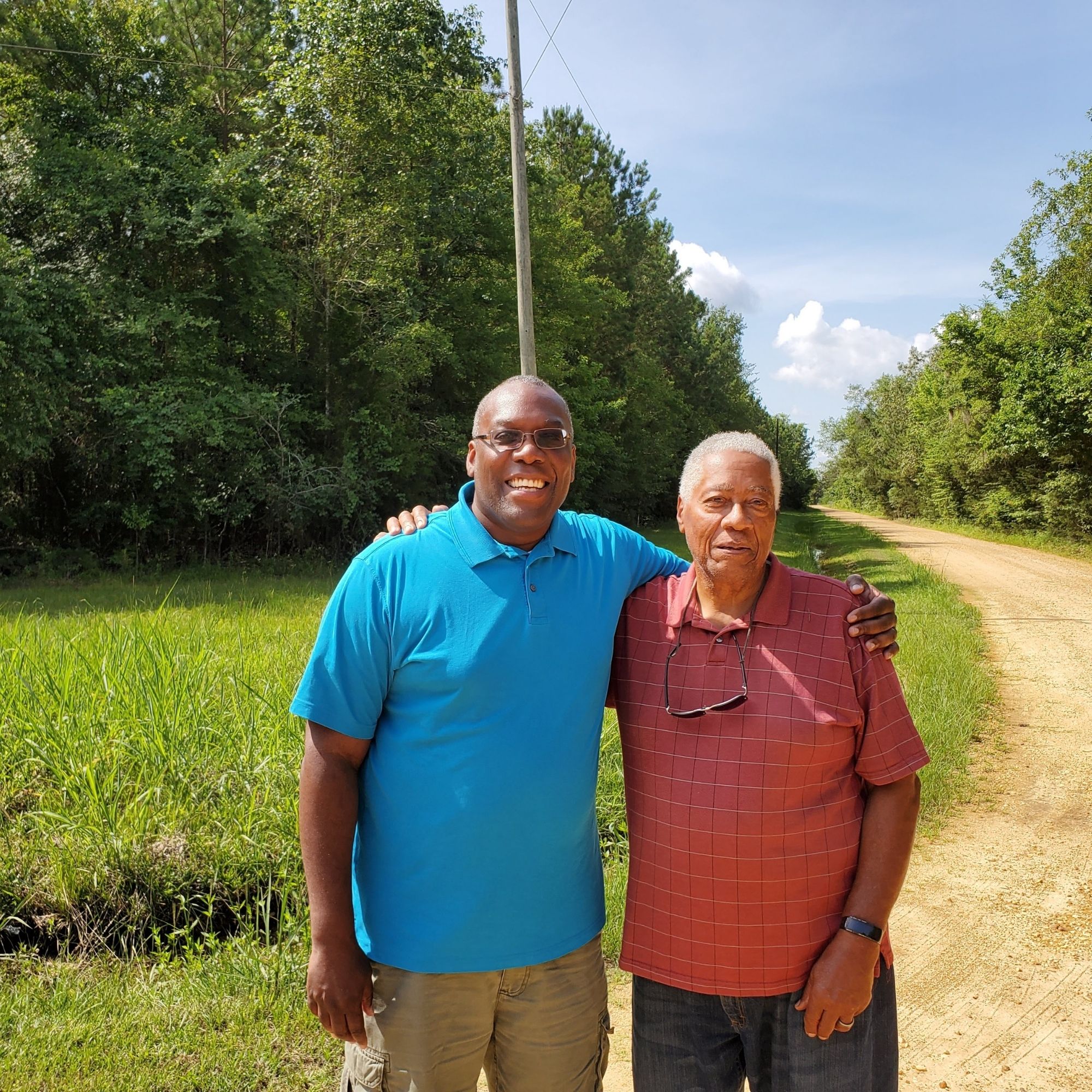
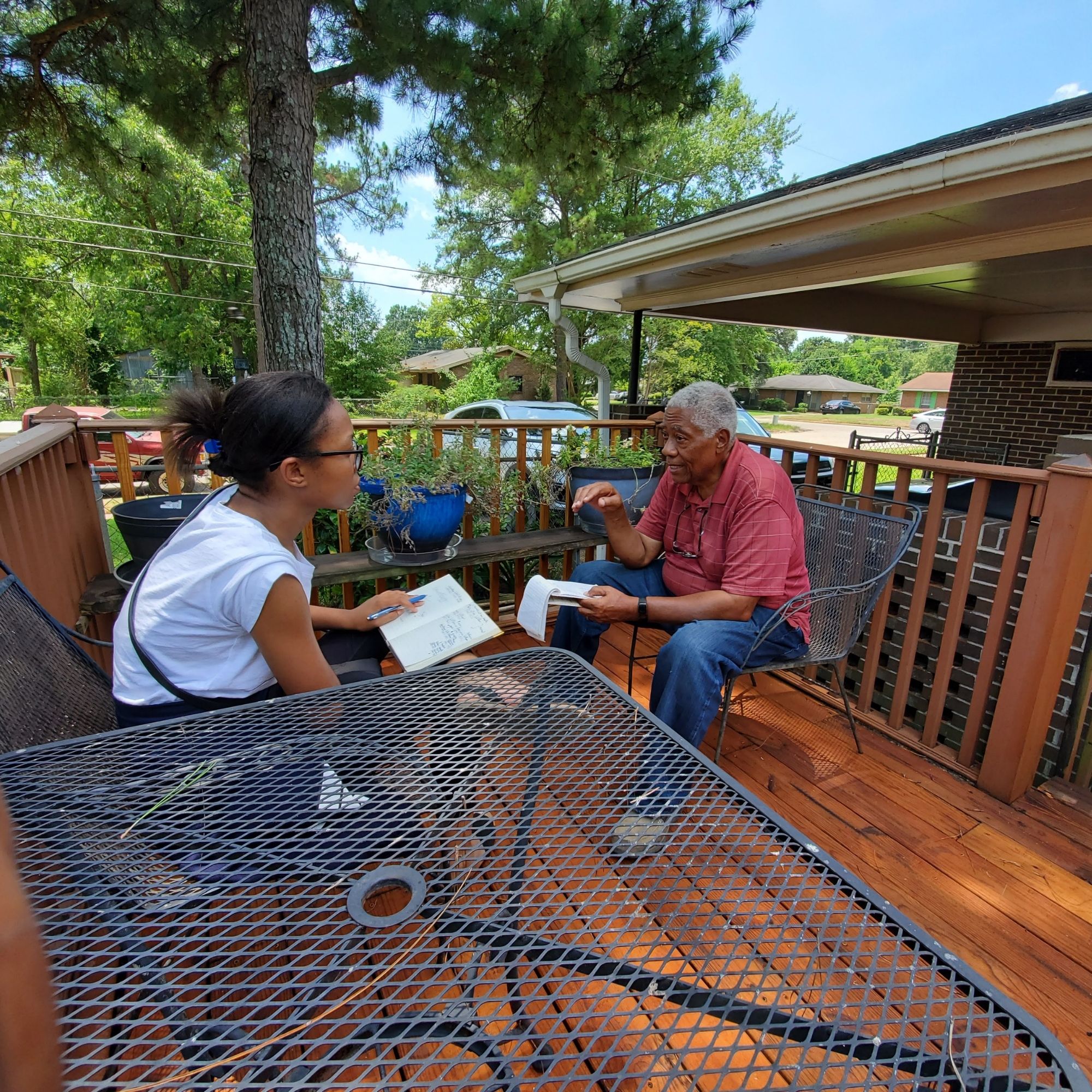
Extend Your Learning — Art Fuller's Lecture Analogies
The lecture is full of living analogies that apply to real life. This dedicated page turns three of them — entrepreneurship, being a CEO, and working through challenges — into their own learning anchors, each grounded in Voice Up's five core principles.
Art Fuller — A Teacher and a Jazz Musician at the Same Time
Go deeper into how Art Fuller's full lived experience — his years as both a teacher and a professional jazz musician, and the connections he made with Anthony Braxton, Roland Dahinden, and Randy Weston — became what Voice Up is today. Featuring Voice Up History and Ellington Books.
Reflect on the Session — Enter the Gift Card Raffle
Answer the three reflection questions below. Each one ties directly to a theme from Art Fuller's guest lecture. Your reflections enter you into Voice Up's weekly $25–$50 gift card raffle. Honest, specific reflections are reviewed first.
You need a free Voice Up account to submit your reflection and enter the raffle. Your progress saves automatically — create your account anytime and pick up right where you left off.
The Uncle Charlie Story — Three Uses in One Hour
Art Fuller told the Uncle Charlie story three times during the lecture: first as proof of the science of purpose, then as the source of his resilience, and finally as a story handed forward when a student said, "Tell your uncle happy birthday on behalf of all of us." Which of those three uses lands most powerfully for you, and why? How does a single life story become evidence, foundation, and curriculum at the same time?
Servant Leadership in Practice
Art identified himself as a servant leader and demonstrated it live by naming specific students on the call. He said leadership is "just as much about the relationships you have with people as the task you are actually trying to accomplish." Describe a moment when you saw leadership as a relationship rather than a task. What did that look like, and what would it take for you to practice it more often?
The Five Core Principles as an Accountability Framework
Art stated Voice Up's five core principles — collaboration, humility, precision, patience, and empathy — and then used them as diagnostic tools to examine a bad decision. Pick one principle that you would use to examine a recent decision of your own. Name the principle, describe the decision, and explain what that principle reveals when you look closely.
Taking part is completely voluntary — you do not have to answer any question. Everything you share belongs to you. You can ask us to delete your responses at any time, no questions asked.
We read every submission. Honest, specific reflections are processed first.
Invite the Founder to Speak at Your Institution
Art Fuller — Founder, President & CEO of Voice Up Publishing — is available to guest lecture at your university, college, high school, organization, or community gathering. The Georgia State session you just read about is one example. Sessions are available live, virtual, or a combination of both — and every engagement is tailored to your audience, from a single class period to a full semester-long partnership.
Across every topic below, the focus is the same: the power of connecting to your purpose. Art draws on the full breadth and depth of his lived experience and expertise to show how that one connection changes a career, a community, and a life.
Lived Experience as the Career Pathway
How your own story becomes your professional credential — the core Voice Up thesis from Art's doctoral dissertation on the Naming Gap, and the proof that connecting to your purpose unlocks a career no degree alone can open.
Servant Leadership in Practice
What it means to lead by naming people, building relationships, and putting the mission first — demonstrated live, not just described, as the daily practice of connecting your leadership to a purpose bigger than yourself.
Founder, Director, and CEO — The Three Roles
A clean, teachable breakdown of governance: founders need humility and boards, directors execute, CEOs answer to a board smarter than they are — and how knowing which role you play keeps you connected to the purpose that started it all.
The Five Core Principles as an Accountability Framework
Collaboration, Humility, Precision, Patience, and Empathy — not slogans, but diagnostic tools for examining real decisions and setbacks, and for staying connected to your purpose when the work gets hard.
Purpose Science & Health Outcomes
The research behind purpose-driven living: longer life, disease resilience, and the evidence base that shows what happens in your body when you connect to your purpose — the science that underpins everything Voice Up teaches.
From Dissertation to Organization
How academic research becomes a living organization — the journey from the Naming Gap thesis to the Voice Up Media Network — as a model for turning your own scholarship into a purpose you can actually live out.
Building a Purpose-Driven Media Network
How Voice Up reached 134 countries in its first year — and what it takes to build media that begins with people and their purpose instead of a subject, so that every story strengthens someone's connection to their own.
Community Storytelling & Local Issues
The Gary, Indiana trilogy, the Charlie Douglass legacy, and how media can serve communities traditionally underrepresented in the narrative — connecting neighbors to a shared purpose and a shared story.
Entrepreneurship & Bootstrapping a Mission
The Bootstrap Business Accelerator approach — building an organization from lived experience without waiting for permission or outside funding — and how staying connected to your purpose is what carries a founder through the hard early years.
K-12 Education & Combating Bullying
Children's books, the Parent/Guardian Waiver framework, and how Voice Up supports students from elementary through high school in finding their voice — because connecting to your purpose early changes the whole trajectory of a life.
Mentorship & the Bike-Riding Metaphor
Art's go-to teaching device: somebody else taught you how to ride a bike, and that is what mentorship looks like — scaffolding, not lecturing — and how being mentored (and mentoring) keeps you connected to your purpose.
Fellowships, Internships & Career Pipelines
The full Voice Up pipeline — from the First 100 Hours module to paid fellowships and internships — and how each step is designed to turn lived experience into real career capital by keeping students connected to their purpose.
Music, Jazz & the Creative Arts
Art's life as a professional jazz musician and teacher — the connections to Anthony Braxton, Roland Dahinden, and Randy Weston — and how the creative arts are one of the most powerful ways to discover and stay connected to your purpose.
Publishing & Lived Experience Publications
How Voice Up Publishing and J. Ellington Publishing turn student stories into books — Emily Metheny's children's book, the Fuller Road reviews, and more — as living proof that publishing your lived experience deepens your connection to your purpose.
Mental & Behavioral Health Careers
Art's work as Chief of CCBHC Operations at Hamilton Center — connecting clinical practice, public health, and the Voice Up pathway for the next generation of helpers who want their careers tied to a purpose that serves others.
Community Mental Health & CCBHC Operations
What it takes to run Certified Community Behavioral Health Clinics — the compliance, the care model, the staffing — and how purpose is the only thing that sustains leaders in this demanding field.
Applied Purpose Science
The research program behind Voice Up — how purpose is measured, taught, and tracked — and how institutions can apply it to move from theory to measurable outcomes in the lives of the people they serve.
Global Reach & Cross-Cultural Purpose
Maryam in Nigeria, students across 134 countries, and how Voice Up works across cultures, languages, and borders — because connecting to your purpose is a human universal, not a Western one.
Video Interviews & Voice Discovery
The Voice Up video interview process — how a recorded conversation becomes a tool for self-discovery — and how hearing your own voice back is often the first time someone truly connects to their purpose.
How to Invite Art Fuller
Whether you are a professor, a program director, a high school counselor, or a community leader — Art is open to conversations about live guest lectures, virtual sessions, hybrid series, semester-long partnerships, panel appearances, and keynote talks. Reach out through the Voice Up site, and the team will help shape a session tailored to your audience and format.