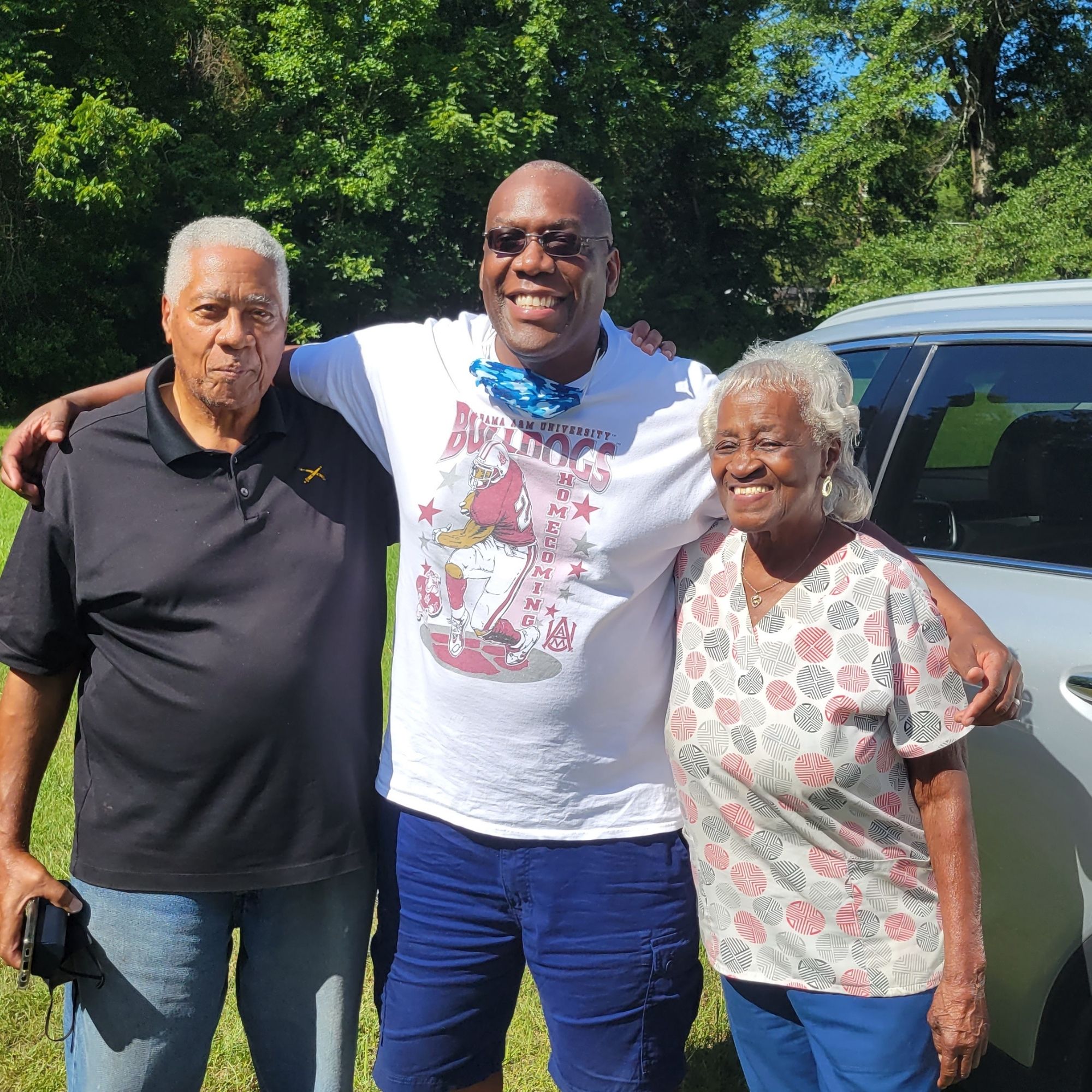
Art Fuller with family — Fuller Road, Montgomery, Alabama.
One Life, Two Lives, Many Connections
How Art Fuller's years as both a teacher and a professional jazz musician — at the same time — became the living proof of what Voice Up teaches today: that a person's full lived experience can connect many people to purpose.
The Connection This Page Makes
During his guest lecture at Georgia State University, Art Fuller said Voice Up "focuses on a very powerful thing that we all have, which is our own lived experience." This page takes one stretch of his own lived experience — the years he was a teacher and a professional jazz musician at the same time — and traces the connections he made in both worlds straight into what Voice Up is today. The thread runs through two websites that carry it forward right now.
Two Lives at Once — Not One After the Other
The Teacher
1996–2002After an M.Ed. in Middle School Mathematics from the Lesley/Shady Hill program, Fuller taught computer technology, math, and science at Middlebrook Middle School in Wilton, Connecticut. He founded FullerMusic in 1998 to teach students to apply math and technology to CD production, web design, and video. By 1999 he was recruited as Senior Education Adviser at Co-nect, promoting technology-driven school reform across nine of the ten largest urban districts in the country.
The Jazz Musician
1994–2000In the summer of 1994, Fuller joined a college professor on a recording project and West Coast tour — the experience he later called getting "the jazz bug." For roughly six years he moonlighted as a jazz drummer in his own quartet, playing frequently in New York City and the Tri-State area, while also working as an educator. The two careers were concurrent, not sequential.
Why this matters: The independent Contemporary Black Biography profile states Fuller moonlighted as a jazz drummer for roughly six years while also working as an educator. The two careers were concurrent, not sequential. That single fact is the seed of everything on this page — purpose is not a single lane, and one person's full experience can hold more than one calling at a time.
The Connections He Made
Each connection below is independently documented in the discographical and historical record.
Anthony Braxton
2014 NEA Jazz Master · 1994 MacArthur Fellow
Place in Jazz History
One of the most important composer-improvisers in American creative music. His 1968 album For Alto was the first full-length solo saxophone recording ever made. Professor of Music at Wesleyan University. His life's work is preserved in the Anthony Braxton Recordings Collection — 751 digitized audio and video recordings housed at Yale's Gilmore Music Library.
Fuller played percussion on a four-CD live box set recorded June 15–19, 1994 at Yoshi's Nitespot in Oakland — independently verified across Discogs, Wikipedia, and AllMusic. Braxton, a Professor of Music at Wesleyan since 1990 and the "college professor" Fuller joined on that West Coast tour, is the same artist whose entire recorded catalog is now archived at Yale. Fuller's percussion on these sessions is part of that documented record.
Roland Dahinden
Swiss trombonist · avant-garde
The next year Fuller recorded on Dahinden's Naima, released on Mode Records, again alongside Braxton. Mode categorizes the release across Avant-Garde, Free Improvisation, and Third Stream — evidence of real range as a drummer within roughly twelve months of the Yoshi's sessions.
Randy Weston
NEA Jazz Master · "America's African Musical Ambassador"
Place in Jazz History
The pianist who traced jazz back to its African roots. Author of African Rhythms (autobiography, Duke University Press). Inducted into the ASCAP Jazz Wall of Fame, named Jazz Composer of the Year, and a 2011 Guggenheim Fellow. He spent his entire career uniting the music of the African continent with the African-American jazz tradition.
Separately from the stage work, Fuller conducted an in-depth interview with Weston about his Bedford-Stuyvesant upbringing and the informal schools of music — churches, blues groups, and musicians' homes — that shaped him. This was not a gig. It was the beginning of an oral-history method Fuller still uses: listen to an elder, preserve the voice, turn it into curriculum.
Where the Two Lives Met
The teaching life and the music life did not just run in parallel. Two initiatives Fuller founded became the place they converged — and the bridge to Voice Up.
FullerMusic
Founded March 1998 · Stamford, CT
In March 1998, while still teaching middle school by day and playing jazz by night, Fuller founded FullerMusic — a program that taught children to use computers through the creative arts. His goal was simple: every child gets in on technology, no matter where they come from. The program earned national recognition in FamilyPC, The New Yorker, and Emerge magazines, and Fuller was invited to a Presidential Information Technology Advisory Committee forum on Closing the Digital Divide. Artist-in-residence collaborations followed at Harvard, Cornell, and venues across New England. FullerMusic is also where the two lives literally met: it was through this program that Fuller played percussion and recorded his interviews with Randy Weston.
The Open Source Teaching Project
2006–2011 · National
Years later, Fuller scaled the same instinct into a national platform. The Open Source Teaching Project connected K-12 students with the world's leading scholars — over 100 of them, including three Nobel Laureates, foundation presidents, UN diplomats, and MacArthur Fellows from Harvard, Stanford, Columbia, and Penn. The website drew 75,000–100,000 visits a month. It was featured in THE Journal ("Information Inspiration," 2009) and Converge Magazine ("Straight from the Source," 2008). The method was the same one he had used with Randy Weston: go to the source, preserve the voice, and turn it into curriculum — now at population scale.
How the Two Lives Became Voice Up
Voice Up grew directly from Fuller's doctoral dissertation on African American students' perceptions of entering behavioral health. He interviewed students across ten states. The recurring finding was the Naming Gap: students carried lived experience directly relevant to the field, but no educational environment had named that relevance for them until it was too late to act on it.
Fuller's own life is the first case study. He was a teacher who was also a musician. The connections he made in both worlds — a MacArthur Fellow on the bandstand, an oral history with a jazz master in the classroom — became the method Voice Up now uses with every student: turn what you have lived into a pathway, and let the elders you have known become the curriculum.
"Voice Up focuses on a very powerful thing that we all have, which is our own lived experience."
— Art Fuller, Georgia State University guest lecture
Dissertation Connections — From the Lecture to the World
During the Georgia State lecture, Art Fuller traced every theme back to his doctoral research. These four sites are where each theme lives on as a public resource.
The Naming Gap
Perceptions with Impact
The dissertation, made public. "Perceptions with Impact" is the study Art Fuller conducted across ten states — the finding that students carried lived experience directly relevant to behavioral health but no one had named it for them. The site turns that finding into BH Pathways™: culturally tailored career pathways, Purpose Intramural Games, and a five-layer data architecture tracking 2,941 participants across 257+ institutions. This is the Naming Gap thesis in living form.
https://perceptionswithimpact.com

Overcoming Challenges
Building Caring Families
Where resilience comes from. In the lecture, Art said lived experience — knowing his family's history back over two hundred years — is "what gets you through setbacks." Building Caring Families turns that into practice: a 30-week Bible study journey, parent-child study, and the five core principles (Collaboration, Humility, Precision, Patience, Empathy) taught through scripture, paired with J Ellington music. It is faith and family as the source of resilience, made free and accessible.
https://buildingcaring.life

Leadership in Action
Titan of Life
The story of Melvin L. Burks — from abject poverty in Hammond, Indiana, to 45 years as President & CEO of Hamilton Center — edited by Art Fuller. The book is read at 200+ universities, with a free 7-day journey, a Titan Fellowship, and the Four Pillars (Professional, Respectful, Fair, Service). This is servant leadership made into a curriculum — the same leadership Art taught at Georgia State, in book form.
https://titanoflife.com
Proof of Voice Up's Impact
Voice of a Miracle
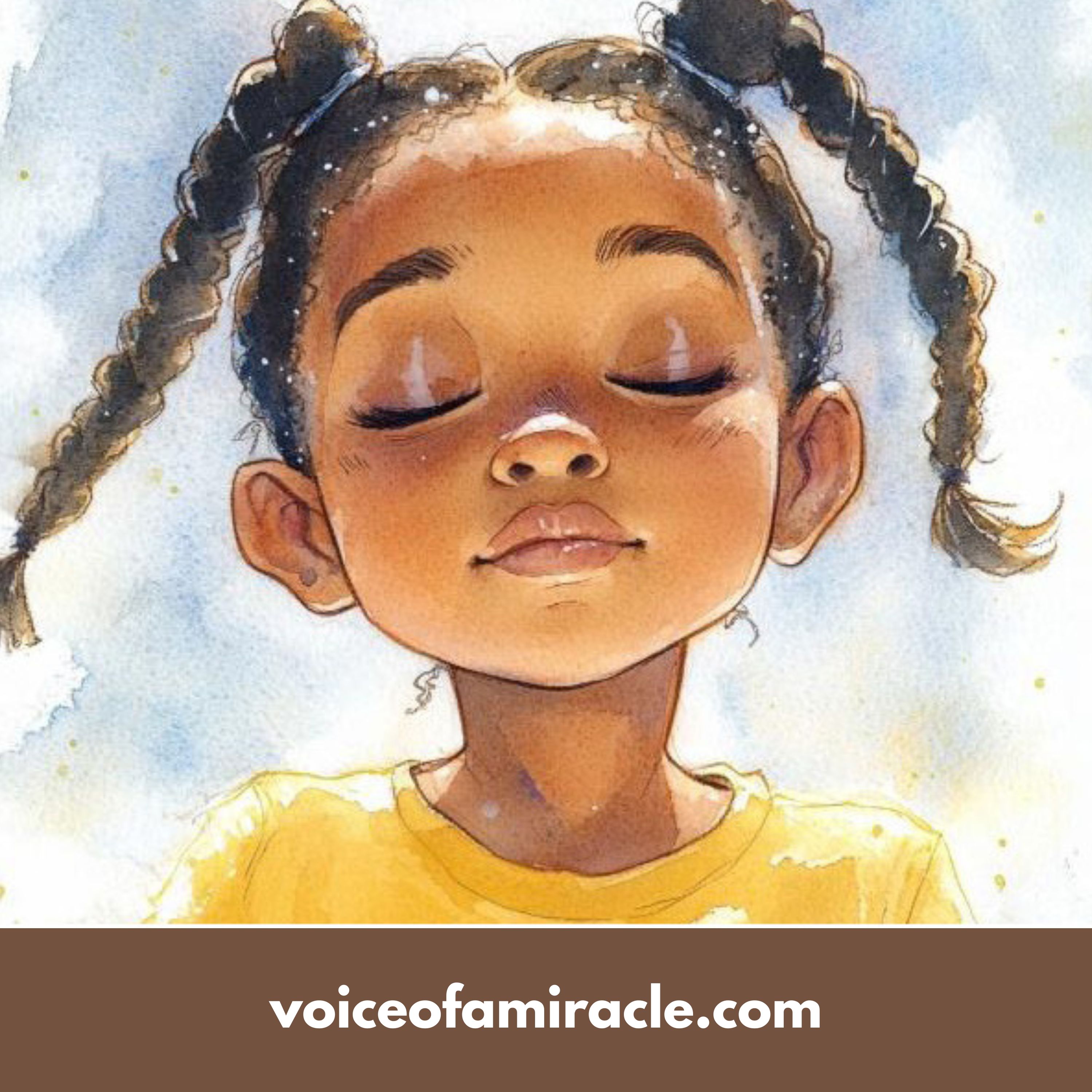
In the lecture, Art named Emily Metheny — a children's book born from childhood anxiety, now purchased by large organizations across multiple states — as proof that lived experience becomes a career pathway. "Miracle Has a Monster" is that proof in real time: an SEL picture book helping children name what they feel, read page by page with voices from around the world. One lived experience, reaching the next generation.
https://voiceofamiracle.com
The Living Proof — Two Sites That Carry It Forward
The teacher and the musician never stopped being the same person. These two websites are the connection, live right now.
Voice Up History
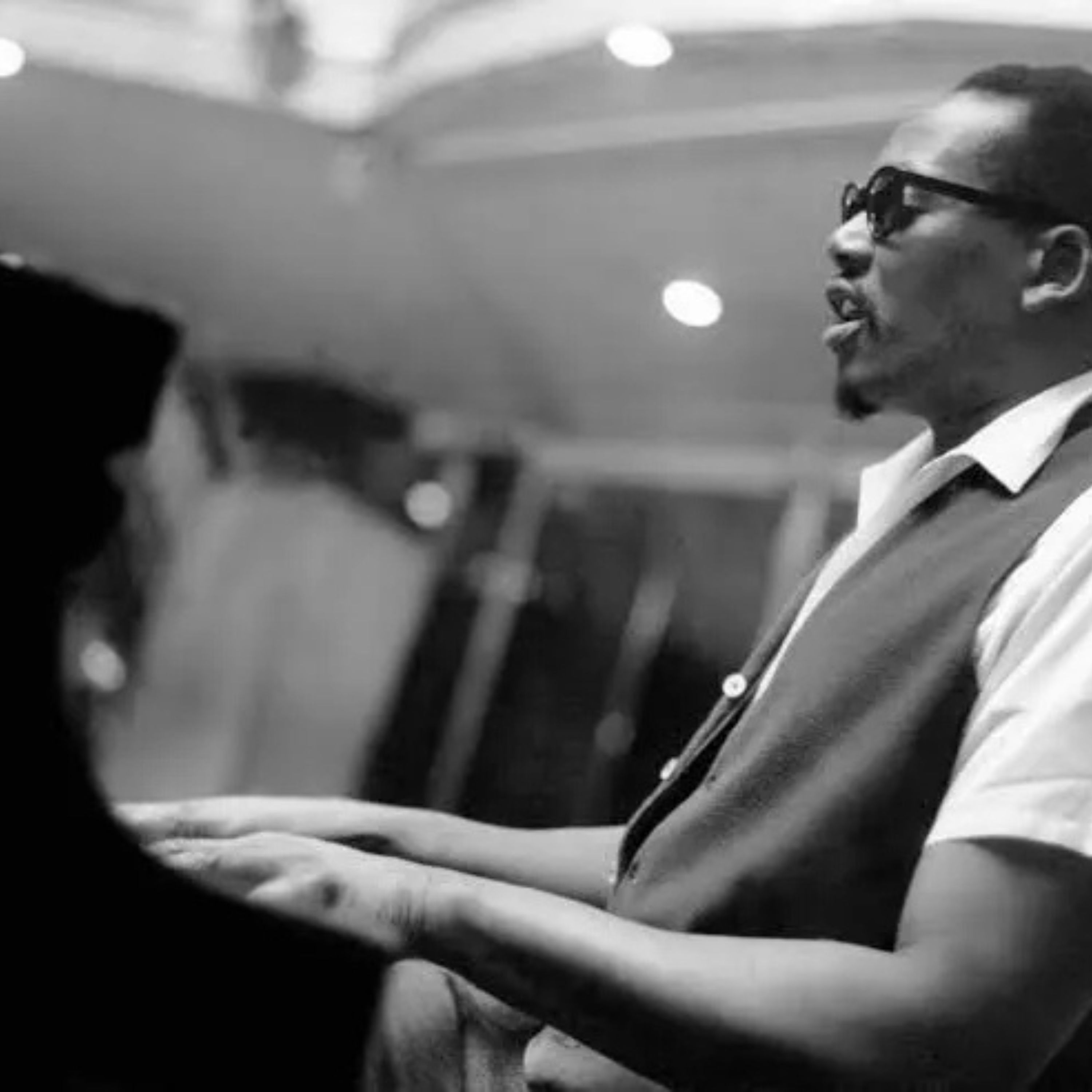
The Randy Weston interviews, made into a living laboratory.
Voice Up History turns the original recorded conversations between Art Fuller and Randy Weston into a learning journey. Each module pairs a recorded conversation with the history behind it, and ends with reflection questions and one action step. It is the oral-history method Fuller began as a jazz interviewer, now made into a public classroom. The site also hosts the Fuller Road Internship, the Coleridge-Taylor Internship, and the Public Health Fellowship.
https://voiceuphistory.life/

Ellington Books
The jazz musician, still making music as ministry.
Ellington Books is where Art Fuller, recording as J Ellington, continues the music career he began in 1994. The catalog has generated over 1,310,950 plays across 134+ countries on a SoundCloud subscription of just $16 a month — no marketing budget. It is the living proof that the teacher and the musician never stopped being the same person, and that music itself can be a pathway to purpose.
https://ellingtonbooks.org
Implications for the Trilogy Series
The method that began with one jazz interview and grew into a national teaching platform now shapes a whole trilogy of learning. These two links show where the thread lands — in the family record, and in the public curriculum built from it.
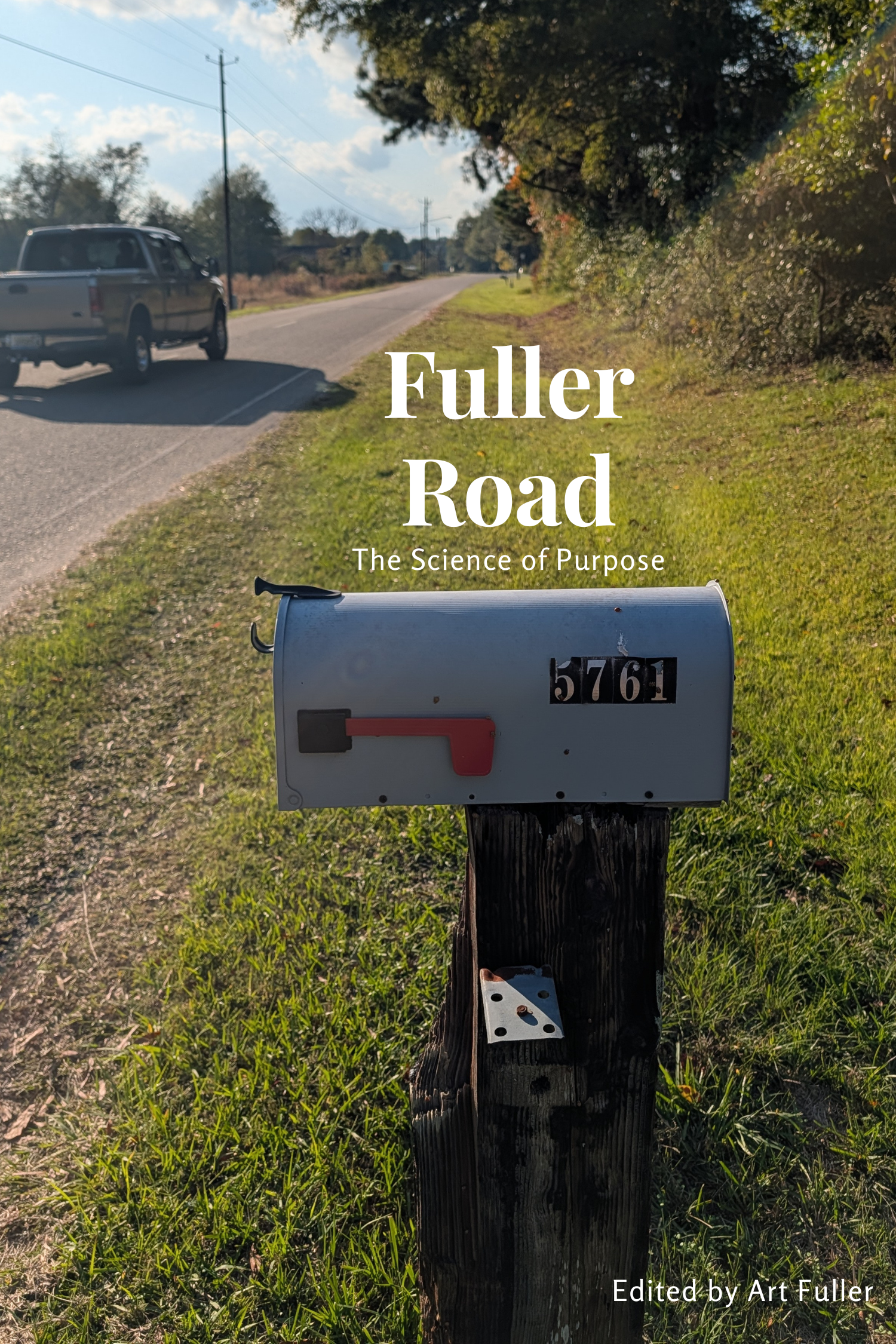
Fuller Road
The Root the Trilogy Draws From
Fuller Road is the documented family legacy — the story traced back more than two hundred years to Old Elam Church in Montgomery, Alabama. Arthur Lee Fuller Sr., Aunt Liz, Uncle Charlie, Aunt Mary C, and the matriarch Mary Douglass. This is where the oral-history method began: Art listening to Uncle Charlie, the same way he later listened to Randy Weston. The implication for the Trilogy is direct. Every theme the Charlie Douglass Trilogy teaches — purpose, patience, stewardship, the naming of what was always there — draws its evidence and its moral authority from this family record. The "developmental silence interrupted across generations" that Art's dissertation names is the exact silence Fuller Road breaks.
https://fullerroad.life
The Charlie Douglass Trilogy
The Method, Applied to One Life
The Charlie Douglass Trilogy takes the same method Fuller used with Randy Weston — listen to an elder, preserve the voice, turn it into curriculum — and applies it to Uncle Charlie's eighty-six years. It synthesizes three lives in parallel: Charlie Douglass, Randy Weston, and Melvin L. Burks, showing that purpose is not taught but witnessed. Art's authority to build it comes from having lived both callings at once: he was the student of elders on the bandstand, and the teacher who turned their voices into learning. The Trilogy is that method, scaled into a public curriculum.
/CharlieDouglassTrilogy
One Clear Scope
A young man studies neuroscience, catches the jazz bug on a West Coast tour with a MacArthur Fellow, teaches middle school by day and plays his own quartet in New York by night, sits in on an avant-garde session in New Jersey, and records a long interview with one of America's greatest jazz pianists about how his father taught him to hold his head high.
Years later, that same person founds an organization built on a single thesis: your lived experience is the most powerful thing you have. The jazz interviews become a public learning laboratory. The music career becomes a ministry reaching a hundred and thirty four countries. The teacher becomes a CEO who tells public health students that lived experience is what gets you through setbacks.
One life. Two lives at once. Many connections. All pointing to the same thing — purpose is not a feeling. It is a practice, and the practice is built from everything you have already lived.