🎉 Happy Birthday Uncle Charlie. Thanks for your life filled with service. 🎂
Charlie Douglass at 86
A Life of Resilience, Education, Service, Movement, and Purpose
Today, on his 86th birthday, we honor Uncle Charlie — whose story is woven throughout Fuller Road: The Science of Purpose, and whose life continues to teach us all what it means to keep moving.
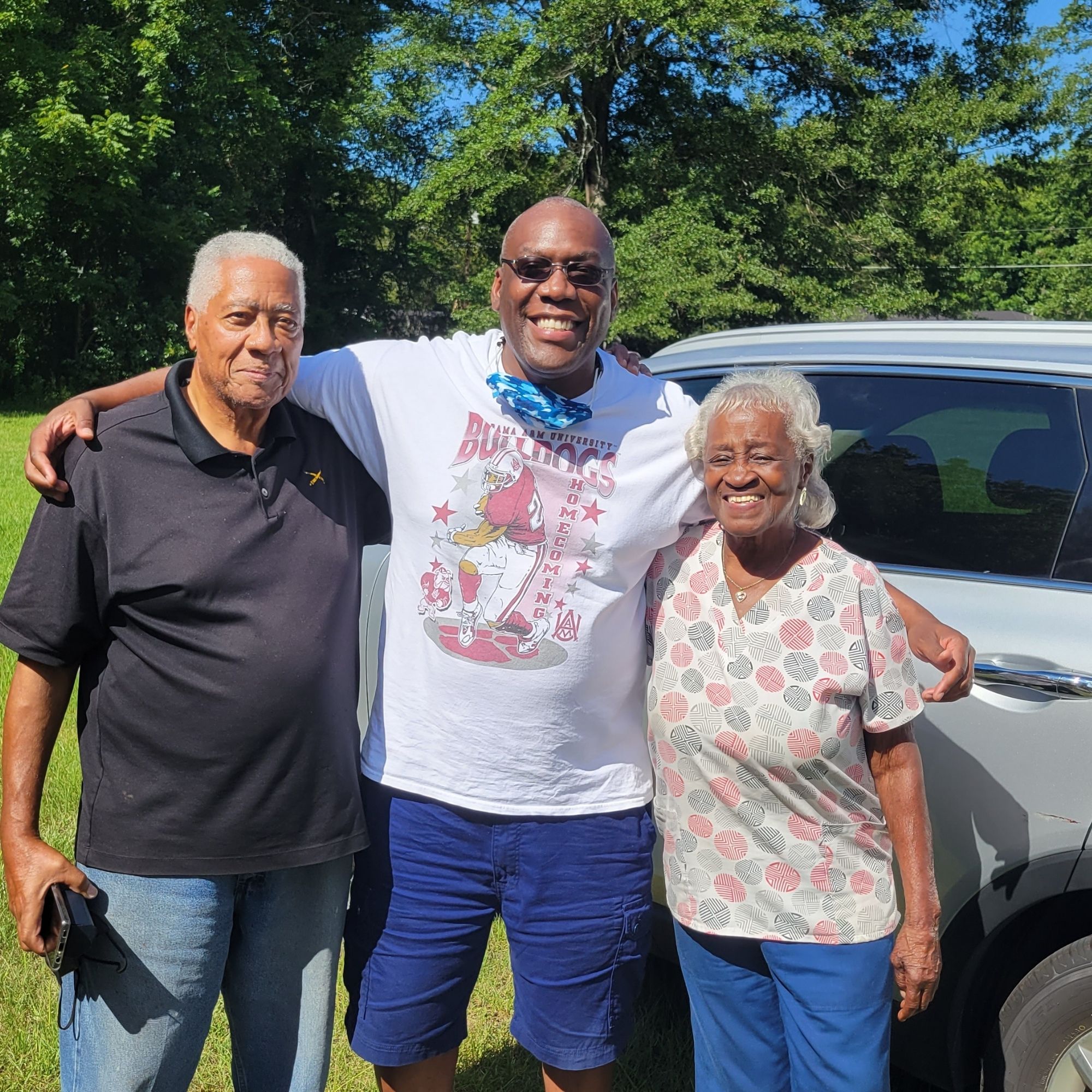
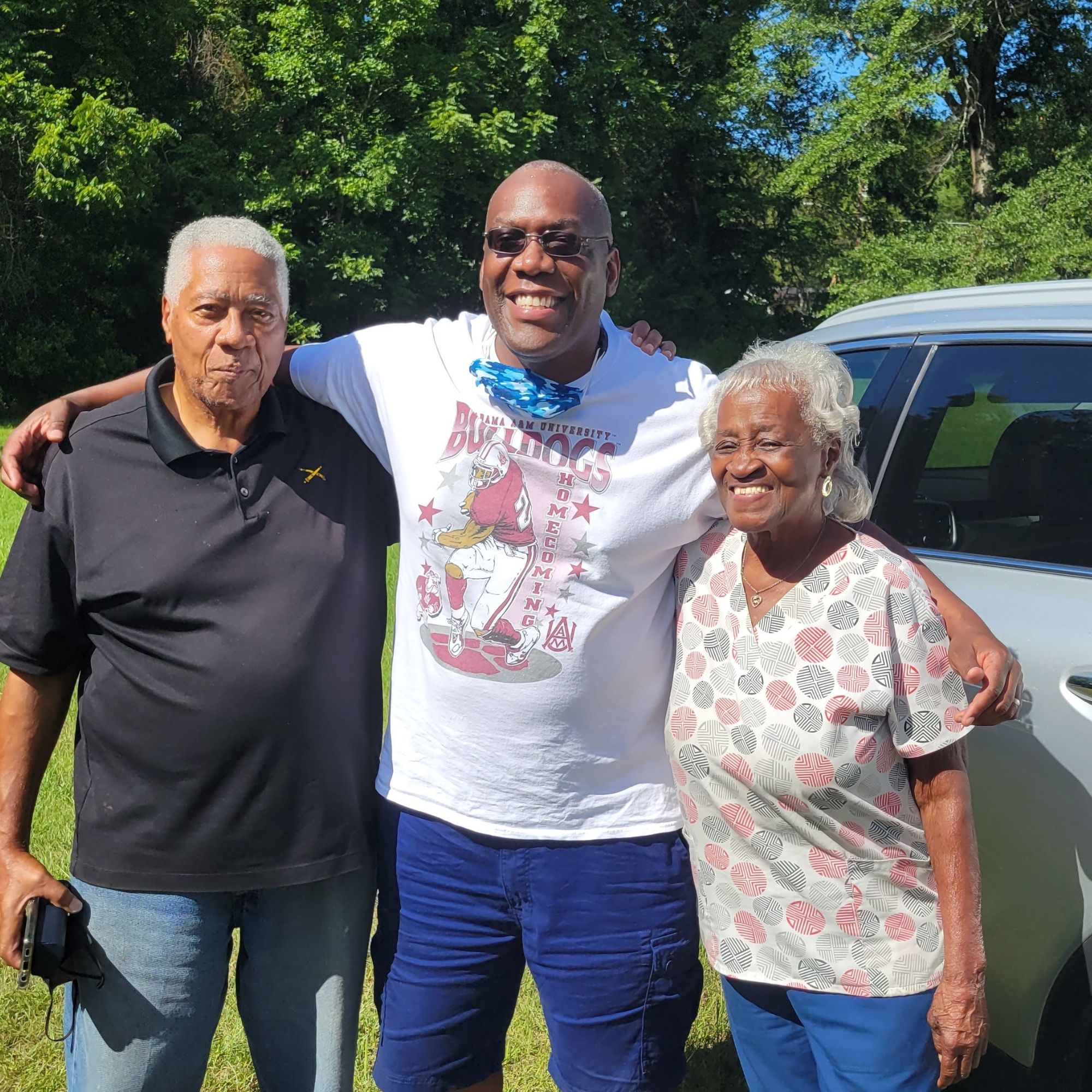
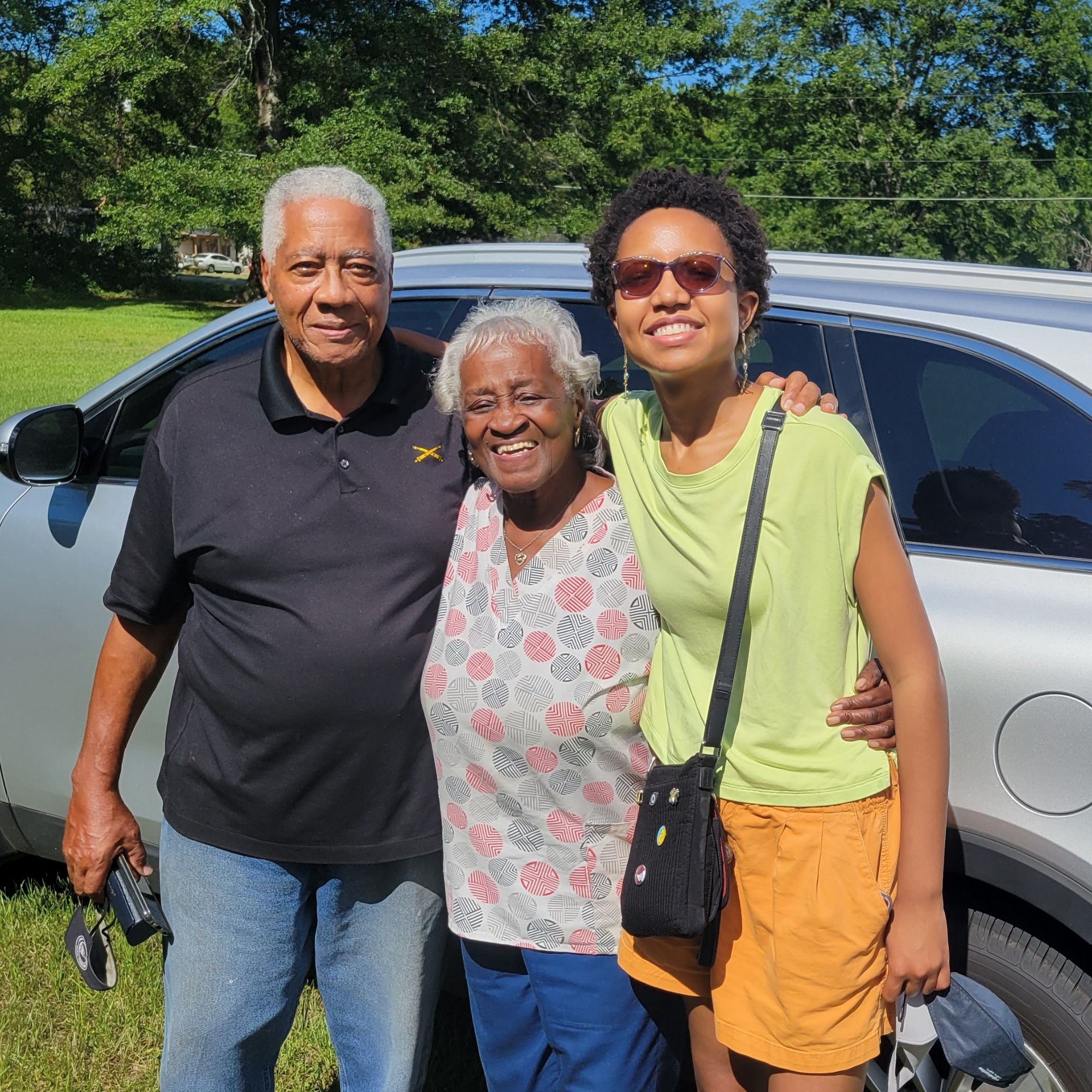
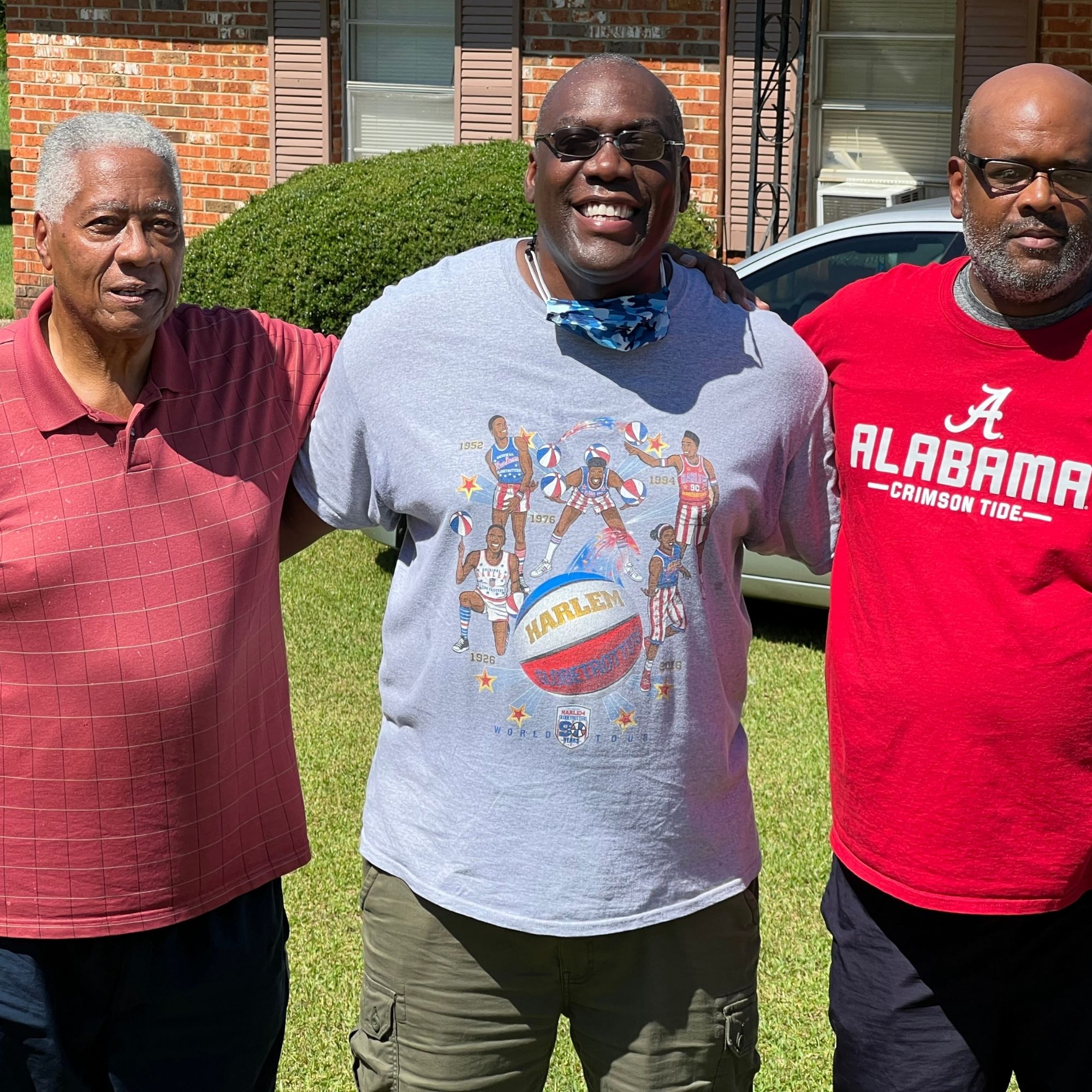
Left to right: Uncle Charlie Douglass, Art Fuller, and Aunt Liz — all still living, all still connected to service. Photographed on Fuller Road in Montgomery, Alabama, July 2022.
His Story in Song
Uncle Charlie's story now travels in song as well. The song "(Be) Your Strong Word" by J Ellington carries the story of the boy who walked the dirt roads of Lowndes County and the man whose dignity and quiet strength still carry this family. Watch the short film here.
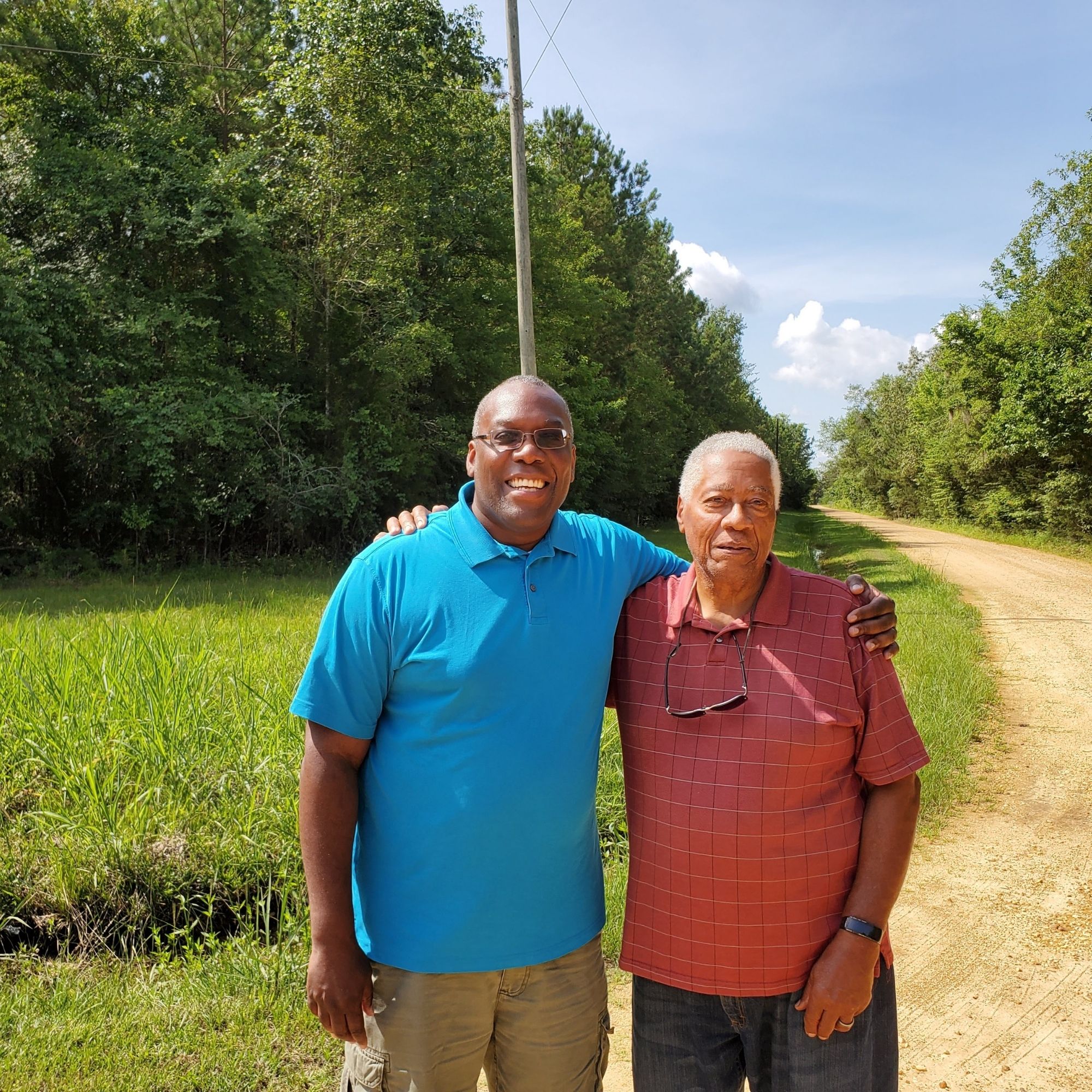
Celebrating Uncle Charlie
Today, Charlie Douglass turns 86 years old.
And early this morning, around 8:00 a.m., I called Uncle Charlie and asked a very simple question:
"What do you have planned for your birthday?"
His answer captured so much about the man whose life is documented throughout Fuller Road: The Science of Purpose.
He was going to the gym.
At 86.
There may be no better introduction to Uncle Charlie.
His life has been about continuing to move forward.
He kept moving when he had to walk miles to school as a Black child growing up under segregation in Lowndes County, Alabama.
He kept moving when the school he attended burned to the ground.
He kept moving through high school, college, military service, four years in Germany, technical training, teaching, entrepreneurship, property ownership, church and community service, family responsibilities, retirement, and eventually into the role of family historian and elder.
And today, at 86 years old, he is still moving.
Born in Lowndes County
Charlie Douglass was born in 1940 in Hayneville, Alabama, in Lowndes County.
His childhood unfolded within the realities of Jim Crow Alabama. When Charlie was approximately three or four years old, his mother left Alabama for New York in search of employment. Charlie remained in Alabama and was largely raised by his great-grandmother, Mamie Peterson.
This multigenerational family structure became one of the defining influences of his life.
Living with his great-grandmother meant that Charlie grew up surrounded by people considerably older than himself. He walked with her. He visited relatives with her. He attended church with her. He listened.
Decades later, those experiences would make him one of the family's most important repositories of historical memory.
The Boy Who Walked to School
Education required extraordinary determination.
Charlie remembered walking approximately five miles to school. A white school was considerably closer, but segregation prevented Black children from attending it.
For much of his childhood, shoes were precious possessions rather than something casually worn. Charlie recalled a world in which children might have shoes designated for school and church while spending much of the remainder of their lives barefoot.
The journey to school also carried the indignities of segregation. Charlie remembered white students passing Black children on school buses and throwing objects at them. The Black children sometimes chose alternate roads to avoid the harassment.
Yet they kept walking.
That image—children walking miles toward an education that society had deliberately made difficult for them to obtain—is central to understanding Charlie Douglass.
When the School Burned
Another defining moment came when Russell School burned.
Charlie remembered being outside when the wooden school caught fire and watching material from the building fly through the air as it burned.
The destruction of a school could have interrupted his educational trajectory permanently.
Instead, his path changed.
Charlie eventually attended Carver High School in Montgomery. There, additional abilities began to emerge.
He became known for basketball.
He developed skill in brick masonry and won a statewide competition.
He became fascinated with electronics.
The child who had walked barefoot down rural Alabama roads was discovering that he could build things, repair things, understand systems and master technical skills.
Those abilities would eventually become a career.
Alabama State and an Unexpected Calling
After graduating from high school in 1959, Charlie enrolled at Alabama State University.
There was one problem.
He did not want to become a teacher.
Teaching was one of the principal professional opportunities available to educated Black men and women in the segregated South, but Charlie initially imagined another path for himself.
So he left.
Life eventually brought him directly back to the profession he had tried to avoid.
Four Years in Germany
Charlie entered the United States military and spent four years stationed in Germany during the Cold War era.
His service exposed a young man from rural Lowndes County to another part of the world while further developing his technical abilities, particularly in electronics and radio-related technology.
When his military service ended, a recruiter attempted to persuade him to reenlist.
Charlie declined.
He had served his time.
It was time for another chapter.
The Teacher Who Didn't Want to Be a Teacher
The young man who left Alabama State because he did not want to teach ultimately became an educator.
But he did it in a way that was authentically his own.
Charlie taught electronics.
The technical knowledge and interests he had developed earlier in life and strengthened through military experience became knowledge he could give to another generation.
He taught students in Lowndes County schools for decades.
Years later, former students still remembered him. Some maintained contact. Some called. Some sent gifts. Some remembered the projects they completed in his classroom.
That may be one of the most meaningful measures of an educator's career: decades after the final grade has been recorded, students still remember what that teacher gave them.
Charlie discovered that teaching was not simply an occupation.
It was a way of passing something forward.
Builder, Craftsman and Entrepreneur
Charlie was never defined by one occupation.
The skills evident during his youth continued throughout adulthood.
He understood electronics. He understood construction. He became a craftsman and builder. He participated in business and investment activities. He understood land.
That last point is particularly important within the historical context of Fuller Road.
Charlie grew up hearing and witnessing how Black families acquired, maintained and sometimes lost land. His family history included generations of people who understood that ownership provided a degree of independence that sharecropping never could.
Consequently, property was never simply property. Land represented autonomy. It represented history. It represented sacrifice. It represented something that should be protected for the next generation.
Keeper of the Family Story
One of Charlie Douglass's greatest contributions may not appear on a résumé.
He remembers.
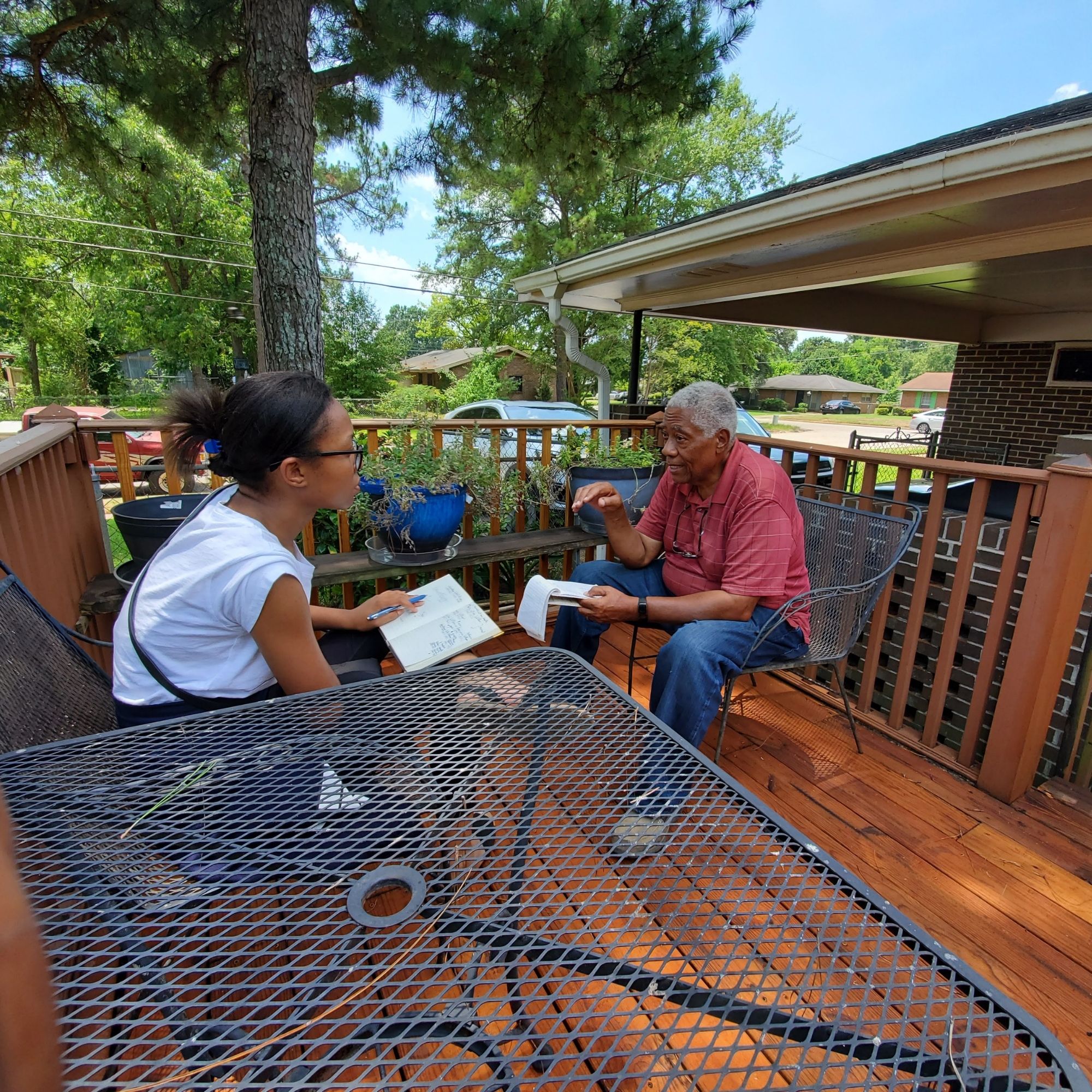
During interviews conducted for Fuller Road, Charlie demonstrated an extraordinary ability to reconstruct generations of family relationships.
He remembered names. He remembered who married whom. He remembered who raised whom. He remembered property. He remembered churches. He remembered schools. He remembered the farms. He remembered people who had died decades earlier.
He could connect family history across generations reaching far beyond his own lifetime.
For families whose history was not always adequately preserved in official archives, this type of oral historical memory is invaluable.
Charlie became a living archive.
His conversations helped transform family memories into a documented record that future generations can study.
Faith and Community
Church has also been woven throughout Charlie's life.
As a child, different family relationships connected him with multiple churches and religious traditions. As an adult, his service included participation in church leadership and stewardship.
His story demonstrates something that appears repeatedly throughout Fuller Road: churches in Black communities were not simply places people visited on Sunday.
They were centers of relationships, education, leadership, mutual assistance and continuity.
Charlie participated in that tradition.
The Meaning of 86
And that brings us back to this morning.
August 31, 2026.
His 86th birthday.
When asked what he was going to do, Charlie did not describe an elaborate celebration.
He was going to the gym.
That answer matters because it is consistent with the life documented in Fuller Road.
At 85, he was already describing regular trips to the gym and the importance of remaining physically active.
At 86, he is still doing it.
The boy who walked miles to school is still moving.
The young man who traveled from Alabama to Germany is still moving.
The teacher who spent decades helping students move toward their futures is still moving.
The builder is still moving.
The family historian is still moving.
The elder is still moving.
What Uncle Charlie's Life Teaches Us
His story leaves several lessons for the generations coming behind him:
Keep moving.
Circumstances may change the route without changing the destination.
Education is bigger than a classroom.
Charlie learned from schools, elders, military service, technical work, students, churches, land and life itself.
Develop useful skills.
Electronics, construction, teaching and problem-solving gave him ways to contribute throughout his life.
Remember where you came from.
Family history survives because someone decides it is important enough to remember.
Protect what previous generations sacrificed to build.
Land, institutions, relationships and stories all require stewardship.
Pass knowledge forward.
Knowledge reaches its highest value when another person can use it.
Age does not eliminate purpose.
At 86, there is still somewhere to go.
Happy 86th Birthday, Uncle Charlie
Fuller Road began as an effort to listen carefully enough to understand what earlier generations were trying to teach us. Charlie Douglass is one of those teachers — not simply because he spent decades in a classroom. Because he lived the lesson.
His life stretches from barefoot walks along the roads of segregated Alabama to military service in Europe; from radios and electronics to modern technology; from a childhood surrounded by elders to becoming the elder younger generations now call for answers.
Eighty-six years represent more than longevity.
They represent history. They represent memory.
They represent resilience. They represent service.
They represent purpose.
And the story is still being written.
Keep moving.
The Public Health Connection
How purpose adds years to your life — and life to your years
Uncle Charlie's story is not just a family story. It is a living example of what public health research now proves: people who stay connected to a sense of purpose tend to live longer, healthier, and more resilient lives. At 86, Charlie is still going to the gym, still teaching, still remembering, still moving. That is not coincidence. That is the science of purpose made visible.
Longer Life
Studies link purpose to lower mortality across age groups.
Better Brain Health
Purpose protects memory and cognitive function as we age.
Greater Resilience
A reason to keep going helps the body and mind recover faster.
The lesson is simple: when you stay connected to purpose — to your family, your community, your story, your service — you are not just living longer. You are living better. Uncle Charlie's 86 years are proof. The research is the explanation.
Honor the Legacy — Join the Internship
Uncle Charlie's life is now the curriculum. The Charlie Douglass Legacy Internship invites students from any discipline to study his story, connect it to something larger, and build something that passes knowledge forward.
The Book That Captures Uncle Charlie's Story
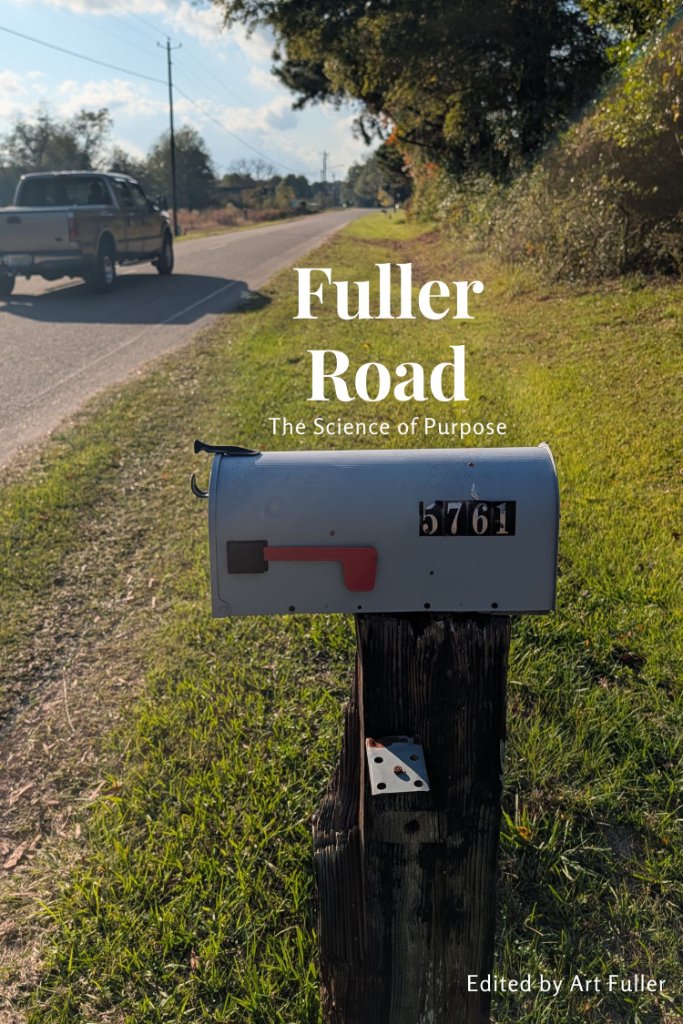
Uncle Charlie's firsthand interviews are preserved in Fuller Road: The Science of Purpose — the book at the heart of the Voice Up movement. It is where his voice, his memories, and his lessons live on for the next generation.
Fuller Road: The Science of Purpose
Edited by Art Fuller
The book that captures Uncle Charlie's life in firsthand interviews. A deeply personal, multi-generational memoir chronicling the Fuller family's experiences as African Americans in rural Alabama during the Jim Crow era — and the systematic discovery of purpose that emerged from those stories.
An uplifting read that preserves underrepresented Black Southern histories while offering practical insights on purpose.
Average Rating
Pages
Countries Reached
Satisfaction Rate
All proceeds support youth, teens, and young adults in connecting to purpose and improving mental & behavioral health
A Song for Uncle Charlie's Birthday
Music carries memory. This featured song — Let Love Flow — is dedicated to Uncle Charlie on his 86th birthday. Tap the play button to listen.

Let Love Flow
Dedicated to Charlie Douglass on his 86th birthday
Listen on SoundCloud86 years of connecting people to purpose