📥 Download the Full Trilogy Guide
All three books, complete evidence base, audience profiles, and classroom tools — in one printable HTML document.
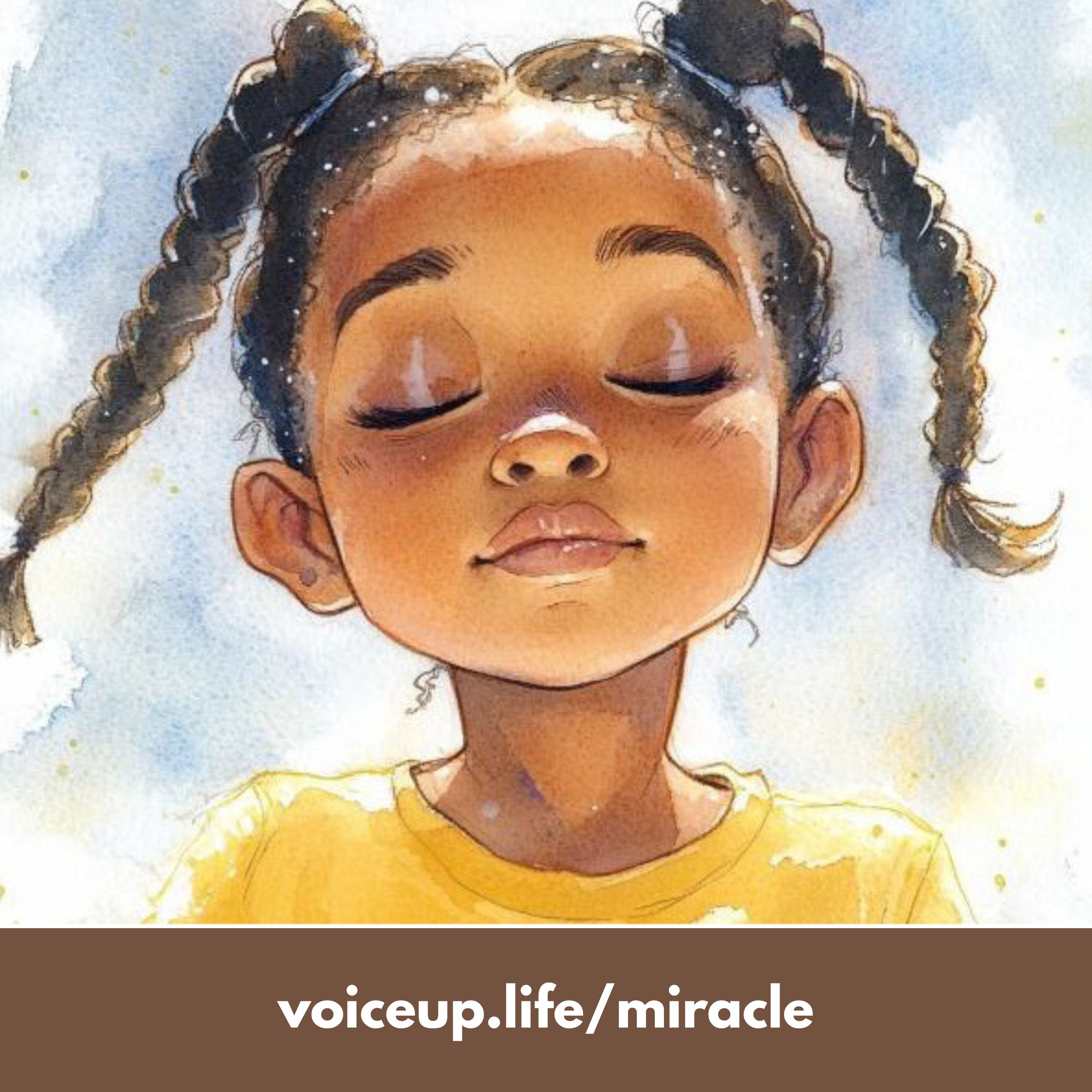
Miracle Has a Monster Trilogy
Miracle Has a Monster · Unlocking More · Living with PCOS
Three books created by Voice Up students — covering emotional literacy, adventure & self-discovery, and health advocacy.
What These Books Have in Common
Each book was created by a Voice Up student who turned lived experience into a published work of impact. Together they form a library of empathy — for children facing anxiety, young readers seeking adventure, and women navigating health challenges.
Student Created
100% by Voice Up participants
Purpose-Centered
Grounded in the Fuller Method
Community Impact
Proceeds support youth programs
Why These Three Books Belong Together
Each book was created by a Voice Up student who turned lived experience into published impact — each one answering a different challenge in human wellbeing.
Miracle Has a Monster — How do I face the scary feelings inside me?
Before you can grow or connect, you need a way to understand your inner world. This book gives young children their first language for anxiety — naming the "monster" so they can face it. Externalizing fear is where healing begins.
Unlocking More — What can I discover when I work with others?
Once emotions have a name, growth happens through connection. This adventure story shows children that different strengths make teams stronger — and that you're capable of more than you believe when you face challenges alongside others.
Living with PCOS — How do I advocate for my own health?
Emotional literacy and collaboration grow into self-advocacy. Written by a physician who lived it, this guide gives women the language, tools, and confidence to understand their condition and take an active role in their own care.
Together, these three student-created books trace a journey from emotional literacy to collaboration to self-advocacy — each one born from lived experience and turned into a resource that helps others. That is the Voice Up ecosystem in action.
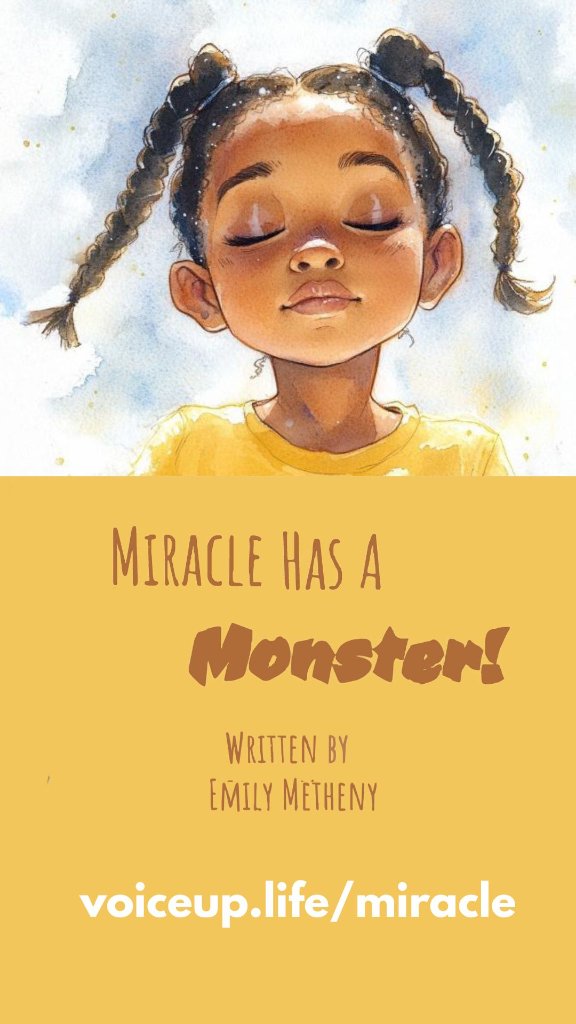
Miracle Has a Monster
by Emily Metheny — Deluxe Edition
What if the scary feelings inside you had a name… and you could learn how to face them?
Miracle Has a Monster is a powerful and heartwarming story that helps children understand anxiety in a way they can see, name, and overcome. Meet Miracle—a bright and thoughtful child who notices a "monster" that shows up during hard moments. With guidance, courage, and simple tools, she learns to face her fears and find her voice again.
Readers will learn:
Ages 5–9 · Parents & Educators · K–6 Classrooms · SEL Programs
Evidence-Based Connections
Miracle Has a Monster is a developmentally appropriate translation of CBT, SEL, and narrative therapy — giving children language, tools, and agency to face anxiety.
Cognitive Behavioral Therapy (CBT) – Child Adaptations
Aaron Beck & Phillip Kendall
Cognitive Therapy and the Emotional Disorders (1976) / Coping Cat Program (1990)
The "monster" is a classic CBT externalization tool. It helps children separate self from anxiety, recognize intrusive thoughts, and practice coping — exactly the technique used in evidence-based child anxiety treatment.
Emotion Regulation Theory
James Gross
Emotion Regulation: Affective, Cognitive, and Social Consequences (2002)
Emotional regulation includes awareness, labeling, and modulation. The book teaches children to name emotions and apply calming strategies like breathing and grounding — direct alignment with Gross's regulatory framework.
Social-Emotional Learning (SEL)
CASEL (Collaborative for Academic, Social, and Emotional Learning)
CASEL SEL Framework (2013)
Direct alignment with core SEL competencies: self-awareness, self-management, and social awareness. The book's 5 ready-to-use lesson plans for educators make it an immediately deployable SEL classroom resource.
Narrative Therapy (Child Psychology)
Michael White
Narrative Means to Therapeutic Ends (1990)
Externalizing problems reduces shame. By naming the "monster," the child becomes an observer and agent — not a victim. This shifts the child's relationship with anxiety from internal identity to external challenge.

Unlocking More
by Alison Wintermute
Three kids. One mysterious world. And a journey that will change how they see themselves forever.
Unlocking More is an imaginative and emotionally rich adventure that blends storytelling with powerful lessons about confidence, teamwork, and self-discovery. When Michelle, Caleb, and Maya are pulled into a strange world, they must work together — and discover what they're truly capable of.
Readers will learn:
Ages 7–12 · Classrooms & Guided Reading · SEL Environments
Evidence-Based Connections
Unlocking More aligns with self-efficacy, resilience, and narrative identity development — using adventure storytelling to support confidence, teamwork, and identity formation in middle childhood.
Self-Efficacy Theory
Albert Bandura
Self-Efficacy: Toward a Unifying Theory of Behavioral Change (1977)
Characters develop confidence through overcoming challenges and mastery experiences — the core mechanism of self-efficacy. Readers internalize this through vicarious experience and character modeling.
Group Dynamics & Cooperative Learning
David Johnson & Roger Johnson
Learning Together and Alone (1975)
Learning improves through collaboration. The book's emphasis on teamwork and shared problem-solving directly embodies cooperative learning principles shown to improve both academic and social outcomes.
Resilience Theory
Emmy Werner
Vulnerable but Invincible: A Longitudinal Study of Resilient Children (1982)
Resilience develops through adaptive coping and supportive relationships. Characters face fear, adapt, and grow — modeling the protective factors that research identifies as central to resilient development.
Developmental Psychology – Industry vs. Inferiority
Erik Erikson
Childhood and Society (1950)
Middle childhood is the stage of Industry vs. Inferiority. The story supports competence and identity formation at exactly the developmental window where confidence is either built or lost.
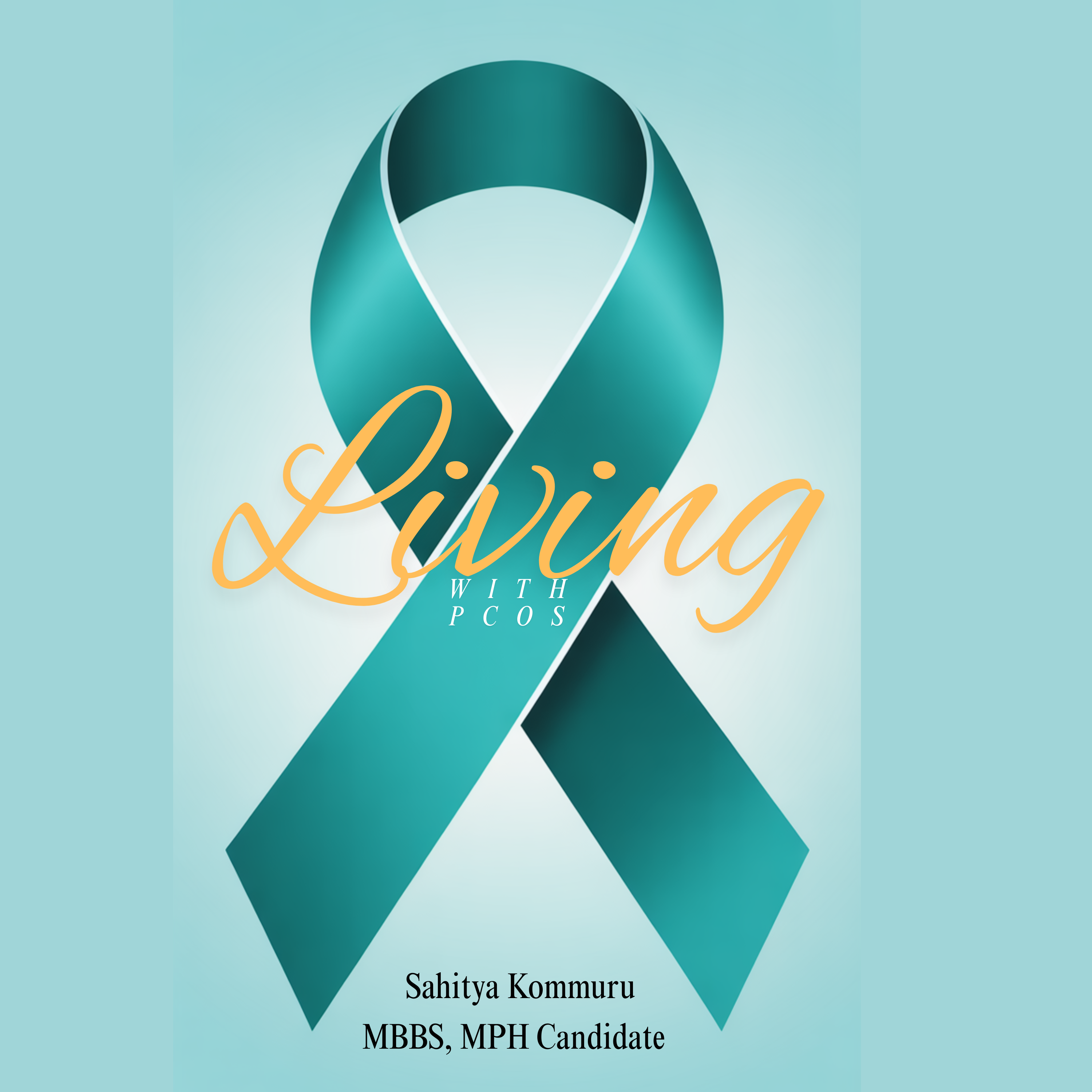
Living with PCOS
by Dr. Sahitya Kommuru, MBBS, MPH Candidate
1 in 10 women live with PCOS — yet most are left confused, unheard, and unsupported.
Living with PCOS is the guide every woman deserves but rarely receives. Written by a physician diagnosed at 19, this book combines medical expertise with lived experience to provide clear answers, real understanding, and practical tools for navigating Polycystic Ovary Syndrome.
Readers will learn:
Women with PCOS · Teens & Young Adults · Families & Partners · Healthcare Advocates
Evidence-Based Connections
Living with PCOS aligns with health literacy, patient empowerment, and chronic care models — combining clinical expertise with lived experience to fill a gap that the healthcare system has largely left open.
Health Literacy Framework
Institute of Medicine
Health Literacy: A Prescription to End Confusion (2004)
Patients need access, understanding, and actionable knowledge to manage conditions. The book provides clear explanations and practical tools — addressing a gap the IOM identified as a public health crisis.
Patient-Centered Care Model
Institute for Healthcare Improvement
Crossing the Quality Chasm (2001)
Patients should understand their conditions and participate in decisions. The book's emphasis on advocacy and informed decision-making translates patient-centered care principles into everyday, accessible language.
Chronic Illness Self-Management
Kate Lorig
Patient Education: A Practical Approach (1992)
Patients manage conditions through daily behaviors, knowledge, and self-monitoring. The book's symptom and period tracking tools directly operationalize chronic care self-management research.
Narrative Medicine
Rita Charon
Narrative Medicine: Honoring the Stories of Illness (2006)
Lived experience improves care understanding. The author — a physician diagnosed at 19 — combines clinical expertise with personal story, exemplifying narrative medicine's core argument that stories and science together produce better care.